SEPT 11 GROUP LEARNS FROM OMAGH
Sept 11group learns from Omagh
BY JACQUELINE COURTNEY
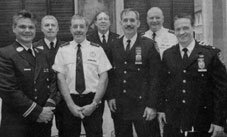
TWO worlds apart, each touched by tragedy, were linked this week during a visit to Omagh by members of the New York emergency services.
Twenty nine people and two unborn babies were killed in the 1998 Omagh bomb while thousands died in the New York Twin Towers terrorist attack in 2001.
The long healing process still goes on and this week it was supported by a New York Emergency Delegation visiting the Trauma Centre in Omagh in a knowledge sharing exchange.
The delegation consisted of senior managers and clinicians from emergency and health organisations who dealt with the aftermath of the destruction of the World Trade Centre's twin towers.
The courageous men and woman, many recognised as heroes from the September 11 attack, arrived in town on Monday at the invitation of the Northern Ireland Centre for Trauma and Transformation.
Representatives from the medical and staff care department of the New York Fire Departments, the Port Authority of New York and New Jersey along with the Project Liberty public health programme set up immediately after the attack on the Twin Towers, met with mental health practitioners and emergency planners in Northern Ireland in a series of workshops and seminars in Omagh, Belfast and Enniskillen.
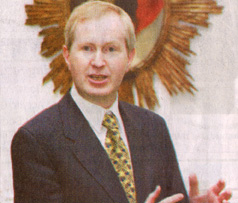
The Director of the NI Centre for Trauma and Transformation (NICTT), David Bolton warmly welcomed the distinguished humanitarian visitors to town earlier this week.
He said, "This is an important visit and we are delighted colleagues from New York have come to Northern Ireland to inform us how they managed the response to the enormous tragedy caused by the destruction of the twin towers, and how they responded to the immediate and longer-term health needs of people in the city and surrounding area.
"We will be sharing with them our work and the lessons and experiences in dealing with the consequences of 35 years of conflict and violence. In particular we will be briefing them on the approaches to the treatment of trauma and related health needs that we have been developing here in Northern Ireland."
SECURITY CONSCIOUS WORLD
The Chairman of the NICTT Trust, Professor Fabian Monds indicated how relevant this exchange was in an ever changing and security conscious world.
"Sadly the joint experiences of the troubles in Northern Ireland and the recent lessons from the tragedies of September 2001 may strike a resonance for other agencies and organisations dealing with similar tragic events and conflicts around the world.
"The NI Centre for Trauma and Transformation is delighted at being given the opportunity to convene and host this important exchange," said Professor Monds.
He added, "The lessons of the conflict here in Northern Ireland and the impact of 9/11 have applicability elsewhere, and by bringing together these practitioners from New York and Northern Ireland to hear about each other's experiences we expect to learn key important lessons about the types of psychological and emergency planning interventions that can be put in place for the future."
The Omagh bombing of August 15 also injured 400 people. 135 were seriously injured. In the context of the civil conflict, including terrorism here, the Omagh bombing was the single largest incident in terms of deaths and injuries.
Immediately following the explosion the local health and social services providers (the Sperrin Lakeland Trust) established the Omagh Community Trauma and Recovery Team (CTRT). This multi-disciplinary team worked for three years to address the psychological and-practical needs arising from the bombing, and by the time the team completed its work, it had dealt with 680 people, including children.
Recent works undertaken by the foresighted centre included the formation earlier this year of an international network with other centres from areas of conflict including South Africa, Israel, Palestine and Sri Lanka, to advance knowledge and practise in this field.
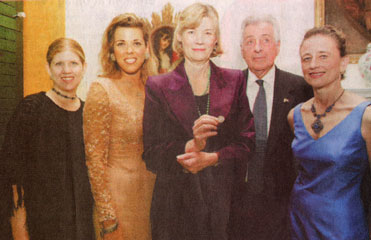
On Tuesday evening the American firefighters were honoured at a reception at Baroncourt, the home of the Duchess of Abercorn, who is one of the trustees of the Centre for Trauma and Transformation.
BY JACQUELINE COURTNEY
TWO worlds apart, each touched by tragedy, were linked this week during a visit to Omagh by members of the New York emergency services.
Twenty nine people and two unborn babies were killed in the 1998 Omagh bomb while thousands died in the New York Twin Towers terrorist attack in 2001.
The long healing process still goes on and this week it was supported by a New York Emergency Delegation visiting the Trauma Centre in Omagh in a knowledge sharing exchange.
The delegation consisted of senior managers and clinicians from emergency and health organisations who dealt with the aftermath of the destruction of the World Trade Centre's twin towers.
The courageous men and woman, many recognised as heroes from the September 11 attack, arrived in town on Monday at the invitation of the Northern Ireland Centre for Trauma and Transformation.
Representatives from the medical and staff care department of the New York Fire Departments, the Port Authority of New York and New Jersey along with the Project Liberty public health programme set up immediately after the attack on the Twin Towers, met with mental health practitioners and emergency planners in Northern Ireland in a series of workshops and seminars in Omagh, Belfast and Enniskillen.
The Director of the NI Centre for Trauma and Transformation (NICTT), David Bolton warmly welcomed the distinguished humanitarian visitors to town earlier this week.
He said, "This is an important visit and we are delighted colleagues from New York have come to Northern Ireland to inform us how they managed the response to the enormous tragedy caused by the destruction of the twin towers, and how they responded to the immediate and longer-term health needs of people in the city and surrounding area.
"We will be sharing with them our work and the lessons and experiences in dealing with the consequences of 35 years of conflict and violence. In particular we will be briefing them on the approaches to the treatment of trauma and related health needs that we have been developing here in Northern Ireland."
SECURITY CONSCIOUS WORLD
The Chairman of the NICTT Trust, Professor Fabian Monds indicated how relevant this exchange was in an ever changing and security conscious world.
"Sadly the joint experiences of the troubles in Northern Ireland and the recent lessons from the tragedies of September 2001 may strike a resonance for other agencies and organisations dealing with similar tragic events and conflicts around the world.
"The NI Centre for Trauma and Transformation is delighted at being given the opportunity to convene and host this important exchange," said Professor Monds.
He added, "The lessons of the conflict here in Northern Ireland and the impact of 9/11 have applicability elsewhere, and by bringing together these practitioners from New York and Northern Ireland to hear about each other's experiences we expect to learn key important lessons about the types of psychological and emergency planning interventions that can be put in place for the future."
The Omagh bombing of August 15 also injured 400 people. 135 were seriously injured. In the context of the civil conflict, including terrorism here, the Omagh bombing was the single largest incident in terms of deaths and injuries.
Immediately following the explosion the local health and social services providers (the Sperrin Lakeland Trust) established the Omagh Community Trauma and Recovery Team (CTRT). This multi-disciplinary team worked for three years to address the psychological and-practical needs arising from the bombing, and by the time the team completed its work, it had dealt with 680 people, including children.
Recent works undertaken by the foresighted centre included the formation earlier this year of an international network with other centres from areas of conflict including South Africa, Israel, Palestine and Sri Lanka, to advance knowledge and practise in this field.
On Tuesday evening the American firefighters were honoured at a reception at Baroncourt, the home of the Duchess of Abercorn, who is one of the trustees of the Centre for Trauma and Transformation.
Further Information
Publisher: ULSTER HERALD
Ref: UH/1669
Published Date: 10-Jun-04
Related Images