BEING MICHAEL GALLAGHER
Being Michael Gallagher
BY: JOHN McCUSKER
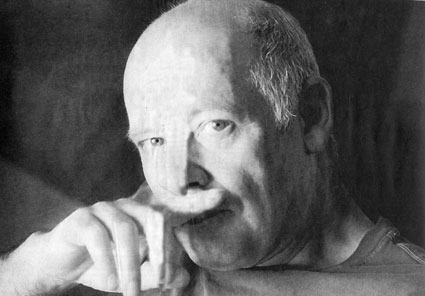
Gerard McSorley drew heavily on the experiences of his own personal loss when he took on the role of Michael Gallagher in the film on the Omagh atrocity.
For, just two months after the car laden with explosives claimed 31 lives on the streets of his home town, Gerard suffered his own inward grief when his 22-year-old son Peter inexplicably overdosed on prescriptions tablets and died. Considering the fact that Michael Gallagher's son Aiden was just 21 when he was slain, the traumatic background similarities between actor and character in the lead role for the film on the Omagh atrocity could not be more analogous.
"It's a film I would have made the tea for just to be part of it," Gerard says in hushed tones. "I turned down other jobs to accommodate it and just focused on nothing else for the time I was doing it. It's a film I really wanted to be in because it's my home town," he explains in the softening Tyrone accent he still retains despite spending the past 30 years based in Dublin.
Gerard, however, sees clearly defined lines between Michael Gallagher, the husband, father and campaigning member of the relatives' group, and the Michael Gallagher depicted in the screenplay of Omagh.
"There's the real Michael Gallagher and then there's the Michael Gallagher in the script. When I knew I was commissioned with the responsibility to play him, and I knew that was a very huge responsibility, I went up to Omagh and met with him and I observed him to be a very, very forthright, charming, sensitive, generous spirited, decent man who was a very quietly spoken individual who is also very articulate and caring. Those were the elements that were realised by Guy Hibbert and Paul Greengrass who co-wrote the script.
"From the dramatic point of view, and when you talk about it being a film rather than real life, it's a very interesting character to play. You place that kind of character in a situation where the individual is going to encounter enormous loss or sorrow or calamity and I still cannot look at Michael Gallagher or any of the people of Omagh who lost without thinking, 'That should never have happened to those people'. In particular, Michael Gallagher was my obsession because he was the character I was playing."
From the outset, Gerard threw himself into the part. He visited the Gallagher household on numerous occasions. He watched endless hours of television interview footage and devoured all there was available in the public domain pertaining to the character he was to portray. He recorded Michael's voice onto a dictaphone and walked around the house for hours on end listening to the sound of his voice so he could pick up the cadences and make them his own, as opposed to just mimicking the tones.
Gerard examined in minute detail the clothes Michael Gallagher wore on the day of the bomb. He also took digital photographs of his character's clothing and shoes in order to get a more intimate feel for the part.
"I just tried to get as close as possible to what I observed to be his psychological life as I could without being too obtrusive and asking too many very personal questions. It's all a matter of a creative evaluation at the end of the day. You're never going to be another human being; it's a philosophical impossibility, so all you can do is approximate it."
On the afternoon of August 15,1998, Gerard McSorley was travelling home to Dublin from Belfast where he had just finished working on a BBC television drama being made at the time on new digital technology. Arriving in his Dublin flat, he was contacted by his late sister Joan from her home in Staffordshire who advised him to switch to Sky News.
"I sat on the couch watching the footage for hours and couldn't take in the reality of it. It took me a long time to come to terms that something as huge as that had happened in a town you'd least expect it. The following day, I hired a car and went up to Omagh and stood there in the street with everybody else. Fortunately, I didn't know anybody who was mutilated, maimed or murdered, but it was nonetheless my home town and I felt the gravity of it and the pain of it as anybody would."
Two months later, Gerard was to go through his own personal loss with the death of his son Peter, who took an overdose of blood pressure drugs that led to cardiac arrest. Following his parents' marriage breakup, Peter had been living in Scotland at the time with Gerard's former wife, Ann. Since the death, the family still have not yet received a satisfactory explanation as to why he was on that particular form of medication.
The trauma led to Gerard suffering a complete physical and mental breakdown. It wasn't until he finally got to grips with the role of gangster John Gilligan in the film about slain Dublin journalist Veronica Guerin that he began to find the confidence to carry on.
"When Peter died, I did not want to continue and I had some professional disasters," Gerard reveals. "I didn't want to leave my home. I didn't want to be an actor any more. I didn't want to know about the superficiality of theatrical life. I didn't want to work.
"I love it. It's my job and has been for 30 years. And when I started to work again I felt that Peter was an angel within me at times prodding me to go forward and to make the best I could of whatever job I was doing. I felt myself that I'd derived some personal strength from his voice and his presence within me."
Although he was aware that Michael Gallagher knew of his own personal tragedy of losing Peter, the pair never openly discussed the issue throughout the making of Omagh. But from a filmmaker's point of view, surely an actor such as Gerard McSorley could draw heavily on his own experiences for a role such as this?
"To a director or to a producer, if you have an actor who is from the town and who has experienced more or less the same psychological horror as the loss of a child, then you're going to have an actor there who has a first hand understanding of the situation and the grief.
"Nobody could understand what it is like to lose a child other than those who have lost one. It's the most physical agonising and the worst kind of mental anguish I have ever experienced in my life, so I could completely and totally relate to Michael Gallagher and all of the victims of the Omagh disaster. I didn't lose anybody in the bomb, but I understand what that loss is like and the loneliness of that loss, how raging you can be, how intense your anger and disgust at the world can be. I can completely and totally relate to all those things.
"And although I would have drawn from those experiences playing the part, there was no time during the filming when there was any bleeding of my own personal situation, because that would have made the performance too inward and too self-indulgent and would have been a disservice to the film, to Michael Gallagher and to his family."
Gerard McSorley is hopeful though that Omagh might, in a sense, provide some positive resonance for people. He understands fully the motives of the Omagh relatives and why they wanted the film to be made in order to keep the issue vivid and in the public imagination.
He will be happy to see the relatives attain 'truth or justice,' and therefore dignity for the town and for those who are still maimed and injured and have been brutalised, not only physically, but psychologically as a result of the atrocity.
"It was an opportunity for me to use what skills I have to tell a love story which I think, in a certain sense, the film is.
"I know it's about the Omagh calamity but it's about a marriage too. It's about what happens to a marriage and how relationships can become fractured in those circumstances as people drift apart and become obsessional about themselves and their own grief.
"People grieve at different paces and in different ways. It's fairly common psychologically that relationships break up but at the end of the day in the script there is something redemptive and hopeful in the love story that is at the centre of the film.
"Maybe in time people in Omagh who are injured or even those who are cynical about the making of the film would be able to see that actually there is a terrific beauty and sensitivity and delicacy at the centre of it all."
BY: JOHN McCUSKER
Gerard McSorley drew heavily on the experiences of his own personal loss when he took on the role of Michael Gallagher in the film on the Omagh atrocity.
For, just two months after the car laden with explosives claimed 31 lives on the streets of his home town, Gerard suffered his own inward grief when his 22-year-old son Peter inexplicably overdosed on prescriptions tablets and died. Considering the fact that Michael Gallagher's son Aiden was just 21 when he was slain, the traumatic background similarities between actor and character in the lead role for the film on the Omagh atrocity could not be more analogous.
"It's a film I would have made the tea for just to be part of it," Gerard says in hushed tones. "I turned down other jobs to accommodate it and just focused on nothing else for the time I was doing it. It's a film I really wanted to be in because it's my home town," he explains in the softening Tyrone accent he still retains despite spending the past 30 years based in Dublin.
Gerard, however, sees clearly defined lines between Michael Gallagher, the husband, father and campaigning member of the relatives' group, and the Michael Gallagher depicted in the screenplay of Omagh.
"There's the real Michael Gallagher and then there's the Michael Gallagher in the script. When I knew I was commissioned with the responsibility to play him, and I knew that was a very huge responsibility, I went up to Omagh and met with him and I observed him to be a very, very forthright, charming, sensitive, generous spirited, decent man who was a very quietly spoken individual who is also very articulate and caring. Those were the elements that were realised by Guy Hibbert and Paul Greengrass who co-wrote the script.
"From the dramatic point of view, and when you talk about it being a film rather than real life, it's a very interesting character to play. You place that kind of character in a situation where the individual is going to encounter enormous loss or sorrow or calamity and I still cannot look at Michael Gallagher or any of the people of Omagh who lost without thinking, 'That should never have happened to those people'. In particular, Michael Gallagher was my obsession because he was the character I was playing."
From the outset, Gerard threw himself into the part. He visited the Gallagher household on numerous occasions. He watched endless hours of television interview footage and devoured all there was available in the public domain pertaining to the character he was to portray. He recorded Michael's voice onto a dictaphone and walked around the house for hours on end listening to the sound of his voice so he could pick up the cadences and make them his own, as opposed to just mimicking the tones.
Gerard examined in minute detail the clothes Michael Gallagher wore on the day of the bomb. He also took digital photographs of his character's clothing and shoes in order to get a more intimate feel for the part.
"I just tried to get as close as possible to what I observed to be his psychological life as I could without being too obtrusive and asking too many very personal questions. It's all a matter of a creative evaluation at the end of the day. You're never going to be another human being; it's a philosophical impossibility, so all you can do is approximate it."
On the afternoon of August 15,1998, Gerard McSorley was travelling home to Dublin from Belfast where he had just finished working on a BBC television drama being made at the time on new digital technology. Arriving in his Dublin flat, he was contacted by his late sister Joan from her home in Staffordshire who advised him to switch to Sky News.
"I sat on the couch watching the footage for hours and couldn't take in the reality of it. It took me a long time to come to terms that something as huge as that had happened in a town you'd least expect it. The following day, I hired a car and went up to Omagh and stood there in the street with everybody else. Fortunately, I didn't know anybody who was mutilated, maimed or murdered, but it was nonetheless my home town and I felt the gravity of it and the pain of it as anybody would."
Two months later, Gerard was to go through his own personal loss with the death of his son Peter, who took an overdose of blood pressure drugs that led to cardiac arrest. Following his parents' marriage breakup, Peter had been living in Scotland at the time with Gerard's former wife, Ann. Since the death, the family still have not yet received a satisfactory explanation as to why he was on that particular form of medication.
The trauma led to Gerard suffering a complete physical and mental breakdown. It wasn't until he finally got to grips with the role of gangster John Gilligan in the film about slain Dublin journalist Veronica Guerin that he began to find the confidence to carry on.
"When Peter died, I did not want to continue and I had some professional disasters," Gerard reveals. "I didn't want to leave my home. I didn't want to be an actor any more. I didn't want to know about the superficiality of theatrical life. I didn't want to work.
"I love it. It's my job and has been for 30 years. And when I started to work again I felt that Peter was an angel within me at times prodding me to go forward and to make the best I could of whatever job I was doing. I felt myself that I'd derived some personal strength from his voice and his presence within me."
Although he was aware that Michael Gallagher knew of his own personal tragedy of losing Peter, the pair never openly discussed the issue throughout the making of Omagh. But from a filmmaker's point of view, surely an actor such as Gerard McSorley could draw heavily on his own experiences for a role such as this?
"To a director or to a producer, if you have an actor who is from the town and who has experienced more or less the same psychological horror as the loss of a child, then you're going to have an actor there who has a first hand understanding of the situation and the grief.
"Nobody could understand what it is like to lose a child other than those who have lost one. It's the most physical agonising and the worst kind of mental anguish I have ever experienced in my life, so I could completely and totally relate to Michael Gallagher and all of the victims of the Omagh disaster. I didn't lose anybody in the bomb, but I understand what that loss is like and the loneliness of that loss, how raging you can be, how intense your anger and disgust at the world can be. I can completely and totally relate to all those things.
"And although I would have drawn from those experiences playing the part, there was no time during the filming when there was any bleeding of my own personal situation, because that would have made the performance too inward and too self-indulgent and would have been a disservice to the film, to Michael Gallagher and to his family."
Gerard McSorley is hopeful though that Omagh might, in a sense, provide some positive resonance for people. He understands fully the motives of the Omagh relatives and why they wanted the film to be made in order to keep the issue vivid and in the public imagination.
He will be happy to see the relatives attain 'truth or justice,' and therefore dignity for the town and for those who are still maimed and injured and have been brutalised, not only physically, but psychologically as a result of the atrocity.
"It was an opportunity for me to use what skills I have to tell a love story which I think, in a certain sense, the film is.
"I know it's about the Omagh calamity but it's about a marriage too. It's about what happens to a marriage and how relationships can become fractured in those circumstances as people drift apart and become obsessional about themselves and their own grief.
"People grieve at different paces and in different ways. It's fairly common psychologically that relationships break up but at the end of the day in the script there is something redemptive and hopeful in the love story that is at the centre of the film.
"Maybe in time people in Omagh who are injured or even those who are cynical about the making of the film would be able to see that actually there is a terrific beauty and sensitivity and delicacy at the centre of it all."
Further Information
Publisher: ULSTER HERALD
Ref: UH/1662
Published Date: 20-May-04
Related Images