MEDICAL STAFF WERE THE FORGOTTEN VICTIMS
Medical staff were the forgotten victims of Omagh bomb report
BY ZOE TUNNEY
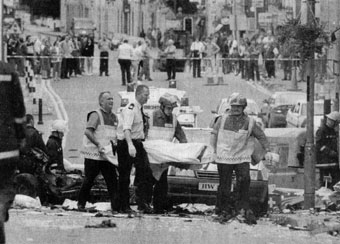
A NEW report just published, highlights for the first time the emotional stress suffered by medical staff who treated the victims of the Omagh bomb.
Frontline staff at Tyrone County Hospital on August 15,1998 and the months after that, were exposed to the most unimaginable trauma, grief and human suffering, but as with every working day as a hospital nurse or doctor, the emotional needs of the staff came far down the priority list.
Staff became trauma victims themselves and as the report's author, Dr Selwyn Black, a lecturer in counselling at the University of Ulster found, the experience from trauma is a long-term one, the negative effects of which, taking many forms.
The report found that people may have become isolated from their social world or their personal and professional beliefs and values were undermined to the extent where they were unable to continue working.
Dr Selwyn met several middle aged medical emergency staff who left the profession after the Omagh bomb. They told him that they had worked in difficult situations all through the Troubles and the Omagh bomb was just one experience too many.
He said "They had been exposed to some of the worst outrages of the Troubles during their working lives and the Omagh bombing was just one experience too many. They described their feelings as their emotional jugs filled to running over."
Dr Selwyn also found that staff working through the Omagh bomb adopted either a defensive/avoidance coping style or an over involved/open one.
His report is the first of its kind carried out in Northern Ireland and will be used as a framework for measuring the intensity of trauma suffered by doctors, nurses, psychologists and other staff.
Describing the events of that day Dr Irfran Hassan, GP at Omagh Health Centre said staff came from all over Northern Ireland, the South and calls even came from England and from gynaecologists offering their assistance.
"It had a large impact on people working at all the facilities especially the nursing staff. Young doctors and nurses would never have seen such devastation, chaos or the sheer numbers in their working lives."
Over 300 people came to the Health Centre that day. Dr Hassan, who was an army doctor in Pakistan, maintains nothing could have prepared him, or anyone else, for what they saw that day. "No amount of medical training can prepare you," he said, "I worked in situations of armed combat. When two armies fight there is always a reason, or so you tell yourself. But this time there was no reason you were treating innocent bystanders."
By the following day the Sperrin Lakeland Trust had already set up a counselling service for staff. Help was on hand from several voluntary agencies and areas were set up in the hospital for staff to talk to someone in confidence. "The common thread between staff at that stage was "why?", why Omagh, why on a busy Saturday afternoon because there was no logic, rhyme or reason to it all," Doctor Hassan recalls. "But in the immediate aftermath, instead of feeling down or low, staff were actually energised by the task. They were asked to take up a professional job and they took the challenge.
"Yes, there was a lot of panic, grief, shock, anguish," he adds, "but there was no time to reflect on all of that. For some the reflection started the next day and anger set in. People, reacted differently." Dr Hassan lost eight practice patients to the Omagh bomb and had the sad task of visiting all the families. "Words dried up," he said I could not say anything but just let the people cry." He suffered personally too. "The knock-on effect is impossible to quantify. Simple pleasures in life were no longer enjoyable. My wife told to me some weeks after the bomb that I didn't smile anymore."
When asked if he smiles now he replies calmly, "I found consolation in prayer, in my wife and my children. But I have to relive it in some form every day, for example, I receive one or two letters a day about compensation. This one is about a lady who lost her sight and I must now go through her file, go over all her injuries, assessments, and progress. It's the same for staff on the psychiatric wards, or in occupational therapy.
"It's not enough for people to tell you not to get involved with your patients because of course you have to. They are innocent people."
It took from six months to a year before things got back to normal at the hospital and Dr Hassan praises the Trust who he says were very sympathetic to the ordeal medical staff experienced. He explained that anyone who wanted to retire were released, anyone who needed time off were facilitated, counselling was made available, allowances made. However, Dr Hassan also recognises the power of work and keeping the mind occupied.
"Staff passed through a stage of talking to each other. They've gone through that stage now and would only talk about it today if there was a stark reminder or some reason to make a direct reference to the bomb. If the situation warranted it they would deal with it.
"The human mind," he said, "has a great propensity to forget what it wants to and that is a good thing because if we couldn't do that none of us would be functioning now."
BY ZOE TUNNEY
A NEW report just published, highlights for the first time the emotional stress suffered by medical staff who treated the victims of the Omagh bomb.
Frontline staff at Tyrone County Hospital on August 15,1998 and the months after that, were exposed to the most unimaginable trauma, grief and human suffering, but as with every working day as a hospital nurse or doctor, the emotional needs of the staff came far down the priority list.
Staff became trauma victims themselves and as the report's author, Dr Selwyn Black, a lecturer in counselling at the University of Ulster found, the experience from trauma is a long-term one, the negative effects of which, taking many forms.
The report found that people may have become isolated from their social world or their personal and professional beliefs and values were undermined to the extent where they were unable to continue working.
Dr Selwyn met several middle aged medical emergency staff who left the profession after the Omagh bomb. They told him that they had worked in difficult situations all through the Troubles and the Omagh bomb was just one experience too many.
He said "They had been exposed to some of the worst outrages of the Troubles during their working lives and the Omagh bombing was just one experience too many. They described their feelings as their emotional jugs filled to running over."
Dr Selwyn also found that staff working through the Omagh bomb adopted either a defensive/avoidance coping style or an over involved/open one.
His report is the first of its kind carried out in Northern Ireland and will be used as a framework for measuring the intensity of trauma suffered by doctors, nurses, psychologists and other staff.
Describing the events of that day Dr Irfran Hassan, GP at Omagh Health Centre said staff came from all over Northern Ireland, the South and calls even came from England and from gynaecologists offering their assistance.
"It had a large impact on people working at all the facilities especially the nursing staff. Young doctors and nurses would never have seen such devastation, chaos or the sheer numbers in their working lives."
Over 300 people came to the Health Centre that day. Dr Hassan, who was an army doctor in Pakistan, maintains nothing could have prepared him, or anyone else, for what they saw that day. "No amount of medical training can prepare you," he said, "I worked in situations of armed combat. When two armies fight there is always a reason, or so you tell yourself. But this time there was no reason you were treating innocent bystanders."
By the following day the Sperrin Lakeland Trust had already set up a counselling service for staff. Help was on hand from several voluntary agencies and areas were set up in the hospital for staff to talk to someone in confidence. "The common thread between staff at that stage was "why?", why Omagh, why on a busy Saturday afternoon because there was no logic, rhyme or reason to it all," Doctor Hassan recalls. "But in the immediate aftermath, instead of feeling down or low, staff were actually energised by the task. They were asked to take up a professional job and they took the challenge.
"Yes, there was a lot of panic, grief, shock, anguish," he adds, "but there was no time to reflect on all of that. For some the reflection started the next day and anger set in. People, reacted differently." Dr Hassan lost eight practice patients to the Omagh bomb and had the sad task of visiting all the families. "Words dried up," he said I could not say anything but just let the people cry." He suffered personally too. "The knock-on effect is impossible to quantify. Simple pleasures in life were no longer enjoyable. My wife told to me some weeks after the bomb that I didn't smile anymore."
When asked if he smiles now he replies calmly, "I found consolation in prayer, in my wife and my children. But I have to relive it in some form every day, for example, I receive one or two letters a day about compensation. This one is about a lady who lost her sight and I must now go through her file, go over all her injuries, assessments, and progress. It's the same for staff on the psychiatric wards, or in occupational therapy.
"It's not enough for people to tell you not to get involved with your patients because of course you have to. They are innocent people."
It took from six months to a year before things got back to normal at the hospital and Dr Hassan praises the Trust who he says were very sympathetic to the ordeal medical staff experienced. He explained that anyone who wanted to retire were released, anyone who needed time off were facilitated, counselling was made available, allowances made. However, Dr Hassan also recognises the power of work and keeping the mind occupied.
"Staff passed through a stage of talking to each other. They've gone through that stage now and would only talk about it today if there was a stark reminder or some reason to make a direct reference to the bomb. If the situation warranted it they would deal with it.
"The human mind," he said, "has a great propensity to forget what it wants to and that is a good thing because if we couldn't do that none of us would be functioning now."
Further Information
Publisher: ULSTER HERALD
Ref: UH/1557
Published Date: 31-Jul-03
Related Images