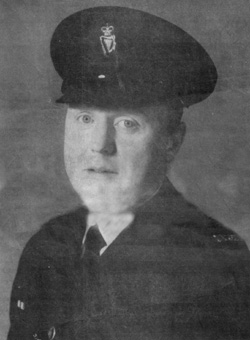
SENIOR POLICEMAN TELLS OF HORROR AT SCENE OF EXPLOSION
Senior policeman tells of horror at scene of explosion
By JACQUELINE COURTNEY
A POLICE officer struggled to hold back tears as he recalled the full horrors of the Omagh bomb and the desperate moment he believed his baby daughter was one of the many victims. His voice trembling with emotion, Sergeant Phillip Marshall recalled looking into the 'window of a wrecked shop after the blast and seeing the body of a little toddler lying in the window believing it was his daughter.
Trying to compose himself, after accepting a glass of water, Sergeant Marshall was still visibly shaken, but refused to take advantage of the offer of an adjournment by the Coroner.
He preferred to continue on with his distressing evidence as he graphically relived the full horrors of that terrible afternoon.
He was the senior police officer at the scene who was involved in the evacuation process.
He told of suddenly hearing a "very loud bang" and seeing a huge plume of grey smoke or dust coming from ground level at the far end of Market Street.
As he ran past Supervalu he saw a man lying on the road with serious facial injuries.
"There were other people whose hair and clothing were on fire. The scale of the numbers of injured was beginning to sink in and I felt deeply shocked," he said.
As he arrived at the seat of the explosion, in the vicinity of SD Kells clothes shop, he observed a large part of a vehicle in the middle of the road which was on fire.
"There was horrendous screaming from injured people. Intruder alarm bells were ringing and people were begging for help," he said.
He observed pieces of bodies strewn all over market Street. But his attention was drawn to a large part of the burning vehicle, recalling "there were people trapped under it and lying right beside it - literally burning to death."
He was handed a large fire extinguisher by a member of the public which he used to extinguish the fire.
He then pulled at least two people lying on the ground away from it.
Looking around to observe the scene he saw numerous seriously injured casualties and persons who were obviously dead. He then moved up and down the street "grabbing uninjured members of the public" and police and tried to allocate two people to remain with each of the seriously injured casualties.
He could not put an accurate figure on the amount of seriously injured as "there were too many."
He directed that the seriously injured be conveyed down to the junction of Market Street/Dublin Road and Drumragh Avenue.
"In the initial few minutes there was a serious shortage of vehicles to convey casualties to hospital so he instructed members of the public to remain with the casualties and ensure they were conveyed to hospital.
He told of trying to switch off as a human being and even though he was traumatised he was acutely aware he needed to remain as level headed and coherent as possible.
He knew he had to relay information and give directions to those at the scene. During this time he also made various radio transmissions requesting as many ambulance, doctors and nurses as they could get. He also gave advice to members of the public on basic first aid who were attending the seriously injured.
Deciding he had to take charge of the scene, the only way he could get people's attention, above the noise of the mayhem, was to stand in the middle of the road and yell at the top of his voice.
He instructed everyone to go to the bottom of the street where he then ordered for a white tape to be put up across the junction at Market Street. He then instructed police to form a line in front of the white tape. He divided the police line in two halves and instructed them to carry out a systematic search of all the buildings in the immediate vicinity and to try and locate any further living casualties.
He later observed a male person whom he now knew to be Captain Sam Potter, attached to the Royal Irish Regiment in Omagh. Together they systematically went to each body and when life was pronounced extinct he instructed each individual body to be covered and placed on a stretcher. These bodies were then moved by a team of men made up of police, fire and ambulance staff to Market Street Mews.
In his presence, Captain Potter examined and declared life extinct on twenty bodies and one body part.
"I found this part of my duty to be very distressing," admitted the officer.
He said that all bodies were escorted by police officers to the temporary mortuary at Lisanelly Military Barracks.
Knowing that continuity was important, he reluctantly ordered his "body team" to accompany him into the mortuary and help unravel, strip and examine each deceased person.
"In the cold atmosphere of the temporary mortuary and my knowing some of the dead I found this particularly distressing," he said.
He systematically examined each body for descriptions and other clues to assist with identification.
He returned to Omagh RUC station for debriefing and terminated duty at 1.00am the next morning Sunday August 16th 1998.
After concluding his evidence in chief, Sergeant Marshall said he would like to say something to the families, "You have got to understand the mayhem on the street. People were begging for help but you had to move on.
"Quick decisions had to be made and if people were able to talk it was decided that they were not as had as the person who was lying there not able to talk.
He assured family members that their loved ones were never left on their own.
"I tried to allocate two people to each body at all times and no one died alone," be said.
Again trying to compose himself, his voice almost gave way as he said: "Everyone was treated with the utmost dignity."
He paid tribute to his own officers and said he was proud of what they did that day. He also praised the Fire and Ambulance Services for all they did and extended his thanks to the people of Omagh for their "tremendous" assistance.
"There was a lot of humanity shown that day by so many people immediately after the bomb," added the witness.
Coroner John Leckey said he was sure that the people of Omagh would be indebted to him and his officers for what they did.
By JACQUELINE COURTNEY
A POLICE officer struggled to hold back tears as he recalled the full horrors of the Omagh bomb and the desperate moment he believed his baby daughter was one of the many victims. His voice trembling with emotion, Sergeant Phillip Marshall recalled looking into the 'window of a wrecked shop after the blast and seeing the body of a little toddler lying in the window believing it was his daughter.
Trying to compose himself, after accepting a glass of water, Sergeant Marshall was still visibly shaken, but refused to take advantage of the offer of an adjournment by the Coroner.
He preferred to continue on with his distressing evidence as he graphically relived the full horrors of that terrible afternoon.
He was the senior police officer at the scene who was involved in the evacuation process.
He told of suddenly hearing a "very loud bang" and seeing a huge plume of grey smoke or dust coming from ground level at the far end of Market Street.
As he ran past Supervalu he saw a man lying on the road with serious facial injuries.
"There were other people whose hair and clothing were on fire. The scale of the numbers of injured was beginning to sink in and I felt deeply shocked," he said.
As he arrived at the seat of the explosion, in the vicinity of SD Kells clothes shop, he observed a large part of a vehicle in the middle of the road which was on fire.
"There was horrendous screaming from injured people. Intruder alarm bells were ringing and people were begging for help," he said.
He observed pieces of bodies strewn all over market Street. But his attention was drawn to a large part of the burning vehicle, recalling "there were people trapped under it and lying right beside it - literally burning to death."
He was handed a large fire extinguisher by a member of the public which he used to extinguish the fire.
He then pulled at least two people lying on the ground away from it.
Looking around to observe the scene he saw numerous seriously injured casualties and persons who were obviously dead. He then moved up and down the street "grabbing uninjured members of the public" and police and tried to allocate two people to remain with each of the seriously injured casualties.
He could not put an accurate figure on the amount of seriously injured as "there were too many."
He directed that the seriously injured be conveyed down to the junction of Market Street/Dublin Road and Drumragh Avenue.
"In the initial few minutes there was a serious shortage of vehicles to convey casualties to hospital so he instructed members of the public to remain with the casualties and ensure they were conveyed to hospital.
He told of trying to switch off as a human being and even though he was traumatised he was acutely aware he needed to remain as level headed and coherent as possible.
He knew he had to relay information and give directions to those at the scene. During this time he also made various radio transmissions requesting as many ambulance, doctors and nurses as they could get. He also gave advice to members of the public on basic first aid who were attending the seriously injured.
Deciding he had to take charge of the scene, the only way he could get people's attention, above the noise of the mayhem, was to stand in the middle of the road and yell at the top of his voice.
He instructed everyone to go to the bottom of the street where he then ordered for a white tape to be put up across the junction at Market Street. He then instructed police to form a line in front of the white tape. He divided the police line in two halves and instructed them to carry out a systematic search of all the buildings in the immediate vicinity and to try and locate any further living casualties.
He later observed a male person whom he now knew to be Captain Sam Potter, attached to the Royal Irish Regiment in Omagh. Together they systematically went to each body and when life was pronounced extinct he instructed each individual body to be covered and placed on a stretcher. These bodies were then moved by a team of men made up of police, fire and ambulance staff to Market Street Mews.
In his presence, Captain Potter examined and declared life extinct on twenty bodies and one body part.
"I found this part of my duty to be very distressing," admitted the officer.
He said that all bodies were escorted by police officers to the temporary mortuary at Lisanelly Military Barracks.
Knowing that continuity was important, he reluctantly ordered his "body team" to accompany him into the mortuary and help unravel, strip and examine each deceased person.
"In the cold atmosphere of the temporary mortuary and my knowing some of the dead I found this particularly distressing," he said.
He systematically examined each body for descriptions and other clues to assist with identification.
He returned to Omagh RUC station for debriefing and terminated duty at 1.00am the next morning Sunday August 16th 1998.
After concluding his evidence in chief, Sergeant Marshall said he would like to say something to the families, "You have got to understand the mayhem on the street. People were begging for help but you had to move on.
"Quick decisions had to be made and if people were able to talk it was decided that they were not as had as the person who was lying there not able to talk.
He assured family members that their loved ones were never left on their own.
"I tried to allocate two people to each body at all times and no one died alone," be said.
Again trying to compose himself, his voice almost gave way as he said: "Everyone was treated with the utmost dignity."
He paid tribute to his own officers and said he was proud of what they did that day. He also praised the Fire and Ambulance Services for all they did and extended his thanks to the people of Omagh for their "tremendous" assistance.
"There was a lot of humanity shown that day by so many people immediately after the bomb," added the witness.
Coroner John Leckey said he was sure that the people of Omagh would be indebted to him and his officers for what they did.
Further Information
Publisher: ULSTER HERALD
Ref: UH/1500
Published Date: 05-Oct-00
Related Images