SURGEON DESCRIBES HOSPITAL AS WAR ZONE
Surgeon describes hospital as war zone
By JOHN McCUSKER
A MAJOR disaster of battlefield proportions was how the senior surgeon on duty at Tyrone County Hospital described the immediate aftermath of the bombing tragedy.
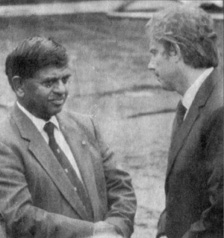
Scenes of sheer pandemonium witnessed at Tyrone County Hospital Consultant surgeon Dominic Pinto told of witnessing war zone scenes of 'sheer pandemonium' with the injured laid out in corridors and the accident and radiology departments full to capacity.
"The scale of the disaster was unprecedented in the history of the Troubles," he told a hushed inquest room, adding that many more would have died had it not been for the work of medics.
Giving evidence during the inquest on Julia Hughes, Mr Pinto recounted how he travelled immediately to the hospital after hearing the bomb explode. A major incident plan had already been prepared and staff had been issued with detailed instructions of what to do in such instances.
"The roads to the hospital were choc-a-bloc, bumper to bumper," he said. "I had to drive on the wrong side of the road with my lights on to get there."
On arrival at the County, all appeared calm and quiet, "but what greeted me when I got to the main corridor was sheer pandemonium," he told Coroner John Leckey
"Injured people were lying in the corridor, the accident department and radiology department were filled to capacity and more injured were arriving."
Within 45 minutes of the bomb exploding a total of 240 casualties had been taken to the hospital the first arriving within five minutes. At that time on the Saturday afternoon, the A&E department had only its normal quota of staff on duty.
Mr Pinto said "I took control and moved the walking wounded into out-patients. Those badly injured who were lying on trolleys or on the floor were moved into four wards and the most severely injured into intensive care."
Many of those hurt had suffered blast and shrapnel injuries with relatively few sustaining head injuries.
The surgeon alerted specialists in other hospitals to expect casualties before deciding which of the injured were to remain for treatment or who was to be transferred.
"I did a quick assessment of every patient in accident and emergency and it was only then that I could attend to the most severely injured in ICU because I was the only experienced surgeon on duty.
"If it had not been for the dedication of the nursing staff, GPs who arrived to help and junior doctors, the final outcome would have been worse," he said.
Mr Pinto said he was later joined by a surgeon colleague from the South Tyrone Hospital in Dunganon.
He explained how the scale of the tragedy had been unique in a number of features - the high number of elderly, women and children among the injured and the high number of those wounded by flying shrapnel.
Because of its close proximity to the scene of the explosion, the hospital soon became the 'centre of the incident' and staff of duty found themselves having to deal with relatives who had been caught up in the explosion.
Mr Pinto had previously been awarded an QBE for his work in helping survivors of the 1988 Ballygawley bus bombing which killed eight soldiers and injured a further 28. He also received numerous commendations for his work following the Market Street attack.
By JOHN McCUSKER
A MAJOR disaster of battlefield proportions was how the senior surgeon on duty at Tyrone County Hospital described the immediate aftermath of the bombing tragedy.
Scenes of sheer pandemonium witnessed at Tyrone County Hospital Consultant surgeon Dominic Pinto told of witnessing war zone scenes of 'sheer pandemonium' with the injured laid out in corridors and the accident and radiology departments full to capacity.
"The scale of the disaster was unprecedented in the history of the Troubles," he told a hushed inquest room, adding that many more would have died had it not been for the work of medics.
Giving evidence during the inquest on Julia Hughes, Mr Pinto recounted how he travelled immediately to the hospital after hearing the bomb explode. A major incident plan had already been prepared and staff had been issued with detailed instructions of what to do in such instances.
"The roads to the hospital were choc-a-bloc, bumper to bumper," he said. "I had to drive on the wrong side of the road with my lights on to get there."
On arrival at the County, all appeared calm and quiet, "but what greeted me when I got to the main corridor was sheer pandemonium," he told Coroner John Leckey
"Injured people were lying in the corridor, the accident department and radiology department were filled to capacity and more injured were arriving."
Within 45 minutes of the bomb exploding a total of 240 casualties had been taken to the hospital the first arriving within five minutes. At that time on the Saturday afternoon, the A&E department had only its normal quota of staff on duty.
Mr Pinto said "I took control and moved the walking wounded into out-patients. Those badly injured who were lying on trolleys or on the floor were moved into four wards and the most severely injured into intensive care."
Many of those hurt had suffered blast and shrapnel injuries with relatively few sustaining head injuries.
The surgeon alerted specialists in other hospitals to expect casualties before deciding which of the injured were to remain for treatment or who was to be transferred.
"I did a quick assessment of every patient in accident and emergency and it was only then that I could attend to the most severely injured in ICU because I was the only experienced surgeon on duty.
"If it had not been for the dedication of the nursing staff, GPs who arrived to help and junior doctors, the final outcome would have been worse," he said.
Mr Pinto said he was later joined by a surgeon colleague from the South Tyrone Hospital in Dunganon.
He explained how the scale of the tragedy had been unique in a number of features - the high number of elderly, women and children among the injured and the high number of those wounded by flying shrapnel.
Because of its close proximity to the scene of the explosion, the hospital soon became the 'centre of the incident' and staff of duty found themselves having to deal with relatives who had been caught up in the explosion.
Mr Pinto had previously been awarded an QBE for his work in helping survivors of the 1988 Ballygawley bus bombing which killed eight soldiers and injured a further 28. He also received numerous commendations for his work following the Market Street attack.
Further Information
Publisher: ULSTER HERALD
Ref: UH/1454
Published Date: 21-Sep-00
Related Images