DIARY OF EVENTS AT COUNTY RECALLED
Diary of events at County recalled
BY: JOHN McCUSKER
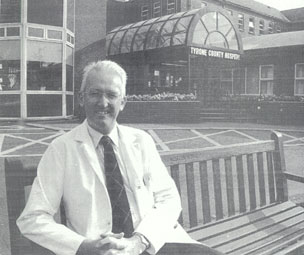
MANY more lives could have been lost following the Omagh bombing, had it not been for the efforts of trained medical staff at Tyrone County Hospital and the back-up of other hospitals in the area, a leading consultant has claimed.
The bombing, just over five weeks ago, resulted in almost 400 casualties with one in three of those hurt, being admitted to hospitals right across the North.
The final tally of those caught up in the blast was revealed during the monthly meeting of the Western Health and Social Services Council by Clive Russell, Medical Director of Sperrin Lakeland Trust.
But the consultant who tended dozens of those injured also warned that the psychological scars of the disaster will live on in many forms for years to come.
Members attending the Council's first meeting since the bombing, observed a minute's silence in memory of those who died in the tragedy.
At the outset of the meeting, Chairman, Frank Hughes extended sympathy to two families who had connections with the Council and who had been directly affected by the bombing.
He offered condolences to former secretary, Doreen McFarland, whose daughter Samantha died in the atrocity, and also tendered sympathy and best wishes to Council member, Grace White, whose daughter-in-law was seriously injured in the blast.
Introducing Mr Russell who presented a reflection on the County Hospital's response to the bombing Mr Hughes also paid tribute to the role of the emergency services in the aftermath of what he described as "this heinous crime."
Outlining details of the 'County's' response throughout the first 30 hours following the blast, Mr Russell said the incident had had a devastating effect on the entire local community.
As well as leading to the deaths of 29 people and 2 unborn children, on that day there was a total of 382 casualties of the bomb.
Breaking down the figures of all those who were treated at each of the hospitals involved in the emergency plan, the consultant said he thought it important to point out that many of those injured had travelled themselves to other hospitals in the region for treatment.
"Seventy-one people were directed straight to the Erne Hospital, Altnagelvin had 30 people and the South Tyrone Hospital received 26.
"So the full burden was not just felt at the Tyrone County Hospital, but the other hospitals in the Western Board also dealt with the casualties."
Of the 382 casualties, one-in-three - a total of 128 -were admitted to hospital, and by any scale that was classed as a "major disaster" he added.
In addition, many patients who were admitted to hospital were then transferred for specialist treatment. And without the ability to transfer those seriously injured, there was no doubt many more would have died.
Prior to the explosion, it had been a normal, quiet Saturday afternoon at the 'County,' with only a handful of resident medical staff and the normal nursing staff on duty.
Following the blast, Sr Bridie McMenamin, nursing co-ordinator for the emergency, made her way to the switchboard and activated the hospital's major disaster plan.
She then went to open the Outpatients Department, which was to be used to treat casualties. But in that short space of time, two bus loads of injured had already arrived at the hospital.
"We were totally unprepared for what happened" said Mr Russell.
"Because of the proximity of the bomb and the fact that people had literally been put into cars, Sr McMenamin said, as she stood there, 30 people were lying on the ground around her."
Although communication systems had been badly affected by the blast, nurses, former nurses and medical personnel arrived at the hospital within minutes.
Dr Peter Garrett was the physician on call, consultant surgeon, Dominic Pinto was also on duty and an anaesthetist from Altnagelvin was also in the hospital at the time.
But within three-quarters of an hour, around 20 doctors and many more nurses had been mobilised to treat those arriving.
"I think the fact that so many nurses and doctors turned up was eventually our salvation. By that stage we had something like 200 casualties on our doorstep.
"They were arriving literally wave upon wave, in cars, buses and vans. People were being carried in on doors, some arriving in police Landrovers. It was just sheer bedlam" added Mr Russell.
Adding to the mayhem were the hundreds of relatives who rushed to the hospital, and at one point the consultant estimated there were upwards on one thousand people cramming the corridors and wards anxiously seeking loved ones.
That situation lasted until approximately 8pm, and during those hours staff were faced with some horrific injuries inflicted on casualties, comprised mainly of women and young children.
Some had suffered severe shrapnel injuries involving loss of limbs, others had serious head and chest injuries. Many had sustained severe burns, while there were also many cases of serious abdominal wounds and eye injuries.
Prioritisation of injuries meant the most serious cases were transferred to the hospital's intensive care unit, while Wards 5, 6, 7 and 8 were filled in less than 20 minutes.
Casualties also filled the ambulance bay, the floors of the Accident and Emergency unit and Outpatients Department.
Children were transferred to the paediatric ward and the hospital's ENT department was also opened.
Those suffering from minor injuries were treated at the hospital's Post Graduate Centre, while the Day Procedure Unit was utilised as a temporary mortuary.
Patients were assessed into three groups those who had to be transferred to Belfast or Derry, those requiring immediate surgery, and those who required observation and treatment at either the 'County' or the Erne Hospital.
"At ward level, all patients were assigned to an individual nurse who remained with that patient.
"Basic resuscitation was mostly done by our own staff who had all been trained in that capacity, and I think that was another factor in our salvation" said Mr Russell.
Following appeals through the media, staff quickly arrived at the hospital and three theatres were opened to treat the injured.
Army helicopters were mobilised to transfer those seriously injured to specialist units at other hospitals. And medical teams from the
1st Battalion Queen's Lancashire Regiment assisted in a total of nine flights involving the transferral of 33 patients.
"I was told the quickest journey by helicopter to Belfast was 22 minutes, and that was crucial in saving lives" added the consultant.
Within hours, a decision was taken to open the Leisure Centre as an incident room where relatives were directed to.
That move eased the situation within the hospital itself, where 'doormen' had been posted at the entrance to each ward in an effort to control the influx of friends and families seeking information on those hurt.
As casualties were assessed, those suffering from orthopaedic injuries were transferred to Altnagelvin Hospital; those with more serious abdominal and head injuries were sent to the Royal Victoria Hospital in Belfast, while patients suffering from burns were flown to other specialist units for treatment.
During what Mr Russell described as the "second phase" of the operation lasting from approximately 8pm until 1.30am patients were stabilised in the 'County'
Consultant surgeon, Dominic Pinto and his counterpart from the South Tyrone Hospital in Dungannon, Rodney Payton worked continuously in the operating theatres.
A third theatre was staffed by volunteer surgeons, while 14 anaesthetists "who arrived from everywhere" proved "invaluable" in the battle to save lives.
"Around lam, the last helicopter left for the Royal taking a young patient accompanied by a surgeon whom the police had brought down from Belfast.
"A further patient was then transferred by ambulance to the RVH, accompanied by a neuro-surgical registrar who happened to be in Sligo when he heard about the bomb and drove to Omagh and offered to help.
"The amount of assistance was just overwhelming" added Mr Russell.
A "follow-up" phase ensued throughout Sunday, involving a series of ward rounds and further transfer of patients requiring specialist treatment.
The day also saw the first round of visits by politicians and dignitaries, with Deputy Prime Minister, John Prescott calling in on staff at the 'County'
But Mr Russell's lasting memories of the tragedy were reserved for those who offered to help throughout the long and arduous hours and days following the tragedy.
"I think I will always remember with pride, the generosity, compassion and sheer decency of those who came to the assistance of the Omagh people that day.
"All those people locked together in one enormous relief operation which I believe was highly successful.
"There was a phrase which was used several times by Mr Prescott during the visit. He said: 'When we need it, the NHS never lets us down.' And he was right" concluded Mr Russell.
BY: JOHN McCUSKER
MANY more lives could have been lost following the Omagh bombing, had it not been for the efforts of trained medical staff at Tyrone County Hospital and the back-up of other hospitals in the area, a leading consultant has claimed.
The bombing, just over five weeks ago, resulted in almost 400 casualties with one in three of those hurt, being admitted to hospitals right across the North.
The final tally of those caught up in the blast was revealed during the monthly meeting of the Western Health and Social Services Council by Clive Russell, Medical Director of Sperrin Lakeland Trust.
But the consultant who tended dozens of those injured also warned that the psychological scars of the disaster will live on in many forms for years to come.
Members attending the Council's first meeting since the bombing, observed a minute's silence in memory of those who died in the tragedy.
At the outset of the meeting, Chairman, Frank Hughes extended sympathy to two families who had connections with the Council and who had been directly affected by the bombing.
He offered condolences to former secretary, Doreen McFarland, whose daughter Samantha died in the atrocity, and also tendered sympathy and best wishes to Council member, Grace White, whose daughter-in-law was seriously injured in the blast.
Introducing Mr Russell who presented a reflection on the County Hospital's response to the bombing Mr Hughes also paid tribute to the role of the emergency services in the aftermath of what he described as "this heinous crime."
Outlining details of the 'County's' response throughout the first 30 hours following the blast, Mr Russell said the incident had had a devastating effect on the entire local community.
As well as leading to the deaths of 29 people and 2 unborn children, on that day there was a total of 382 casualties of the bomb.
Breaking down the figures of all those who were treated at each of the hospitals involved in the emergency plan, the consultant said he thought it important to point out that many of those injured had travelled themselves to other hospitals in the region for treatment.
"Seventy-one people were directed straight to the Erne Hospital, Altnagelvin had 30 people and the South Tyrone Hospital received 26.
"So the full burden was not just felt at the Tyrone County Hospital, but the other hospitals in the Western Board also dealt with the casualties."
Of the 382 casualties, one-in-three - a total of 128 -were admitted to hospital, and by any scale that was classed as a "major disaster" he added.
In addition, many patients who were admitted to hospital were then transferred for specialist treatment. And without the ability to transfer those seriously injured, there was no doubt many more would have died.
Prior to the explosion, it had been a normal, quiet Saturday afternoon at the 'County,' with only a handful of resident medical staff and the normal nursing staff on duty.
Following the blast, Sr Bridie McMenamin, nursing co-ordinator for the emergency, made her way to the switchboard and activated the hospital's major disaster plan.
She then went to open the Outpatients Department, which was to be used to treat casualties. But in that short space of time, two bus loads of injured had already arrived at the hospital.
"We were totally unprepared for what happened" said Mr Russell.
"Because of the proximity of the bomb and the fact that people had literally been put into cars, Sr McMenamin said, as she stood there, 30 people were lying on the ground around her."
Although communication systems had been badly affected by the blast, nurses, former nurses and medical personnel arrived at the hospital within minutes.
Dr Peter Garrett was the physician on call, consultant surgeon, Dominic Pinto was also on duty and an anaesthetist from Altnagelvin was also in the hospital at the time.
But within three-quarters of an hour, around 20 doctors and many more nurses had been mobilised to treat those arriving.
"I think the fact that so many nurses and doctors turned up was eventually our salvation. By that stage we had something like 200 casualties on our doorstep.
"They were arriving literally wave upon wave, in cars, buses and vans. People were being carried in on doors, some arriving in police Landrovers. It was just sheer bedlam" added Mr Russell.
Adding to the mayhem were the hundreds of relatives who rushed to the hospital, and at one point the consultant estimated there were upwards on one thousand people cramming the corridors and wards anxiously seeking loved ones.
That situation lasted until approximately 8pm, and during those hours staff were faced with some horrific injuries inflicted on casualties, comprised mainly of women and young children.
Some had suffered severe shrapnel injuries involving loss of limbs, others had serious head and chest injuries. Many had sustained severe burns, while there were also many cases of serious abdominal wounds and eye injuries.
Prioritisation of injuries meant the most serious cases were transferred to the hospital's intensive care unit, while Wards 5, 6, 7 and 8 were filled in less than 20 minutes.
Casualties also filled the ambulance bay, the floors of the Accident and Emergency unit and Outpatients Department.
Children were transferred to the paediatric ward and the hospital's ENT department was also opened.
Those suffering from minor injuries were treated at the hospital's Post Graduate Centre, while the Day Procedure Unit was utilised as a temporary mortuary.
Patients were assessed into three groups those who had to be transferred to Belfast or Derry, those requiring immediate surgery, and those who required observation and treatment at either the 'County' or the Erne Hospital.
"At ward level, all patients were assigned to an individual nurse who remained with that patient.
"Basic resuscitation was mostly done by our own staff who had all been trained in that capacity, and I think that was another factor in our salvation" said Mr Russell.
Following appeals through the media, staff quickly arrived at the hospital and three theatres were opened to treat the injured.
Army helicopters were mobilised to transfer those seriously injured to specialist units at other hospitals. And medical teams from the
1st Battalion Queen's Lancashire Regiment assisted in a total of nine flights involving the transferral of 33 patients.
"I was told the quickest journey by helicopter to Belfast was 22 minutes, and that was crucial in saving lives" added the consultant.
Within hours, a decision was taken to open the Leisure Centre as an incident room where relatives were directed to.
That move eased the situation within the hospital itself, where 'doormen' had been posted at the entrance to each ward in an effort to control the influx of friends and families seeking information on those hurt.
As casualties were assessed, those suffering from orthopaedic injuries were transferred to Altnagelvin Hospital; those with more serious abdominal and head injuries were sent to the Royal Victoria Hospital in Belfast, while patients suffering from burns were flown to other specialist units for treatment.
During what Mr Russell described as the "second phase" of the operation lasting from approximately 8pm until 1.30am patients were stabilised in the 'County'
Consultant surgeon, Dominic Pinto and his counterpart from the South Tyrone Hospital in Dungannon, Rodney Payton worked continuously in the operating theatres.
A third theatre was staffed by volunteer surgeons, while 14 anaesthetists "who arrived from everywhere" proved "invaluable" in the battle to save lives.
"Around lam, the last helicopter left for the Royal taking a young patient accompanied by a surgeon whom the police had brought down from Belfast.
"A further patient was then transferred by ambulance to the RVH, accompanied by a neuro-surgical registrar who happened to be in Sligo when he heard about the bomb and drove to Omagh and offered to help.
"The amount of assistance was just overwhelming" added Mr Russell.
A "follow-up" phase ensued throughout Sunday, involving a series of ward rounds and further transfer of patients requiring specialist treatment.
The day also saw the first round of visits by politicians and dignitaries, with Deputy Prime Minister, John Prescott calling in on staff at the 'County'
But Mr Russell's lasting memories of the tragedy were reserved for those who offered to help throughout the long and arduous hours and days following the tragedy.
"I think I will always remember with pride, the generosity, compassion and sheer decency of those who came to the assistance of the Omagh people that day.
"All those people locked together in one enormous relief operation which I believe was highly successful.
"There was a phrase which was used several times by Mr Prescott during the visit. He said: 'When we need it, the NHS never lets us down.' And he was right" concluded Mr Russell.
Further Information
Publisher: ULSTER HERALD
Ref: UH/1152
Published Date: 24-Sep-98
Related Images