SHERIFF HANGS UP HIS SCALPEL
Sheriff hangs up his scalpel
BY: ROSETTA DONNELLY
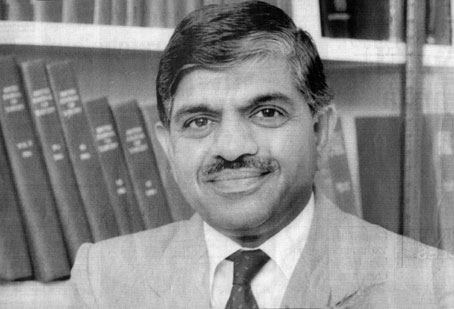
Dominic Pinto laid down his surgeon's scalpel this week bringing to an end a lifetime dedicated to the caring for the people of Tyrone. As consultant surgeon at the Tyrone County Hospital for the past 23 years, he has saved innumerable lives, undoubtedly the most widely known of which were in the aftermath of the Omagh bomb and the Ballygawley military bus bomb.
It was a career that cast him into the centre of the maelstrom that was the conflict in the North of Ireland, a place he first saw when he came here just over 20 years ago. However, in retirement, Dominic Pinto plans to retain the strong roots he has established in his adopted community. He will remain in Omagh and continue to take part in community activities he has supported down the years.
When he first joined the staff at the Tyrone County Hospital in the late 1970s, Dominic Pinto made his home in Omagh along with his wife Olga and their two adopted children. The couple went on to have another son, Boris.
When he talks of his family, Dominic Pinto glows with pride. Last year, while he garnered many new honours for himself - including the honorary position of Sheriff of County Tyrone it was his youngest son's achievements as a former student of Omagh CBS and as a member of the Ulster Youth Orchestra that loomed largest in his life. In retirement, clearly, family ties will bind the outgoing surgeon strongly to his new home in Omagh and all the friends he has made here.
Yet, when he came first to Omagh, the new surgeon immersed himself into the life of a busy hospital familiarising himself with the practices of it. At that time there were just two surgeons, himself and Mr Maltby. He said they were supported by a 'nursing staff which was second to none'.
"The nursing staff at the Tyrone County Hospital have always been nothing short of superb in their attitude to their work and that still continues to be the case".
Outside of work, Dominic joined the Rotary Club, of which he is a member to the present day. It is a club which gives him great satisfaction because of the global nature of the charity it espouses. For the past year and more, Dominic has been a prominent member of the Campaign for the Rural West and has been actively supporting the campaign to locate the new hospital near Omagh.
He has concerns about where the new hospital for the Omagh and Fermanagh area might be located. "I personally believe that the hospital should be in the Omagh district as it is more central. A hospital in Omagh can serve the people of Mid-Tyrone who are going to lose out badly if Enniskillen is the location".
"I do not think the Tyrone County Hospital site is at all suitable, but the Tyrone and Fermanagh (Hospital) land is available and with the proximity of the proposed remaining part of the throughpass, it is the best location".
Dominic Pinto was born in Goa in 1937 to a family of nine. His father worked in the civil service and on occasions the family had to move house to his new place of work. The family's first move was to Kenya where Dominic went to school and grew up.
At the age of 16 he went to London to stay with friends to study for his 'A' levels. He passed with flying colours.
He then went on to study medicine at the Royal London Medical School in and upon graduating, he became a member of the Royal College of Surgeons of England and Scotland. He was able to secure work in London, Cambridge and Ipswich before commencing post graduate research at the Middlesex Hospital, in London.
For his thesis he researched Deep Vein Thrombosis and he presented his findings on the subject to London University in 1970. Such was the standard of his work, he was granted the Mastership of Surgery by the university. This was long before the condition was highlighted through findings about the risks of long-haul flights.
Dominic was then asked by London University to go to Kampala to teach postgraduate surgery. He agreed and during his term there he helped to develop the postgraduate programme for all Developing Countries.
Upon his return to the Medical Research Centre, Dominic joined the team of Sir Peter Medawar the Nobel Laureate working in the field of transplantation biology. This was to be a brilliant experience for the young doctor, as it was the early days of transplant surgery and methods were being investigated on how to reduce infection.
"While I was there, I was responsible for the treatment of breast cancer and the early implementation of chemotherapy.
"I also worked closely with radiologists in the pioneer work in CT scanning and ultrasound" he added.
Four years after joining, Dominic was appointed an honorary Consultant Surgeon to Northwick Park Hospital.
He left the hospital as a senior scientist and joined the NHS where he took a posting to Northern Ireland.
He joined the staff at the Tyrone County Hospital and embarked upon a mission to upgrade the hospital at every opportunity he could.
Although truly fulfilled with his medical work, Dominic found he had an eye for the structural development of the hospital and he often could be found down measuring a room for the purposes of extension or improvement. Had Dominic Pinto not have been a surgeon, he could well have been an architect such is his interest in the fabric of the hospital where he has worked for the past 20 years.
The first task he undertook was the A&E department which he said 'left a lot to be desired'. There was no radiologist on site: One came from Altnagelvin twice a week.
"When I first arrived, there were about four chairs in the waiting room and the whole thing was most inadequate."
He persuaded the powers-that-be to upgrade the department and the new present facility was opened in 1984.
There was scant if any teaching for young doctors, so the surgeon ran a teaching programme which ran for the next 13 years with local and invited speakers taking part. He managed to sell the idea of a need for a post-graduate centre and, through the help of people in the Omagh district and the Western Health Board, money was secured to finance the centre which is now situated at the front of the hospital. It was opened in 1986.
Dominic's other achievements include securing finance for the Sterile Supply Unit. He was a also instrumental in moving the physiotherapy department to its present site to ensure expansion of the radiology department so as to encourage full tune radiologists to the hospital.
The Renal Unit, which has been the jewel in the crown of the TCH, could have gone to Derry had it not been for the intervention of Dominic Pinto. He convinced the nephrologists in Belfast he that the hospital could be an equally viable site to have a satellite renal unit.
"Having won the argument of being the most central for the West, we handed over half of the old paediatric ward for the new unit but, quid pro quo, I ensured that we got an improved paediatric ward together with a new entrance to the hospital as we see it today."
Once during a visit to England, Dominic was in a hospital with very long corridors.
"They were so long they were using bicycles to get around," he laughed.
At that English hospital, he noted the absence of workmen. On enquiry, he was told that the ceilings had been built with a catwalk for the engineers to work without disrupting the workings in the hospital.
"I thought it was a great idea and came home and encouraged management to do the same with the County which also has high ceilings."
In the last 12 years, the consultant surgeon has taken on an international commitment in the training of overseas surgeons in Britain. With the Royal Colleges he has had one or two sponsored surgeons from Bombay and Goa go to the County each year and then they continue their further education in the Northern Ireland training programme.
To date all have done extremely well and most have returned home to pursue their medical careers.
Users of the hospital will have noticed the continued changes in surgery with the advent of new ideas in management and the use of new technology. The surgeons have accepted the changes, put them into effect and used the new technology for the benefit of the people. The development of the day procedure unit has made the delivery of surgery in the modern context very productive, successful and safe for the patient.
Twenty years after arriving at the hospital, Dominic feels happy with what he has attained.
As Dominic looks towards his retirement, he is looking forward to spending more time with his family - his adopted children Anthony and Fiona, who are in their 30s and his son Boris who is studying medicine at Queen's. The first thing he intends to do when he finishes work tomorrow (Friday) is pack for his holiday which he and Olga are taking.
They are going to India where there is going to be a family reunion.
He is also planning on spending more time at his favourite sport of golf.
He will continue with his work with the Rotary Club and as Chief Sheriff of Tyrone and Deputy Lieutenant of Tyrone.
BY: ROSETTA DONNELLY
Dominic Pinto laid down his surgeon's scalpel this week bringing to an end a lifetime dedicated to the caring for the people of Tyrone. As consultant surgeon at the Tyrone County Hospital for the past 23 years, he has saved innumerable lives, undoubtedly the most widely known of which were in the aftermath of the Omagh bomb and the Ballygawley military bus bomb.
It was a career that cast him into the centre of the maelstrom that was the conflict in the North of Ireland, a place he first saw when he came here just over 20 years ago. However, in retirement, Dominic Pinto plans to retain the strong roots he has established in his adopted community. He will remain in Omagh and continue to take part in community activities he has supported down the years.
When he first joined the staff at the Tyrone County Hospital in the late 1970s, Dominic Pinto made his home in Omagh along with his wife Olga and their two adopted children. The couple went on to have another son, Boris.
When he talks of his family, Dominic Pinto glows with pride. Last year, while he garnered many new honours for himself - including the honorary position of Sheriff of County Tyrone it was his youngest son's achievements as a former student of Omagh CBS and as a member of the Ulster Youth Orchestra that loomed largest in his life. In retirement, clearly, family ties will bind the outgoing surgeon strongly to his new home in Omagh and all the friends he has made here.
Yet, when he came first to Omagh, the new surgeon immersed himself into the life of a busy hospital familiarising himself with the practices of it. At that time there were just two surgeons, himself and Mr Maltby. He said they were supported by a 'nursing staff which was second to none'.
"The nursing staff at the Tyrone County Hospital have always been nothing short of superb in their attitude to their work and that still continues to be the case".
Outside of work, Dominic joined the Rotary Club, of which he is a member to the present day. It is a club which gives him great satisfaction because of the global nature of the charity it espouses. For the past year and more, Dominic has been a prominent member of the Campaign for the Rural West and has been actively supporting the campaign to locate the new hospital near Omagh.
He has concerns about where the new hospital for the Omagh and Fermanagh area might be located. "I personally believe that the hospital should be in the Omagh district as it is more central. A hospital in Omagh can serve the people of Mid-Tyrone who are going to lose out badly if Enniskillen is the location".
"I do not think the Tyrone County Hospital site is at all suitable, but the Tyrone and Fermanagh (Hospital) land is available and with the proximity of the proposed remaining part of the throughpass, it is the best location".
Dominic Pinto was born in Goa in 1937 to a family of nine. His father worked in the civil service and on occasions the family had to move house to his new place of work. The family's first move was to Kenya where Dominic went to school and grew up.
At the age of 16 he went to London to stay with friends to study for his 'A' levels. He passed with flying colours.
He then went on to study medicine at the Royal London Medical School in and upon graduating, he became a member of the Royal College of Surgeons of England and Scotland. He was able to secure work in London, Cambridge and Ipswich before commencing post graduate research at the Middlesex Hospital, in London.
For his thesis he researched Deep Vein Thrombosis and he presented his findings on the subject to London University in 1970. Such was the standard of his work, he was granted the Mastership of Surgery by the university. This was long before the condition was highlighted through findings about the risks of long-haul flights.
Dominic was then asked by London University to go to Kampala to teach postgraduate surgery. He agreed and during his term there he helped to develop the postgraduate programme for all Developing Countries.
Upon his return to the Medical Research Centre, Dominic joined the team of Sir Peter Medawar the Nobel Laureate working in the field of transplantation biology. This was to be a brilliant experience for the young doctor, as it was the early days of transplant surgery and methods were being investigated on how to reduce infection.
"While I was there, I was responsible for the treatment of breast cancer and the early implementation of chemotherapy.
"I also worked closely with radiologists in the pioneer work in CT scanning and ultrasound" he added.
Four years after joining, Dominic was appointed an honorary Consultant Surgeon to Northwick Park Hospital.
He left the hospital as a senior scientist and joined the NHS where he took a posting to Northern Ireland.
He joined the staff at the Tyrone County Hospital and embarked upon a mission to upgrade the hospital at every opportunity he could.
Although truly fulfilled with his medical work, Dominic found he had an eye for the structural development of the hospital and he often could be found down measuring a room for the purposes of extension or improvement. Had Dominic Pinto not have been a surgeon, he could well have been an architect such is his interest in the fabric of the hospital where he has worked for the past 20 years.
The first task he undertook was the A&E department which he said 'left a lot to be desired'. There was no radiologist on site: One came from Altnagelvin twice a week.
"When I first arrived, there were about four chairs in the waiting room and the whole thing was most inadequate."
He persuaded the powers-that-be to upgrade the department and the new present facility was opened in 1984.
There was scant if any teaching for young doctors, so the surgeon ran a teaching programme which ran for the next 13 years with local and invited speakers taking part. He managed to sell the idea of a need for a post-graduate centre and, through the help of people in the Omagh district and the Western Health Board, money was secured to finance the centre which is now situated at the front of the hospital. It was opened in 1986.
Dominic's other achievements include securing finance for the Sterile Supply Unit. He was a also instrumental in moving the physiotherapy department to its present site to ensure expansion of the radiology department so as to encourage full tune radiologists to the hospital.
The Renal Unit, which has been the jewel in the crown of the TCH, could have gone to Derry had it not been for the intervention of Dominic Pinto. He convinced the nephrologists in Belfast he that the hospital could be an equally viable site to have a satellite renal unit.
"Having won the argument of being the most central for the West, we handed over half of the old paediatric ward for the new unit but, quid pro quo, I ensured that we got an improved paediatric ward together with a new entrance to the hospital as we see it today."
Once during a visit to England, Dominic was in a hospital with very long corridors.
"They were so long they were using bicycles to get around," he laughed.
At that English hospital, he noted the absence of workmen. On enquiry, he was told that the ceilings had been built with a catwalk for the engineers to work without disrupting the workings in the hospital.
"I thought it was a great idea and came home and encouraged management to do the same with the County which also has high ceilings."
In the last 12 years, the consultant surgeon has taken on an international commitment in the training of overseas surgeons in Britain. With the Royal Colleges he has had one or two sponsored surgeons from Bombay and Goa go to the County each year and then they continue their further education in the Northern Ireland training programme.
To date all have done extremely well and most have returned home to pursue their medical careers.
Users of the hospital will have noticed the continued changes in surgery with the advent of new ideas in management and the use of new technology. The surgeons have accepted the changes, put them into effect and used the new technology for the benefit of the people. The development of the day procedure unit has made the delivery of surgery in the modern context very productive, successful and safe for the patient.
Twenty years after arriving at the hospital, Dominic feels happy with what he has attained.
As Dominic looks towards his retirement, he is looking forward to spending more time with his family - his adopted children Anthony and Fiona, who are in their 30s and his son Boris who is studying medicine at Queen's. The first thing he intends to do when he finishes work tomorrow (Friday) is pack for his holiday which he and Olga are taking.
They are going to India where there is going to be a family reunion.
He is also planning on spending more time at his favourite sport of golf.
He will continue with his work with the Rotary Club and as Chief Sheriff of Tyrone and Deputy Lieutenant of Tyrone.
Further Information
Publisher: ULSTER HERALD
Ref: UH/1125
Published Date: 28-Nov-02
Related Images