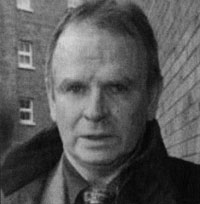
MURPHY REFUSES TO ACCEPT FAMILIES' WRIT
Murphy refuses to accept bomb families' writs
BY BARRY O'KELLY
THE only man convicted in connection with the Omagh bombing, Colm Murphy, has refused to accept visits from London lawyers issuing writs on behalf of some relatives of the victims of the 1998 Omagh bombing atrocity, thereby thwarting the first stage of the civil action against him.
Murphy also said he is confident of winning his appeal against the conviction earlier this year, based on alleged inconsistencies in Garda evidence at the trial in Dublin's Special Criminal Court.
Murphy disclosed that he has refused to accept two visits from the London lawyers since the writs were issued two weeks ago. It is believed that two other prisoners in Portlaoise jail, Michael McKevitt and Liam Campbell, have also declined to accept the writs. McKevitt and Campbell have been accused of involvement in the bombing which claimed 29 lives and two unborn children.
Legal sources said the prisoners cannot be forced to accept the writs, and that the highly publicised lawsuits cannot proceed without them.
In an interview, Colm Murphy, a former millionaire builder, also said he is now financially ruined, having spent €600,000 settling his tax affairs and paying legal fees.
Revenue Commissioner sources in Dublin confirmed that Murphy had received a major bill for back taxes.
Murphy, a builder and bar owner from Jordan's Corner, Ravensdale, Co Louth, was jailed for 14 years earlier this year after being convicted of conspiring to cause an explosion between August 13 and 16,1998. The Special Criminal Court sitting without a jury was told Murphy had lent two mobile phones to the bombers.
Murphy said: "I had no hand, act or part in the bombing of Omagh. Even the farce of a trial never claimed I had any knowledge of the bombing."
He added: "I am a republican, but I am not a member of the Continuity IRA."
Murphy said that the lawyers called to the jail last. Friday week seeking a visit with him. "The prison governor asked me if I wanted to meet a solicitor; I declined and continued with another visit I had.
"Later that day, a group of prison officers opened the cell door and threw in an envelope and I threw it back out again. It remains outside the cell."
It is understood that the lawyers travelled from London to the jail, for a second time, last week. Murphy again declined to take a visit from them. The prison authorities then asked the prisoners' representative to accept the writ, and he also declined.
Murphy hit back at media reports that he had with drawn money to escape having to pay compensation to the relatives of the victims in a civil suit. "Any money in the AIB in Ashbourne was used to pay the outstanding bills," he said.
"After I was arrested in connection with Omagh, my building firm collapsed as nobody would employ me. Until the time I was convicted three years later, I never worked," he said.
"I have no idea what happened in Omagh. I have never been there in my life. But I don't have the money to fight another court case with the same sort of resources as the state."
Murphy said he was shocked that two gardai who were found to have lied under oath at his trial were still on duty in the force. One detective, Liam Donnelly, was found by the three judges to have falsified statements attributed to Murphy. His Garda partner, Detective John Fahy, was found to have engaged in "persistent lying on oath".
Donnelly, backed up by Fahy, lied 13 times in claiming that he had not rewritten an interview statement, the court heard. A Garda scientist confirmed in cross examination that Donnelly had rewritten the statement attributed to Murphy. "It is amazing that the two branch men, Donnelly and Fahy, are still on duty on full pay."
Murphy's lawyer, Michael O'Higgins, told the trial that named officers including a British intelligence agent allegedly collaborated to shore up holes in the alleged confession statements. This was emphatically denied at the time. The case against Murphy centred around unsigned statements attributed to him in Monaghan Garda station in February 1999.
Michael O'Higgins described Detective Donnelly's behaviour in court as a spectacular perjury that compromised the whole investigation.
The detective had been caught fabricating a statement after he was forced to rewrite parts of it when it emerged that the original notes were patently false, the court heard.
The fabrication was discovered by a forensic test known as electrostatic document analysis (ESDA).
Murphy denied making a crucial statement of admission to two detectives, James Bernie Hanley and Sergeant Gerard McGrath, who conducted interviews in relays with the "discredited officers" Donnelly and Fahy. The key statement attributed to Murphy is in four lines recorded by Detective Garda James Bernie Hanley and Detective Garda Sergeant McGrath during the 13th interview session in February 1999.
Murphy is alleged to have told Hanley: "Yes, I knew it [his mobile phone] would be used for moving bombs. I knew these fellows were involved in moving bombs to Northern Ireland to bomb targets."
Under cross-examination, Detective Donnelly said he had spoken with Sergeant McGrath as he was preparing to take over the interrogation session and he didn't mention anything new had happened during the 13th interview session.
O'Higgins' said there were echoes of what happened to Murphy in the controversial case of Paul Ward, a Dublin man, who has since won his appeal against conviction for the murder of journalist Veronica Guerin. Hanley was one of the officers on the case.
O'Higgins suggested to Hanley that "a large number of people who have been interviewed by you have come to court subsequently and said, "I never said that."
Hanley replied: "I wouldn't agree with that. A large number of people would contest the admissions made, but I wouldn't say a large number of people have said they never said that, no."
Hanley denied a suggestion by O'Higgins that he was "damaged material".
The judges found that Colm Murphy had indeed made this incriminating statement to Hanley. Murphy said another key element in his defence would be the evidence of British intelligence officer Lisa Purnell in the case.
Purnell's link with the case stems from one of the alleged garda confession statements, where Murphy was asked if his mobile phone was used in a bombing mission in Banbridge two weeks before the Omagh bombing.
Murphy allegedly replied: "Yeah, it was up there all right It is strange, all those calls, it doesn't make sense."
It was claimed that Murphy made these comments in garda custody on February 22nd 1999, after gardai had obtained records of traffic from his mobile phone.
It was claimed during the trial that the gardai did not, at that stage, have any documents relating to Murphy's mobile phone use in Banbridge.
Michael O'Higgins claimed that Purnell's evidence connected with this feature of the case, did not add up. He referred to her as "the intelligence agent Lisa Purnell from Northern Ireland, the lady who was seconded to the RUC who worked in the portacabin [in Stormont] but sent faxes on RUC [Knock Road] headed notepaper. I say that she lied in her evidence, and I make no apology for it"
After gardai referred to the second document, analysing the traffic on Murphy's phone in Banbridge, Purnell was asked in court about when she faxed this document to the gardai. She said: "Not that I am going on memory or anything. It was a very specific answer, it was between the 21st and the 23rd of February 1999."
This appeared to confirm that gardai had the phone cell analysis document in their possession at the time that Colm Murphy was in custody.
The day after Purnell appeared, it emerged that the original fax was dated February 24,1999 after Colm Murphy was released from custody.
The following Monday, Purnell reappeared in court to confirm her evidence (from the previous Thursday) for the prosecution.
The intelligence officer then stated that she had faxed the document "between the 2lst and 24th February".
Asked why she had given differentiates to the court the previous Thursday when she knew the fax was dated the 24th, Purnell, who swore on oath that she had not discussed the matter with gardai in the intervening period, replied: "I don't know."
However, the judges found that she had been an honest witness. Murphy's appeal is expected to be heard early next year.
Further Information
Related Images