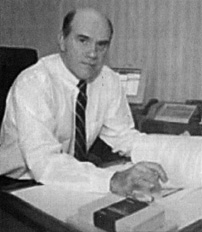
RONNIE FLANAGAN AT THE HEART OF POLICING
Ronnie Flanagan at the heart of policing
On November 4 1996 Ronnie Flanagan became RUC Chief Constable. Events at Drumcree that year did not bring him any closer to his declared priority of building relationships with the nationalist community. However in an interview shortly before taking up his post he asked that people "not judge the police on one event in one set of very traumatic circumstances but take a much longer measured view of the service that the RUC provides on a daily basis."
Five years later, with the Police Service of Northern Ireland Chief Constable Ronnie Flanagan's embroiled in a public battle over the Omagh bombing with the Police Ombudsman he championed as a guarantor of good policing, the UlsterHerald takes a "longer measured view".
Born on March 25 1949 in North Belfast's Protestant Old park, Ronnie Flanagan worshipped at Donegal Street Congregational Church. He attended Finiston Primary School, Belfast High School, Queen's University and the University of Ulster.
He married in 1970 and now lives with his family in North Down. Also in 1970 Ronnie Flanagan joined the RUC while still at Queen's where he was studying physics. On the advice of the RUC, he switched to psychology and was initially stationed at Belfast's Queen Street RUC barracks during university breaks.
The new recruit spent his first night on duty guarding the Royal Navy recruiting office in Belfast which had been bombed that day.
It was a significant time to join the RUC. The force had been damned by the Scarman Tribunal and the Hunt Report. A Scotland Yard detective charged with investigating the death of Samuel Devenney in April 1969 in Deny had met a 'conspiracy of silence' within the RUC. In July 1970, the Lower Falls area was put under curfew. Relationships between nationalists and the British Army/RUC were in rapid decline.
Yet the RUC represented a natural career option for young Protestant males. According to journalist and former Police Authority member Chris Ryder, Ronnie Flanagan said the "police seemed to me a very attractive vehicle to be of some service, to make a contribution to the well being of the community."
Following the introduction of internment in August, 1971, Ronnie Flanagan was transferred to CID as a relief detective. The psychology degree was shelved, though he was later to graduate from the University of Ulster in Police Studies and a Masters in Public Sector Studies.
Following promotion to Station Sergeant in 1973, he was moved to Castlereagh RUC Barracks, which Chris Ryder describes as 'busy' during this period. It was one of two centres for interrogating suspects. Reports soon emerged of systematic abuse of those held at the East Belfast 'holding centre'. A former member of the RUC Special Patrol Group commented: "It had a grim reputation. Suspects would be held there in window less cubes for up to a week. They might be denied sleep, stripped, beaten or humiliated. No one wanted to be taken to Castlereagh."
Eventually this led to responsibility for interrogations being transferred from Special Branch to the CID in the mid 1970s. However with the end of internment, the RUC came to rely heavily on confessions.
Promoted to Inspector in 1976, Ronnie Flanagan was transferred to the Waterside in Deny and then to the Personnel Department at RUC HQ.
With the policy of 'Ulsterisation' in 1978, responsibility was transferred from the British Army to the RUC. Ronnie Flanagan returned to Castlereagh as Duty Inspector in charge of the interrogation centre. That same year Amnesty International published a serious indictment of the interrogation centres where "ill-treatment, by plain clothes detectives, of suspects had occurred with sufficient frequency to warrant a public inquiry." Amnesty's findings related to cases prior to 1978, before Ronnie Flanagan took over as Duty Inspector. Soon after publication of the report the British Government set up the Bennett Committee of Inquiry into Police Interrogation Procedures in Northern Ireland. It found that there was clear evidence of injuries sustained during interrogation which could not have been 'self-inflicted' and recommended the introduction of strict internal controls.
Just before publication of the Bennett Report in the spring of 1979 Dr Robert Irwin, an RUC Surgeon with responsibility for interrogation centres, revealed that he had seen roughly 150/160 prisoners with various injuries which could not have been self-inflicted. These revelations were supported by another RUC surgeon, Dr Dennis Elliot, and the Association of Police Surgeons. Significantly Dr Irwin's testimony related to a three-year period including 1978 when Ronnie Flanagan was Duty Inspector in charge of Castlereagh. The findings of the Bennett Report into 'present conditions' at the interrogation centres also relate to the period when he was in charge.
The key role of the Duty Inspector is underlined in the Report. The "actual business of supervising interviews falls largely to the inspector on duty." Many 'untoward incidents' occurred while Ronnie Flanagan was in charge of Castlereagh. Following a public uproar, a number of prosecutions of RUC officers were attempted but no RUC officer was ever found guilty. Shortly after publication of the Bennett Report, Flanagan was transferred.
As the Hunger Strikes focused world attention on the North in 1981, Ronnie Flanagan moved to North Belfast as Detective Inspector with Special Branch. He soon became Detective Chief Inspector in command of the Headquarters Mobile Support Units or HMSUs. These were involved in a number of controversial shoot to kill incidents in the early 1980s soon after he took over command.
According to Amnesty International "Although the circumstances of many killings were disputed before 1982, three consecutive incidents in November and December 1982 sparked off widespread public concern that the security forces had a policy of deliberately killing alleged members of Republican groups. Six unarmed people were killed in the three incidents. The undercover anti-terrorist units of the RUC involved in the three incidents late in 1982 were HMSUs
"The units operated under the control of the Special Branch of the RUC. The Special Branch is responsible for obtaining, analysing and acting upon information about terrorist groups. With the military intelligence services and the UK Government's Security Service (MI5), it performs an intelligence gathering role. The recruitment and handling of informers is central to its work. Within the Special Branch there are a number of specialist squads, uniformed and plain clothed, which act on information supplied by informers.
"The HMSUs, each consisting of about 24 men, are reportedly trained by the Special Air Services (SAS) regiment of the British Army. The chain of command of the HMSUs consists of a Special Branch Inspector, a Special Branch Superintendent, and the RUC Assistant Chief Constable, who is head of the Special Branch. Each unit contains smaller groups of three or four men who operate in unmarked cars."
While the British Government denied the existence of a 'shoot-to-kill' policy, unionist politicians welcomed the existence of just such a policy.
John Stalker, a senior officer in the Greater Manchester Police, was sent over to investigate the 'shoot-to-kill' incidents. When it became clear that his report would expose serious criminal wrong-doing by members of the security forces, Stalker himself became the victim of what many believe was a 'dirty tricks' campaign and was taken off the case. He had concluded that Special Branch had played a central role in directing operations both before and after two of the three incidents he was investigating.
"A clear message emerged that Special Branch officers planned, directed and effectively controlled the official accounts given. The Special Branch targeted the suspected terrorist they briefed the officers and after the shootings they removed the men, cars and guns for a private debriefing before CID officers were allowed any access to these crucial matters. They provided the cover stories, and they decided at what point the CID were allowed to commence the official investigation of what had occurred. Most CID officers we saw seemed resigned to the supremacy of the Special Branch."
According to Chris Ryder, Ronnie Flanagan was the Special Branch "detective chief inspector in command of the Headquarters Mobile Support Units the elite anti-terrorist units who carried out some of the most difficult and dangerous work against the killers and bombers."
Promoted to Detective Superintendent in 1987, Ronnie Flanagan took over Special Branch command of the Tasking and Co-ordinating Group (South Region) in Gough Barracks in Armagh which "directed police and soldiers in the undercover war along the border from south Down to west Fermanagh."
Following the shoot-to-kill controversies, TCGs took over where HMSUs had failed. The latter, according to the security services, had handled the cover-up badly. In the wake of the killings there was agreement that the Special Branch should co-ordinate intelligence and surveillance but that actual ambushes should be carried out by British Army units. Both were integrated into TCGs.
The TCGs essentially called the shots while the SAS fired them in an increasingly dirty war. South Region Tasking and Co-ordinating Group based at Gough Barracks for example was the hidden hand behind the Loughgall ambush of eight IRA men and a civilian in May 1987. While the actual military operation was carried out by the SAS the planning and co-ordination was the responsibility of the TCG. At any one time TCG (South Region) had up to eight covert operations underway.
In 1988, Ronnie Flanagan was awarded a diploma following a course at the FBI Academy. Later, he lectured the FBI on intelligence and resource management and instructed the Philippines Government following the collapse of the Marcos dictatorship.
Transferred back to Belfast HQ in 1989, he ran the Special Branch department which co-ordinated surveillance and intelligence throughout the North. The department was also responsible for monitoring outside of the North which implies liaison with similar bodies and/or actual intelligence gathering by the RUC Special Branch in other jurisdictions. Flanagan also attended Bramshill Police Staff College for three months during the summer in order to qualify for promotion to Chief Superintendent. In 1990, at 40, he became one of the youngest Chief Superintendents in the RUC. He returned to Bramshill soon after to run the actual course he had taken.
Following a further six month Senior Command Course in 1991, Flanagan was appointed Assistant Chief Constable in command of the Complaints and Discipline Branch. Complaints and Discipline has a significant record of 'non-achievement' within the RUC. Even where courts of law have paid out thousands of pounds in compensation claims against RUC officers, no successful prosecutions have been taken by Complaints and Discipline.
In 1992, he was given command of the RUC in the Greater Belfast area and increasingly assumed the role of RUC media spokesman.
In 1994, Ronnie Flanagan took command of the Special Branch following the Chinook helicopter crash on the Mull of Kintyre in which senior Special Branch, M15 and British Military Intelligence men were killed.
In August, the IRA declared a ceasefire.
Ronnie Flanagan then headed the Fundamental Review of Policing in 1995. It took place against an increasing background of calls from nationalists for "root and branch changes" in policing. That summer, a stand-off developed between Orangemen and residents of the nationalist Garvaghy Road in Portadown. Flanagan became directly involved.
The Mediation Network for Northern Ireland brokered a compromise which involved residents allowing a token parade down the Garvaghy Road following a personal assurance from the then Deputy Chief Constable Ronnie Flanagan that no parade would be allowed the following year (1996) without the permission of residents.
In 1996, Ronnie Flanagan was awarded an OBE. In February, the IRA ceasefire ended with a massive bomb in Canary Wharf in London.
Despite the assurance made the previous year, a parade was forced down the Garvaghy Road leading to i serious street disturbances throughout the North. The parade had originally been stopped but the decision was reversed in the face of loyalist violence and a de facto mutiny in RUC ranks.{tab}
Unionists blamed Ronnie Flanagan for the original decision to stop the parade, while nationalists were incensed at the reversal of the decision.
The Mediation Network took the unprecedented step of publishing a long statement testifying to the assurances which Ronnie Flanagan later claims had never been given. The dispute over parades led to long summers of violence, alienation and even death. Also in the summer of 1996 Flanagan personally ordered a 24 hour curfew of the largely nationalist Lower Ormeau area of Belfast in order to force through an Orange parade.
In an interview Flanagan stated, "The truth has to be acknowledged that our relationship with the community at large was damaged by the events of the summer."
Ronnie Flanagan then took over as Chief Constable. Within the RUC itself the appointment was broadly welcomed. The previous incumbent, Hugh Annesley, was deeply unpopular and was seen as an outsider imposed on the force. Flanagan is seen as one of their own having risen up through the ranks and more importantly to an organisation bereft of media friendly spokesmen, has shown himself well capable of presenting the new image of policing which the Northern Ireland Office regards as important. (That new image involved frequent interviews in civilian clothes with the inevitable implication that an RUC uniform was a negative image.)
Ronnie Flanagan is undoubtedly an intelligent, talented and communicative individual. His rapid rise in the ranks of the RUC are testimony to certain public relations skills.
His admission that he left the Free Masons because as he put it "there may be a perception people have that it might place me in a compromising position" was a shrewd move.
However, two important groups who met the Chief Constable in his first year of office voiced criticism of him. In August 1997, Flanagan met with Congressman Chris Smith, chair of the Human Rights Sub-committee of the Foreign Affairs Committee of the US Congress. Congressman Smith later wondered aloud how the Chief Constable would treat an unemployed nationalist given the contempt with which he had treated a US congressman. He added that this was a Chief Constable "in denial".
A similar meeting with a Canadian delegation of MPs and former Canadian Attorney General Warren Allmond ended with Flanagan accusing them of being less than honest with the truth. They had witnessed human rights abuses by his men on the Garvaghy Road. Not so, according to the Chief Constable who clearly inferred they were the liars.
Other human rights observers have related how the former rugby hooker tends to "bad mouth" human rights groups with anecdotal.
Yet, until his fulminations against the Ombudsman's report on the Omagh bombing, Ronnie Flanagan had been winning the media war. His measured comments are delivered in a soft voice and he has mastered a look of feigned hurt that anybody would consider his force as anything other than paragons of good policing.
Even in his obvious rage against Ombusdman Nuala O'Loan, he deflected his criticisms through the heads of the Police Federation and the Superintendents Association. It should be noted that the latter is chief of Special Branch in Belfast.
Ronnie Flanagan hopes for a plum post with the FBI have been severely dented this past week. His resignation is due to take place soon. He has a a lot of making up to do.
On November 4 1996 Ronnie Flanagan became RUC Chief Constable. Events at Drumcree that year did not bring him any closer to his declared priority of building relationships with the nationalist community. However in an interview shortly before taking up his post he asked that people "not judge the police on one event in one set of very traumatic circumstances but take a much longer measured view of the service that the RUC provides on a daily basis."
Five years later, with the Police Service of Northern Ireland Chief Constable Ronnie Flanagan's embroiled in a public battle over the Omagh bombing with the Police Ombudsman he championed as a guarantor of good policing, the UlsterHerald takes a "longer measured view".
Born on March 25 1949 in North Belfast's Protestant Old park, Ronnie Flanagan worshipped at Donegal Street Congregational Church. He attended Finiston Primary School, Belfast High School, Queen's University and the University of Ulster.
He married in 1970 and now lives with his family in North Down. Also in 1970 Ronnie Flanagan joined the RUC while still at Queen's where he was studying physics. On the advice of the RUC, he switched to psychology and was initially stationed at Belfast's Queen Street RUC barracks during university breaks.
The new recruit spent his first night on duty guarding the Royal Navy recruiting office in Belfast which had been bombed that day.
It was a significant time to join the RUC. The force had been damned by the Scarman Tribunal and the Hunt Report. A Scotland Yard detective charged with investigating the death of Samuel Devenney in April 1969 in Deny had met a 'conspiracy of silence' within the RUC. In July 1970, the Lower Falls area was put under curfew. Relationships between nationalists and the British Army/RUC were in rapid decline.
Yet the RUC represented a natural career option for young Protestant males. According to journalist and former Police Authority member Chris Ryder, Ronnie Flanagan said the "police seemed to me a very attractive vehicle to be of some service, to make a contribution to the well being of the community."
Following the introduction of internment in August, 1971, Ronnie Flanagan was transferred to CID as a relief detective. The psychology degree was shelved, though he was later to graduate from the University of Ulster in Police Studies and a Masters in Public Sector Studies.
Following promotion to Station Sergeant in 1973, he was moved to Castlereagh RUC Barracks, which Chris Ryder describes as 'busy' during this period. It was one of two centres for interrogating suspects. Reports soon emerged of systematic abuse of those held at the East Belfast 'holding centre'. A former member of the RUC Special Patrol Group commented: "It had a grim reputation. Suspects would be held there in window less cubes for up to a week. They might be denied sleep, stripped, beaten or humiliated. No one wanted to be taken to Castlereagh."
Eventually this led to responsibility for interrogations being transferred from Special Branch to the CID in the mid 1970s. However with the end of internment, the RUC came to rely heavily on confessions.
Promoted to Inspector in 1976, Ronnie Flanagan was transferred to the Waterside in Deny and then to the Personnel Department at RUC HQ.
With the policy of 'Ulsterisation' in 1978, responsibility was transferred from the British Army to the RUC. Ronnie Flanagan returned to Castlereagh as Duty Inspector in charge of the interrogation centre. That same year Amnesty International published a serious indictment of the interrogation centres where "ill-treatment, by plain clothes detectives, of suspects had occurred with sufficient frequency to warrant a public inquiry." Amnesty's findings related to cases prior to 1978, before Ronnie Flanagan took over as Duty Inspector. Soon after publication of the report the British Government set up the Bennett Committee of Inquiry into Police Interrogation Procedures in Northern Ireland. It found that there was clear evidence of injuries sustained during interrogation which could not have been 'self-inflicted' and recommended the introduction of strict internal controls.
Just before publication of the Bennett Report in the spring of 1979 Dr Robert Irwin, an RUC Surgeon with responsibility for interrogation centres, revealed that he had seen roughly 150/160 prisoners with various injuries which could not have been self-inflicted. These revelations were supported by another RUC surgeon, Dr Dennis Elliot, and the Association of Police Surgeons. Significantly Dr Irwin's testimony related to a three-year period including 1978 when Ronnie Flanagan was Duty Inspector in charge of Castlereagh. The findings of the Bennett Report into 'present conditions' at the interrogation centres also relate to the period when he was in charge.
The key role of the Duty Inspector is underlined in the Report. The "actual business of supervising interviews falls largely to the inspector on duty." Many 'untoward incidents' occurred while Ronnie Flanagan was in charge of Castlereagh. Following a public uproar, a number of prosecutions of RUC officers were attempted but no RUC officer was ever found guilty. Shortly after publication of the Bennett Report, Flanagan was transferred.
As the Hunger Strikes focused world attention on the North in 1981, Ronnie Flanagan moved to North Belfast as Detective Inspector with Special Branch. He soon became Detective Chief Inspector in command of the Headquarters Mobile Support Units or HMSUs. These were involved in a number of controversial shoot to kill incidents in the early 1980s soon after he took over command.
According to Amnesty International "Although the circumstances of many killings were disputed before 1982, three consecutive incidents in November and December 1982 sparked off widespread public concern that the security forces had a policy of deliberately killing alleged members of Republican groups. Six unarmed people were killed in the three incidents. The undercover anti-terrorist units of the RUC involved in the three incidents late in 1982 were HMSUs
"The units operated under the control of the Special Branch of the RUC. The Special Branch is responsible for obtaining, analysing and acting upon information about terrorist groups. With the military intelligence services and the UK Government's Security Service (MI5), it performs an intelligence gathering role. The recruitment and handling of informers is central to its work. Within the Special Branch there are a number of specialist squads, uniformed and plain clothed, which act on information supplied by informers.
"The HMSUs, each consisting of about 24 men, are reportedly trained by the Special Air Services (SAS) regiment of the British Army. The chain of command of the HMSUs consists of a Special Branch Inspector, a Special Branch Superintendent, and the RUC Assistant Chief Constable, who is head of the Special Branch. Each unit contains smaller groups of three or four men who operate in unmarked cars."
While the British Government denied the existence of a 'shoot-to-kill' policy, unionist politicians welcomed the existence of just such a policy.
John Stalker, a senior officer in the Greater Manchester Police, was sent over to investigate the 'shoot-to-kill' incidents. When it became clear that his report would expose serious criminal wrong-doing by members of the security forces, Stalker himself became the victim of what many believe was a 'dirty tricks' campaign and was taken off the case. He had concluded that Special Branch had played a central role in directing operations both before and after two of the three incidents he was investigating.
"A clear message emerged that Special Branch officers planned, directed and effectively controlled the official accounts given. The Special Branch targeted the suspected terrorist they briefed the officers and after the shootings they removed the men, cars and guns for a private debriefing before CID officers were allowed any access to these crucial matters. They provided the cover stories, and they decided at what point the CID were allowed to commence the official investigation of what had occurred. Most CID officers we saw seemed resigned to the supremacy of the Special Branch."
According to Chris Ryder, Ronnie Flanagan was the Special Branch "detective chief inspector in command of the Headquarters Mobile Support Units the elite anti-terrorist units who carried out some of the most difficult and dangerous work against the killers and bombers."
Promoted to Detective Superintendent in 1987, Ronnie Flanagan took over Special Branch command of the Tasking and Co-ordinating Group (South Region) in Gough Barracks in Armagh which "directed police and soldiers in the undercover war along the border from south Down to west Fermanagh."
Following the shoot-to-kill controversies, TCGs took over where HMSUs had failed. The latter, according to the security services, had handled the cover-up badly. In the wake of the killings there was agreement that the Special Branch should co-ordinate intelligence and surveillance but that actual ambushes should be carried out by British Army units. Both were integrated into TCGs.
The TCGs essentially called the shots while the SAS fired them in an increasingly dirty war. South Region Tasking and Co-ordinating Group based at Gough Barracks for example was the hidden hand behind the Loughgall ambush of eight IRA men and a civilian in May 1987. While the actual military operation was carried out by the SAS the planning and co-ordination was the responsibility of the TCG. At any one time TCG (South Region) had up to eight covert operations underway.
In 1988, Ronnie Flanagan was awarded a diploma following a course at the FBI Academy. Later, he lectured the FBI on intelligence and resource management and instructed the Philippines Government following the collapse of the Marcos dictatorship.
Transferred back to Belfast HQ in 1989, he ran the Special Branch department which co-ordinated surveillance and intelligence throughout the North. The department was also responsible for monitoring outside of the North which implies liaison with similar bodies and/or actual intelligence gathering by the RUC Special Branch in other jurisdictions. Flanagan also attended Bramshill Police Staff College for three months during the summer in order to qualify for promotion to Chief Superintendent. In 1990, at 40, he became one of the youngest Chief Superintendents in the RUC. He returned to Bramshill soon after to run the actual course he had taken.
Following a further six month Senior Command Course in 1991, Flanagan was appointed Assistant Chief Constable in command of the Complaints and Discipline Branch. Complaints and Discipline has a significant record of 'non-achievement' within the RUC. Even where courts of law have paid out thousands of pounds in compensation claims against RUC officers, no successful prosecutions have been taken by Complaints and Discipline.
In 1992, he was given command of the RUC in the Greater Belfast area and increasingly assumed the role of RUC media spokesman.
In 1994, Ronnie Flanagan took command of the Special Branch following the Chinook helicopter crash on the Mull of Kintyre in which senior Special Branch, M15 and British Military Intelligence men were killed.
In August, the IRA declared a ceasefire.
Ronnie Flanagan then headed the Fundamental Review of Policing in 1995. It took place against an increasing background of calls from nationalists for "root and branch changes" in policing. That summer, a stand-off developed between Orangemen and residents of the nationalist Garvaghy Road in Portadown. Flanagan became directly involved.
The Mediation Network for Northern Ireland brokered a compromise which involved residents allowing a token parade down the Garvaghy Road following a personal assurance from the then Deputy Chief Constable Ronnie Flanagan that no parade would be allowed the following year (1996) without the permission of residents.
In 1996, Ronnie Flanagan was awarded an OBE. In February, the IRA ceasefire ended with a massive bomb in Canary Wharf in London.
Despite the assurance made the previous year, a parade was forced down the Garvaghy Road leading to i serious street disturbances throughout the North. The parade had originally been stopped but the decision was reversed in the face of loyalist violence and a de facto mutiny in RUC ranks.{tab}
Unionists blamed Ronnie Flanagan for the original decision to stop the parade, while nationalists were incensed at the reversal of the decision.
The Mediation Network took the unprecedented step of publishing a long statement testifying to the assurances which Ronnie Flanagan later claims had never been given. The dispute over parades led to long summers of violence, alienation and even death. Also in the summer of 1996 Flanagan personally ordered a 24 hour curfew of the largely nationalist Lower Ormeau area of Belfast in order to force through an Orange parade.
In an interview Flanagan stated, "The truth has to be acknowledged that our relationship with the community at large was damaged by the events of the summer."
Ronnie Flanagan then took over as Chief Constable. Within the RUC itself the appointment was broadly welcomed. The previous incumbent, Hugh Annesley, was deeply unpopular and was seen as an outsider imposed on the force. Flanagan is seen as one of their own having risen up through the ranks and more importantly to an organisation bereft of media friendly spokesmen, has shown himself well capable of presenting the new image of policing which the Northern Ireland Office regards as important. (That new image involved frequent interviews in civilian clothes with the inevitable implication that an RUC uniform was a negative image.)
Ronnie Flanagan is undoubtedly an intelligent, talented and communicative individual. His rapid rise in the ranks of the RUC are testimony to certain public relations skills.
His admission that he left the Free Masons because as he put it "there may be a perception people have that it might place me in a compromising position" was a shrewd move.
However, two important groups who met the Chief Constable in his first year of office voiced criticism of him. In August 1997, Flanagan met with Congressman Chris Smith, chair of the Human Rights Sub-committee of the Foreign Affairs Committee of the US Congress. Congressman Smith later wondered aloud how the Chief Constable would treat an unemployed nationalist given the contempt with which he had treated a US congressman. He added that this was a Chief Constable "in denial".
A similar meeting with a Canadian delegation of MPs and former Canadian Attorney General Warren Allmond ended with Flanagan accusing them of being less than honest with the truth. They had witnessed human rights abuses by his men on the Garvaghy Road. Not so, according to the Chief Constable who clearly inferred they were the liars.
Other human rights observers have related how the former rugby hooker tends to "bad mouth" human rights groups with anecdotal.
Yet, until his fulminations against the Ombudsman's report on the Omagh bombing, Ronnie Flanagan had been winning the media war. His measured comments are delivered in a soft voice and he has mastered a look of feigned hurt that anybody would consider his force as anything other than paragons of good policing.
Even in his obvious rage against Ombusdman Nuala O'Loan, he deflected his criticisms through the heads of the Police Federation and the Superintendents Association. It should be noted that the latter is chief of Special Branch in Belfast.
Ronnie Flanagan hopes for a plum post with the FBI have been severely dented this past week. His resignation is due to take place soon. He has a a lot of making up to do.
Further Information
Publisher: ULSTER HERALD
Ref: UH/0878
Published Date: 13-Dec-01
Related Images