NEW YORK IS OMAGH REVISITED FOR WRITER
New York is Omagh revisited for writer
BY JACQUELINE COURTNERY
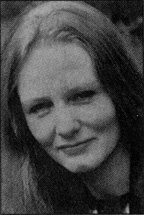
AN Omagh born journalist has safely returned to base after covering the top story of a lifetime the terrorist attack on New York's World Trade Centre. For Martina Devlin however, the New York episode a sorrowful journey back in time to the Omagh bomb of 1998.
Seasoned Irish Independent reporter Martina was not ashamed to admit that she felt for the American people who felt so vulnerable after being caught up in the disaster.
She found the harrowing scenes were comparable to the aftermath of the Omagh bomb. So much so that she encountered many flashbacks to the devastation in Omagh while on her new assignment. The grief, panic and heartbreak were the same but on a much wider scale.
Martina learned from reporting the Omagh bomb and used that to get unique stories for Dublin. Not wanting to intrude where she was not welcome she backed away from people who did not want to tell their story.
"You cannot intrude on people's grief and perhaps that's one thing I took from the Omagh bomb reporting. I think it made me a little bit more considerate. I do think Omagh taught me a little bit about treating people with as much respect as possible in appalling situations and not intruding.
"In some ways, New York was quite like covering the Omagh bomb. Obviously this was on a much greater scale but one person's grief is one person's grief and is the same regardless of what side of the world you are on."
Martina quickly became aware of the knock on effect of the tragedy in New York. Even those not directly affected by the Twin Towers tragedy viewed things differently.
"It struck at people's sense of security it made them feel differently about that part of New York it made them feel differently about skyscrapers which they are not comfortable with any more. Their sense of security has been dented and it will take a long time for it to come back."
Martina noted the same in Omagh. "People do not feel comfortable walking down that part of town and country people do not feel comfortable coming into town to shop after the bomb".
Martina revealed that she has found that brave people she talked to, like those in New York and in Omagh had a humbling effect on her.
"I found that humbling effect talking to people like Michael Gallagher and Stanley McCombe in Omagh. They are so brave and so forgiving and so looking to the future. They are so positive. They really are an inspiration by the way they get on with life and by what they do and they say. And there are people like that in the United States which will help the community come to terms with this and move forward," added Martina.
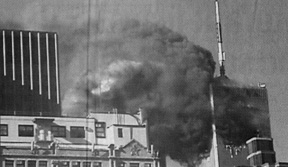
Approximately 7,000 people lost their lives in the American terrorist attack when two hijacked planes smashed into the Twin Towers on Tuesday, September 11.
As news filtered through Martina was immediately put on stand by her News Editor to be ready to fly out. However it was Saturday before she got on a flight. On board were a lot of priority people and Martina said she was 'very fortunate to get a seat on the first jet out to the States following the atrocity.
At the check-in the reporter witnessed some traumatic scenes people just standing about aimlessly others weeping. One lady was in a terrible state.
"She was crying and crying. She was weeping at the check-in and again waiting to board the plane. I went over to see if I could help her. She told me her cousin was missing. He was on the top floor of the World Trade Centre and there was essentially no hope. I felt really sorry for her as she was there on her own.
"It wasn't only her cousin she was concerned about. She told me there were about 60 people in the neighbourhood where she lived who worked in the Trade Centre. She expected for her whole neighbourhood to be wiped out," said Martina.
She later discovered the cousin worked for Cantor Fitzgerald one of the hardest hit in the disaster. They lost 770 of 1,000 people working there three quarters of their staff. They were on the 104th floor up and were a Government Bond Agency which employed a lot of Irish people.
"On the flight also were people who had suffered bereavements, people who had relatives who were on the missing list. All were desperate to get to New York to find out if their loves ones were dead or alive.
There were many Americans who had been on holiday in Ireland. They had to wait in anguish for days before the first available flight home on the Saturday. Also on board were essential workers firefighters, medics and I actually got talking to an FBI agent who was on the same flight. These were people who had been pulled back from there holidays to help out with the rescue operations which were already underway," recalled Martina.
When she eventually got to New York she discovered the work they faced.
"There was 1.2 million tonnes of rumble at the scene it was an amazing sight which covered the vast area. Every bit of rubble had to be removed and transported to Staten Island. I saw the FBI agents sifting through looking for clues. They were being incredibly thorough. It was unbelievable and in fact they found the passport of one of the hijackers in the rubble."
She also recalled some of the miraculous escapes from the towers which made the headlines.
For one employee on the 105th floor a summon to the lobby which he reluctantly answered turned out to be a call which saved his life. Everyone else in the office perished as he reached the ground floor.
"But he was wrecked with grief that he got out and so many others were killed. This was a phenomenon I discovered over and over again that those who lived felt guilty or just really puzzled by the strange turn of events. They were asking why did I live and the person who sits at the desk next to me die?
"This was so much like the Omagh bomb and I do remember people saying they were standing beside somebody who died and they had just a scratch. These whole feelings of guilt will stay with them for such a long long time."
Martina also spoke to a director of the Red Cross. He informed her they were opening a Family Assistance Centre and were asking relatives to come along with hairbrushes, toothbrushes or razors which might have tiny bits of hair or skin for DNA testing.
"People wanting to do this as they desperately wanted some proof of their loved ones I don't mean to be offensive but relatives were desperate for even a body part of a relative to bury. That was quite humbling really in lots of ways this tiny part would even give them consolation."
Martina also spoke to a nurse with Irish connections who discovered that her firefighter son had died.
"It was very interesting as she was one of the few mothers I spoke to who acknowledged right from the start that her son was not coming home. Maybe it was her medical background that helped her say I know he is dead."
It turned out that she was getting her hope from the news that firefighters would have medals struck in their honour to be presented to other brave firemen in the line of duty.
"She thought in a way that this was his legacy. But she was honest enough and human enough to say I would rather have my son, and who wouldn't? At the same time she was getting some comfort from the idea that there would be a medal stuck in his honour. All the firefighters are getting these and I think it is a good move on behalf of the authorities."
Her first sight of the scene of the disaster was from the Aer Lingus jet. "I saw Manhattan below me and then I saw these fumes of smoke and this was five days after the disaster," recalls Martina.
The next morning she went down to the scene of the tragedy. "Nothing really prepares you for it. I had seen it on the news, lots of footage and photographs but I still was not prepared for the horror. Actually being there was astonishing. The only word I can describe it as is apocalyptic. It was smothering away under the rubble and the fire fighters could not get under the rubble it was piled that high. They could not reach the fires to put them out. There was also this smoke and fumes everywhere. There was also the fear of carbon monoxide poisoning and concerns over the asbestos fumes."
Work on the centre commenced in the later 1960s when asbestos would have been used. It took almost ten years for the buildings to be completed.
Martina tells another interesting story of her fact finding trip. She revealed that as a result of the catastrophe the word 'labourer' in New York has been elevated as these people were the ones who got in there and started removing the rubble.
"We live in a high tech society now, but at the end of the day it was men and women using their hands putting the rubble into big white buckets. The buckets were passed along a human chain and tipped into a lorry which was going to Staten Island. It was fascinating to think that with all this hi-tech equipment around there was no better way found to do this.
"I suppose in the aftermath they did not want to risk injuring somebody by putting in the big excavators then. And I suppose also they were aware that any sounds coming from the rubble would have been drowned out had big machines been used."
She also recalled seeing a number of make shift shrines all over New York with posters, flowers and poems and photographs as if in remembrance.
"A lot of them had Irish names above freckled faced photographs and it was so sad because you knew they're just not coming back. It was just so sad, really really sad," said Martina her voice now breaking with emotions.
On one level it was incredibly interesting but as a journalist you were aware that this was the biggest story you would ever cover. On a human level it was hard not to be moved. There was a lot of emotion out there and you couldn't help but be moved.
One story which Martina was greatly influenced by was an incredibly brave Irish American lady who lost two sons in the disaster a firefighter and a police officer. She was very proud of both boys and she wanted the Irish people to know about them.
"She had the sense to know you had to put something into society, rather that thinking what can I take out of it. It this sense of patronism in the purest form was why these two lads were in service to their country. She was paying a very high price for it but she was incredibly proud of the contribution they had made and wanted to talk about that," concluded Martina.
Martina returns home on Saturday November 3 from 2-4pm. She will be at the Carlisle Book Shop Omagh to launch her latest book, Be Careful What You Wish For. Everyone is welcome.
BY JACQUELINE COURTNERY
AN Omagh born journalist has safely returned to base after covering the top story of a lifetime the terrorist attack on New York's World Trade Centre. For Martina Devlin however, the New York episode a sorrowful journey back in time to the Omagh bomb of 1998.
Seasoned Irish Independent reporter Martina was not ashamed to admit that she felt for the American people who felt so vulnerable after being caught up in the disaster.
She found the harrowing scenes were comparable to the aftermath of the Omagh bomb. So much so that she encountered many flashbacks to the devastation in Omagh while on her new assignment. The grief, panic and heartbreak were the same but on a much wider scale.
Martina learned from reporting the Omagh bomb and used that to get unique stories for Dublin. Not wanting to intrude where she was not welcome she backed away from people who did not want to tell their story.
"You cannot intrude on people's grief and perhaps that's one thing I took from the Omagh bomb reporting. I think it made me a little bit more considerate. I do think Omagh taught me a little bit about treating people with as much respect as possible in appalling situations and not intruding.
"In some ways, New York was quite like covering the Omagh bomb. Obviously this was on a much greater scale but one person's grief is one person's grief and is the same regardless of what side of the world you are on."
Martina quickly became aware of the knock on effect of the tragedy in New York. Even those not directly affected by the Twin Towers tragedy viewed things differently.
"It struck at people's sense of security it made them feel differently about that part of New York it made them feel differently about skyscrapers which they are not comfortable with any more. Their sense of security has been dented and it will take a long time for it to come back."
Martina noted the same in Omagh. "People do not feel comfortable walking down that part of town and country people do not feel comfortable coming into town to shop after the bomb".
Martina revealed that she has found that brave people she talked to, like those in New York and in Omagh had a humbling effect on her.
"I found that humbling effect talking to people like Michael Gallagher and Stanley McCombe in Omagh. They are so brave and so forgiving and so looking to the future. They are so positive. They really are an inspiration by the way they get on with life and by what they do and they say. And there are people like that in the United States which will help the community come to terms with this and move forward," added Martina.
Approximately 7,000 people lost their lives in the American terrorist attack when two hijacked planes smashed into the Twin Towers on Tuesday, September 11.
As news filtered through Martina was immediately put on stand by her News Editor to be ready to fly out. However it was Saturday before she got on a flight. On board were a lot of priority people and Martina said she was 'very fortunate to get a seat on the first jet out to the States following the atrocity.
At the check-in the reporter witnessed some traumatic scenes people just standing about aimlessly others weeping. One lady was in a terrible state.
"She was crying and crying. She was weeping at the check-in and again waiting to board the plane. I went over to see if I could help her. She told me her cousin was missing. He was on the top floor of the World Trade Centre and there was essentially no hope. I felt really sorry for her as she was there on her own.
"It wasn't only her cousin she was concerned about. She told me there were about 60 people in the neighbourhood where she lived who worked in the Trade Centre. She expected for her whole neighbourhood to be wiped out," said Martina.
She later discovered the cousin worked for Cantor Fitzgerald one of the hardest hit in the disaster. They lost 770 of 1,000 people working there three quarters of their staff. They were on the 104th floor up and were a Government Bond Agency which employed a lot of Irish people.
"On the flight also were people who had suffered bereavements, people who had relatives who were on the missing list. All were desperate to get to New York to find out if their loves ones were dead or alive.
There were many Americans who had been on holiday in Ireland. They had to wait in anguish for days before the first available flight home on the Saturday. Also on board were essential workers firefighters, medics and I actually got talking to an FBI agent who was on the same flight. These were people who had been pulled back from there holidays to help out with the rescue operations which were already underway," recalled Martina.
When she eventually got to New York she discovered the work they faced.
"There was 1.2 million tonnes of rumble at the scene it was an amazing sight which covered the vast area. Every bit of rubble had to be removed and transported to Staten Island. I saw the FBI agents sifting through looking for clues. They were being incredibly thorough. It was unbelievable and in fact they found the passport of one of the hijackers in the rubble."
She also recalled some of the miraculous escapes from the towers which made the headlines.
For one employee on the 105th floor a summon to the lobby which he reluctantly answered turned out to be a call which saved his life. Everyone else in the office perished as he reached the ground floor.
"But he was wrecked with grief that he got out and so many others were killed. This was a phenomenon I discovered over and over again that those who lived felt guilty or just really puzzled by the strange turn of events. They were asking why did I live and the person who sits at the desk next to me die?
"This was so much like the Omagh bomb and I do remember people saying they were standing beside somebody who died and they had just a scratch. These whole feelings of guilt will stay with them for such a long long time."
Martina also spoke to a director of the Red Cross. He informed her they were opening a Family Assistance Centre and were asking relatives to come along with hairbrushes, toothbrushes or razors which might have tiny bits of hair or skin for DNA testing.
"People wanting to do this as they desperately wanted some proof of their loved ones I don't mean to be offensive but relatives were desperate for even a body part of a relative to bury. That was quite humbling really in lots of ways this tiny part would even give them consolation."
Martina also spoke to a nurse with Irish connections who discovered that her firefighter son had died.
"It was very interesting as she was one of the few mothers I spoke to who acknowledged right from the start that her son was not coming home. Maybe it was her medical background that helped her say I know he is dead."
It turned out that she was getting her hope from the news that firefighters would have medals struck in their honour to be presented to other brave firemen in the line of duty.
"She thought in a way that this was his legacy. But she was honest enough and human enough to say I would rather have my son, and who wouldn't? At the same time she was getting some comfort from the idea that there would be a medal stuck in his honour. All the firefighters are getting these and I think it is a good move on behalf of the authorities."
Her first sight of the scene of the disaster was from the Aer Lingus jet. "I saw Manhattan below me and then I saw these fumes of smoke and this was five days after the disaster," recalls Martina.
The next morning she went down to the scene of the tragedy. "Nothing really prepares you for it. I had seen it on the news, lots of footage and photographs but I still was not prepared for the horror. Actually being there was astonishing. The only word I can describe it as is apocalyptic. It was smothering away under the rubble and the fire fighters could not get under the rubble it was piled that high. They could not reach the fires to put them out. There was also this smoke and fumes everywhere. There was also the fear of carbon monoxide poisoning and concerns over the asbestos fumes."
Work on the centre commenced in the later 1960s when asbestos would have been used. It took almost ten years for the buildings to be completed.
Martina tells another interesting story of her fact finding trip. She revealed that as a result of the catastrophe the word 'labourer' in New York has been elevated as these people were the ones who got in there and started removing the rubble.
"We live in a high tech society now, but at the end of the day it was men and women using their hands putting the rubble into big white buckets. The buckets were passed along a human chain and tipped into a lorry which was going to Staten Island. It was fascinating to think that with all this hi-tech equipment around there was no better way found to do this.
"I suppose in the aftermath they did not want to risk injuring somebody by putting in the big excavators then. And I suppose also they were aware that any sounds coming from the rubble would have been drowned out had big machines been used."
She also recalled seeing a number of make shift shrines all over New York with posters, flowers and poems and photographs as if in remembrance.
"A lot of them had Irish names above freckled faced photographs and it was so sad because you knew they're just not coming back. It was just so sad, really really sad," said Martina her voice now breaking with emotions.
On one level it was incredibly interesting but as a journalist you were aware that this was the biggest story you would ever cover. On a human level it was hard not to be moved. There was a lot of emotion out there and you couldn't help but be moved.
One story which Martina was greatly influenced by was an incredibly brave Irish American lady who lost two sons in the disaster a firefighter and a police officer. She was very proud of both boys and she wanted the Irish people to know about them.
"She had the sense to know you had to put something into society, rather that thinking what can I take out of it. It this sense of patronism in the purest form was why these two lads were in service to their country. She was paying a very high price for it but she was incredibly proud of the contribution they had made and wanted to talk about that," concluded Martina.
Martina returns home on Saturday November 3 from 2-4pm. She will be at the Carlisle Book Shop Omagh to launch her latest book, Be Careful What You Wish For. Everyone is welcome.
Further Information
Publisher: ULSTER HERALD
Ref: UH/0849
Published Date: 11-Oct-01
Related Images