SECRETARY OF STATE MEETS BOMB VICTIMS DURING VISIT
Secretary of state meets bomb victims during visit
BY ADRIAN MULLAN
Secretary of State, John Reid, was in Omagh on Thursday last to meet with relatives of those maimed and injured in the Omagh bombing.
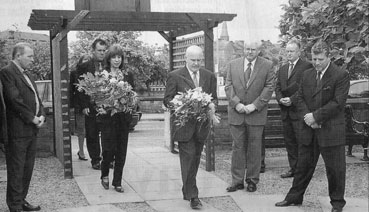
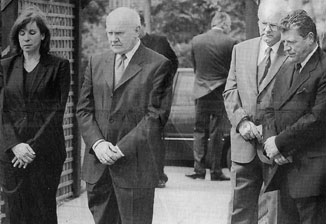
During the visit Dr Reid visited the Garden of Remembrance before a visit to the Trauma Centre (Bridge Centre) where he met community representatives and representatives from other voluntary organisations which had helped in the aftermath of the bomb. Amongst those who met with Dr Reid were Stanley McCombe, Michael Gallagher, and Elizabeth Gibson all of whom were bereaved in the blast on August 15th 1998.
Speaking after the meeting, Michael Gallagher, Chairman of the Omagh Self-Help and Support Group said he had spoken to Dr Reid about the private case being taken against those suspected of planting the bomb.
However, said Mr Gallagher, "He couldn't really talk about he civil action because of restrictions on him of being in government." Mr Gallagher went on to say that Dr. Reid indicated that he fully supported the legal move.
"I have been deeply impressed, said Mr Reid, "by the courage and determination shown by those whose lives were changed forever on August 15th 1998 also want to pay tribute to the wonderful work that has been done for, and with the people of Omagh, by the staff of the Trauma Centre and by the community and voluntary groups.
They have borne a heavy burden in responding to those affected by the terrible consequences of the bombing."
At the Trauma Centre the Secretary of State fielded questions from waiting journalists including those attempting to establish if he had a preferred outcome in the forthcoming general election in terms of the Northern Ireland parties. Dr Reid said his preference would be that the people select their representatives, nor would he be drawn as to whether or not he had an SDLP bias, given that the SDLP is sometimes considered Labour's sister party in Northern Ireland.
He hoped that the arms issue could be resolved and indicated that around half of all of the British army installations had been removed and that the soldiers had also been reduced.
BY ADRIAN MULLAN
Secretary of State, John Reid, was in Omagh on Thursday last to meet with relatives of those maimed and injured in the Omagh bombing.
During the visit Dr Reid visited the Garden of Remembrance before a visit to the Trauma Centre (Bridge Centre) where he met community representatives and representatives from other voluntary organisations which had helped in the aftermath of the bomb. Amongst those who met with Dr Reid were Stanley McCombe, Michael Gallagher, and Elizabeth Gibson all of whom were bereaved in the blast on August 15th 1998.
Speaking after the meeting, Michael Gallagher, Chairman of the Omagh Self-Help and Support Group said he had spoken to Dr Reid about the private case being taken against those suspected of planting the bomb.
However, said Mr Gallagher, "He couldn't really talk about he civil action because of restrictions on him of being in government." Mr Gallagher went on to say that Dr. Reid indicated that he fully supported the legal move.
"I have been deeply impressed, said Mr Reid, "by the courage and determination shown by those whose lives were changed forever on August 15th 1998 also want to pay tribute to the wonderful work that has been done for, and with the people of Omagh, by the staff of the Trauma Centre and by the community and voluntary groups.
They have borne a heavy burden in responding to those affected by the terrible consequences of the bombing."
At the Trauma Centre the Secretary of State fielded questions from waiting journalists including those attempting to establish if he had a preferred outcome in the forthcoming general election in terms of the Northern Ireland parties. Dr Reid said his preference would be that the people select their representatives, nor would he be drawn as to whether or not he had an SDLP bias, given that the SDLP is sometimes considered Labour's sister party in Northern Ireland.
He hoped that the arms issue could be resolved and indicated that around half of all of the British army installations had been removed and that the soldiers had also been reduced.
Further Information
Publisher: ULSTER HERALD
Ref: UH/0774
Published Date: 07-Jun-01
Related Images