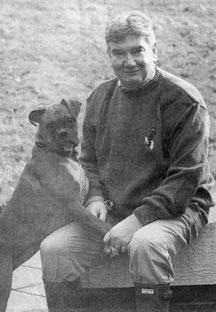
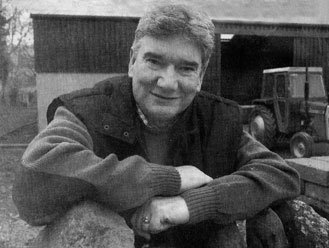
THE CHIEF BOWS OUT AFTER TWELVE YEARS HEADING LOCAL COUNCIL
The chief bows out after two years heading local council
John McKinney had been contemplating early retirement when the opportunity arose to head one of the newly established cross border bodies set up under the Belfast Agreement.
For the father-of-four, the chance to become involved at the very heart of the devolution process was a moment he was unwilling to pass over.
Today, as he swaps his post as chief executive of Omagh District Council for a similar role with the Special EU Programmes Body, his thoughts will focus on implementing the Peace and Interreg programmes previously administered by finances departments north and south.
Throughout the past 12 years, John has steered the local authority, taking it through its most painful period in the aftermath of the Market Street bombing of August '98.
Within minutes of the attack, he had placed council resources at the disposal of families of the dead and injured and co-ordinated the identification of those caught up in the atrocity. In the days and weeks that followed, he ensured that every practical assistance was made available to those affected by the tragedy.
A three-times graduate, John initially spent 10 years with a UK-based telecommunications company, rising to head its operations on this side of the Irish Sea. Following the reorganisation of local government in 1973, he joined Omagh Council and worked for six years with Technical Services followed by a similar spell as Chief Finance Officer.
He then moved to neighbouring Strabane Council where he completed a two-year term as Chief Executive before returning to replace Desmond Mitchell as head of Omagh Council in 1988.
In the New Years Honours of 1999, he was awarded an OBE for leadership within the community.
His new position with the EU Body will allow him the opportunity to advance a deep desire to witness the implementation of provisions laid down in the Good Friday Agreement.
"I always had a deep interest in community development and projects linked to reconciliation within the community," he declares. "I always felt, and still feel, that community development plays a large part in bringing about peace in this part of the world and I always regarded the council as an important body in terms of reaching out to the community.
"I am interested in the devolved political process and I see my position as head of one of the North-South bodies as part of that devolved process."
The Special EU Programmes Body was one of six set up as part of the agreement. Among the new cheif executive's responsibilities during the forthcoming months will be the launch of the new Peace and Interreg Programmes (2000-2004)
In addition, the Body, under John's direction, will have a significant managerial role in relation to the remaining community initiatives in Northern Ireland, the border counties and also on an all-Ireland basis, resulting from the Leader, Equal and Urban programmes.
The Body will also be involved with the development of the Common Chapter, as agreed by the governments North and South, and working towards a structure which will provide funding for Northern Ireland and the border counties after 2004.
The headquarters of the Body will be in Belfast with regional offices in Omagh and Monaghan. John McKinney will be based with a staff of 20-plus in the Omagh office which is presently being constructed opposite the CBS grammar school on the town's Kevlin Road.
"I move on with mixed feelings," he reveals. "Like everything in life, there is a time to make decisions. I had contemplated early retirement and moving in a different direction, but this opportunity came along in an area I've always been interested.
"I have been actively involved in seeking funding, not only with the council, but also with a number of other groups over the years. I am also interested in sustainability and making sure that the funding will have a lasting impact. "In essence, I see this as an opportunity to use my experience and knowledge of government and the European funding mechanisms to ensure that it contributes to peace and a self-sustaining economy in Northern Ireland and the border counties of the Republic of Ireland."
Before the formation of partnerships between various bodies became fashionable, Omagh Council, under John's direction, found that the process represented a means by which the town and area could be developed.
"Quite often, I found that it was the only way of getting results," John said. "We have worked very successfully with local groups and funders who have offered some excellent regeneration opportunities, especially in rural areas, and as a council we took full advantage of those opportunities.
"After all, rural development is just as important as urban development and it is essential for the people from the rural hinterland.
"When I first came here as chief executive my focus was to develop Omagh as a regional centre. It had all the attributes. It was well positioned geographically and it had been, and still is, a very successful administrative centre.
"Part of the drive here down through the years has been to try to maintain that status and I think the record of the council over that time has proved us right."
John describes himself as a 'man who never forgot his roots.' He still farms a portion of the land in Knockmoyle worked by his ancestors in pre-famine times.
When he eventually does get around to retiring, he looks forward to devoting some 'quality time' at home with his wife Ann and working his 100-plus acre holding.
On the afternoon of August 15, 1998, John was helping his eldest son, Henry lay foundations for a new home when he received a call from fellow council official, Kevin O'Gara, warning of a bomb in Omagh. A second call minutes later informed him of the terrible tragedy.
At that time, he recalls, there was a vague understanding that the local authority, and particularly the chief executive, would undertake the role of co-ordinating the recovery side of the tragedy.
The council's involvement in drawing up an emergency plan for local catastrophes arose from the disastrous floods in Omagh and Strabane in 1987. 'The bombing of Omagh really shocked everyone and since then emergency planning protocol has been put in place between councils and agencies.
"I believe the town is now starting to find its way again. I don't think I can ever attempt to speak for the bereaved and injured, because they are the ones who feel the real pain and hurt. But I think the town is perhaps now trying to take a step in the right direction and there are signs of improvement through the likes of the riverfront development and the recent launch of the 2010 strategy for the area."
Before departing from his office at the Grange this week, the chief extended a farewell to his 'team' at corporate services and his senior officers who, he believes, also face a major challenge within the foreseeable future. "They have been my backbone and supported me during my time as chief executive," he adds.
In a footnote prior to his departure he adds: "My abiding wish for Omagh would be that it can maintain its very important central position in the south-west of Northern Ireland.
"I also hope that the people who were injured and bereaved in the bombing can find some way to cope with their pain and difficulty and the town can recover and grow to become the vibrant place we all wish and hope for."
John McKinney had been contemplating early retirement when the opportunity arose to head one of the newly established cross border bodies set up under the Belfast Agreement.
For the father-of-four, the chance to become involved at the very heart of the devolution process was a moment he was unwilling to pass over.
Today, as he swaps his post as chief executive of Omagh District Council for a similar role with the Special EU Programmes Body, his thoughts will focus on implementing the Peace and Interreg programmes previously administered by finances departments north and south.
Throughout the past 12 years, John has steered the local authority, taking it through its most painful period in the aftermath of the Market Street bombing of August '98.
Within minutes of the attack, he had placed council resources at the disposal of families of the dead and injured and co-ordinated the identification of those caught up in the atrocity. In the days and weeks that followed, he ensured that every practical assistance was made available to those affected by the tragedy.
A three-times graduate, John initially spent 10 years with a UK-based telecommunications company, rising to head its operations on this side of the Irish Sea. Following the reorganisation of local government in 1973, he joined Omagh Council and worked for six years with Technical Services followed by a similar spell as Chief Finance Officer.
He then moved to neighbouring Strabane Council where he completed a two-year term as Chief Executive before returning to replace Desmond Mitchell as head of Omagh Council in 1988.
In the New Years Honours of 1999, he was awarded an OBE for leadership within the community.
His new position with the EU Body will allow him the opportunity to advance a deep desire to witness the implementation of provisions laid down in the Good Friday Agreement.
"I always had a deep interest in community development and projects linked to reconciliation within the community," he declares. "I always felt, and still feel, that community development plays a large part in bringing about peace in this part of the world and I always regarded the council as an important body in terms of reaching out to the community.
"I am interested in the devolved political process and I see my position as head of one of the North-South bodies as part of that devolved process."
The Special EU Programmes Body was one of six set up as part of the agreement. Among the new cheif executive's responsibilities during the forthcoming months will be the launch of the new Peace and Interreg Programmes (2000-2004)
In addition, the Body, under John's direction, will have a significant managerial role in relation to the remaining community initiatives in Northern Ireland, the border counties and also on an all-Ireland basis, resulting from the Leader, Equal and Urban programmes.
The Body will also be involved with the development of the Common Chapter, as agreed by the governments North and South, and working towards a structure which will provide funding for Northern Ireland and the border counties after 2004.
The headquarters of the Body will be in Belfast with regional offices in Omagh and Monaghan. John McKinney will be based with a staff of 20-plus in the Omagh office which is presently being constructed opposite the CBS grammar school on the town's Kevlin Road.
"I move on with mixed feelings," he reveals. "Like everything in life, there is a time to make decisions. I had contemplated early retirement and moving in a different direction, but this opportunity came along in an area I've always been interested.
"I have been actively involved in seeking funding, not only with the council, but also with a number of other groups over the years. I am also interested in sustainability and making sure that the funding will have a lasting impact. "In essence, I see this as an opportunity to use my experience and knowledge of government and the European funding mechanisms to ensure that it contributes to peace and a self-sustaining economy in Northern Ireland and the border counties of the Republic of Ireland."
Before the formation of partnerships between various bodies became fashionable, Omagh Council, under John's direction, found that the process represented a means by which the town and area could be developed.
"Quite often, I found that it was the only way of getting results," John said. "We have worked very successfully with local groups and funders who have offered some excellent regeneration opportunities, especially in rural areas, and as a council we took full advantage of those opportunities.
"After all, rural development is just as important as urban development and it is essential for the people from the rural hinterland.
"When I first came here as chief executive my focus was to develop Omagh as a regional centre. It had all the attributes. It was well positioned geographically and it had been, and still is, a very successful administrative centre.
"Part of the drive here down through the years has been to try to maintain that status and I think the record of the council over that time has proved us right."
John describes himself as a 'man who never forgot his roots.' He still farms a portion of the land in Knockmoyle worked by his ancestors in pre-famine times.
When he eventually does get around to retiring, he looks forward to devoting some 'quality time' at home with his wife Ann and working his 100-plus acre holding.
On the afternoon of August 15, 1998, John was helping his eldest son, Henry lay foundations for a new home when he received a call from fellow council official, Kevin O'Gara, warning of a bomb in Omagh. A second call minutes later informed him of the terrible tragedy.
At that time, he recalls, there was a vague understanding that the local authority, and particularly the chief executive, would undertake the role of co-ordinating the recovery side of the tragedy.
The council's involvement in drawing up an emergency plan for local catastrophes arose from the disastrous floods in Omagh and Strabane in 1987. 'The bombing of Omagh really shocked everyone and since then emergency planning protocol has been put in place between councils and agencies.
"I believe the town is now starting to find its way again. I don't think I can ever attempt to speak for the bereaved and injured, because they are the ones who feel the real pain and hurt. But I think the town is perhaps now trying to take a step in the right direction and there are signs of improvement through the likes of the riverfront development and the recent launch of the 2010 strategy for the area."
Before departing from his office at the Grange this week, the chief extended a farewell to his 'team' at corporate services and his senior officers who, he believes, also face a major challenge within the foreseeable future. "They have been my backbone and supported me during my time as chief executive," he adds.
In a footnote prior to his departure he adds: "My abiding wish for Omagh would be that it can maintain its very important central position in the south-west of Northern Ireland.
"I also hope that the people who were injured and bereaved in the bombing can find some way to cope with their pain and difficulty and the town can recover and grow to become the vibrant place we all wish and hope for."
Further Information
Publisher: ULSTER HERALD
Ref: UH/0735
Published Date: 01-Feb-01
Related Images