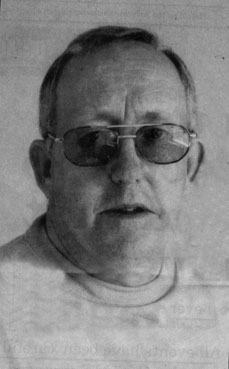
RESCUE HERO SPEAKS TO JACQUELINE COURTNEY
Rescue hero speaks to reporter Jacqueline Courtney about the continual nightmare
Left with a legacy of frenzied mental scaring and repeated cruel flashbacks of a day which so dramatically changed his life, Omagh driving instructor, Frank Pancott remains a sad and tortured human being.
Although not physically injured in the North's worst atrocity, the good Samaritan has, nevertheless, been reduced to a shadow of his former self.
And as the months tick by, the sickening aftermath of that savage day continues to take its sacrilegious toll on Frank.
Sadly there is no escape. "My life can never be what it was," admits the 51-year-old who resides with his parents at Brookmount Crescent, Omagh.
He would gladly give his memories of that fateful day away for nothing.
"If I was offered �50,000 or �1m for my memories I would say take them for nothing. Take them with you now I don't want them back. I just want to get on with my life," exclaimed Frank.
He wonders now, almost a year to the first anniversary, how he got the courage to do what he did - removing mutilated bodies from the devastated street as one of the first people on the scene. He prefers to shy away from the super human job he did that day which resulted in relatives of some of those he helped thanking him personally for being there.
Grieving families were able to take some solace in that he was there and their loved ones had not died alone.
Most days Frank can manage to put on a brave face to hid his personal anguish. But to the viewing, and unaware, public his jovial nature is only a well rehearsed facade.
Dig deeper and you sadly find a man still crying over what happened and still too fearful for his own personal sanity to walk down past the bomb scene.
At bedtime sleep does not come easy for Frank, but he has never once regretted what he did that day.
In the day and night he is often tortured by panic attacks, flashbacks and visions of the many sickening scenes he cruelly witnessed.
"At least when they are replayed on the television set I can turn it off. But then I know 'tonight will be a bad night' ".
The disturbing scenes of August 15th come to haunt Frank without any prior warning.
"I can't make them stop; God I have tried so hard but they keep coming back. I am told I will recover from this . . . but how long is it going to take?" asked Frank.
A disturbing level of desperation had taken over his emotionally filled voice at this stage.
"I have asked this question so many times and even the professionals can't give me a definite answer".
"Something just triggers it off and again I see the row after row of bodies laid out in the street - with curtains and sheets covering them. I can still smell the singeing hair, the flesh burning. People still ask me what did it smell like? 'I tell them "pull off a bit of skin and a lock of hair and throw it into the fire. Imagine the smell, hundred times more intense!"
Frank, normally a level headed man, still gets extremely annoyed by what he describes as the "hurtful" inaccurate misrepresentation of the total number of people who died that day.
"People talk about 29 people dying that day when in fact 31 people died," he said as he tried hard to hold back the tears.
As the interview continued Frank, now again composed, was also critical of the way in which the Omagh Fund was handled and of the payments made to some individuals.
"People ask how much did I get, but no payment has come to me. I do believe that some people making claims were in this for financial gain and were looking forward to see that they would get. That's why I don't care if I never get a penny. Maybe some of those traumatised did get money, reading from the Press statements from the Fund, but I certainly did not get any."
He was resentful also that the public was not consulted about the future redevelopment of their town and the delay in getting the town back to normal again.
"No good, if any good, can come out of this, until the bottom of the street is rebuilt."
He personally would like to see the bomb site street pedestrianised and a monument, commemorating the dead, erected, at the spot where the people died.
"As a mark of respect to the deceased men, women and children, I think that end of the street should be pedestrianised. I don't walk over graves and I don't think we should be driving up past the spot where so many innocent people were slaughtered.
"This in my town and my "street of tears". They talk about Omagh moving forwards but what has been done to help the people move ahead. The site, despite pulling down the damaged buildings, has remained virtually unchanged," he said.
It has stood too long as a sad reminder for Frank to plan ahead for his future.
"I take each day as it comes. I could not even think of holidays this year. I am just living from day to day and I can't even plan a day ahead, " - a hard admission from a man who used to plan around the calendar.
Last Christmas was also a disaster for Frank.
He can still visualise the blown down Christmas tree at the top of the Courthouse -which became a casualty of the festive storms.
It remained too long - like another victim of the bomb -before it was removed from the scene.
According to Frank, scenes like that did not help the recovery procedure of the town.
"The council should have been out sooner to clear up the mess. But the camera crews had gone; they had got Christmas over and they didn't give a damn about the ordinary people of Omagh," said Frank.
He too feels resentful of some of the "highly paid" individuals who picked up awards which came to town.
"The top award should have gone to Sergeant Marshall who took over command at the scene of death and destruction. He was there in the middle of all of this, doing everything he could. Awards were made to others who were not even at the scene where help was most needed," he said.
Sergeant Marshall was responsible for the excellent emergency plan which was launched at the scene and which undoubtedly saved lives.
At this stage Frank made an emotional appeal for the retention and upgrading of the Tyrone County Council which had responded so brilliantly to the disaster.
Many more lives would have been lost if Omagh had not a hospital. I think it should be maintained and upgraded in memory of all the bomb victims," he said.
A daily trip down town can hold out untold agonies for Frank.
He explains: "I can only go as far as Supervalu. I can go no further. I can't stop around there and I could not hold a conversation around there. I need to get away."
"I will never walk down there again. Even when I am at Supervalu I try not to look to my right and I have never walked on that side of the bridge since that day."
He quoted an example of his gripping fear of the bombed street.
"On Christmas Eve I was in Supervalu looking for a CD for my godson. They had not got the one I was after and, without thinking, I decided to cross the road to go to Route 66. Suddenly the hairs on the back of my neck stood up and that was only walking straight across the road".
Approximately six week ago, at the very same spot, he had a similar sinister encounter.
"My legs went from under me. I started shaking and Idammed well nearly cried! I could not understand what was happening to me. I almost crawled up the stairs to Route 66".
Frank, subsequently, learned from his Trauma Centre Councillor, Kevin Hughes, he had suffered a panic attack - possibly triggered off by him getting precariously close to the bomb scene.
Frank and Kevin have built up a good relationship in his fight to get his life back on the rails.
"Kevin has been a great help to me as I talk through my feelings and fears. My greatest fear would be of a hidden memory suddenly appearing five years down the line," said Frank.
But before Kevin entered Frank's bruised life he genuinely believed he had been deserted by the many services who were on the scene that day.
Through some sort of a mix-up, no contact was made with Frank after that day of mayhem.
On one of his worst days he was taken to the local Trauma Centre by friends who could watch his suffering no longer.
But this was six months after the Omagh tragedy.
"When I went in they had never heard of me", recalled Frank.
And he asks the probing question: "Why did my name and address slip through the network. Many others would have given personal details on the day and I wonder how many others did this happen to?."
"My life has been affected in so many ways. I can't even watch a violent film or an old war movie. I used to love the old war movies with the explosions and the bombs."
"People see me out laughing and joking - that was always my usual happy form. But for every good day I can be guaranteed three or four bad days. And I still can't get rid of the guilty feeling inside me."
Frank lists his reasons for not retracing his last journey down Market Street, which is now taboo for him.
He is not ashamed to admit he is scared of the unknown and how the street will affect him.
"My last memories of the street is picking up the dead or the injured and putting them into the back of vehicles, You were scared in case an arm or leg would drop off."
Frank was there before the emergency services arrived and saw the raw horrors of something, he said, resembled a war zone.
And trying hard to hold back the tears, he emotionally recalled horrific scenes of hands and legs lying in middle of the rubble and people, with blackened faces,crying out for help.
"How the hell could I ever walk down that street again?" asked Frank
"I always say to myself this was something which could have been avoided and should never have happened when there was supposed be peace in our country."
His last words were tribute to one of the brave young bomb victims, Clare Gallagher who lost her sight in the blast.
"She has been robbed of so much at such a young age. It is she who gives me the courage and strength to go on." he said.
Left with a legacy of frenzied mental scaring and repeated cruel flashbacks of a day which so dramatically changed his life, Omagh driving instructor, Frank Pancott remains a sad and tortured human being.
Although not physically injured in the North's worst atrocity, the good Samaritan has, nevertheless, been reduced to a shadow of his former self.
And as the months tick by, the sickening aftermath of that savage day continues to take its sacrilegious toll on Frank.
Sadly there is no escape. "My life can never be what it was," admits the 51-year-old who resides with his parents at Brookmount Crescent, Omagh.
He would gladly give his memories of that fateful day away for nothing.
"If I was offered �50,000 or �1m for my memories I would say take them for nothing. Take them with you now I don't want them back. I just want to get on with my life," exclaimed Frank.
He wonders now, almost a year to the first anniversary, how he got the courage to do what he did - removing mutilated bodies from the devastated street as one of the first people on the scene. He prefers to shy away from the super human job he did that day which resulted in relatives of some of those he helped thanking him personally for being there.
Grieving families were able to take some solace in that he was there and their loved ones had not died alone.
Most days Frank can manage to put on a brave face to hid his personal anguish. But to the viewing, and unaware, public his jovial nature is only a well rehearsed facade.
Dig deeper and you sadly find a man still crying over what happened and still too fearful for his own personal sanity to walk down past the bomb scene.
At bedtime sleep does not come easy for Frank, but he has never once regretted what he did that day.
In the day and night he is often tortured by panic attacks, flashbacks and visions of the many sickening scenes he cruelly witnessed.
"At least when they are replayed on the television set I can turn it off. But then I know 'tonight will be a bad night' ".
The disturbing scenes of August 15th come to haunt Frank without any prior warning.
"I can't make them stop; God I have tried so hard but they keep coming back. I am told I will recover from this . . . but how long is it going to take?" asked Frank.
A disturbing level of desperation had taken over his emotionally filled voice at this stage.
"I have asked this question so many times and even the professionals can't give me a definite answer".
"Something just triggers it off and again I see the row after row of bodies laid out in the street - with curtains and sheets covering them. I can still smell the singeing hair, the flesh burning. People still ask me what did it smell like? 'I tell them "pull off a bit of skin and a lock of hair and throw it into the fire. Imagine the smell, hundred times more intense!"
Frank, normally a level headed man, still gets extremely annoyed by what he describes as the "hurtful" inaccurate misrepresentation of the total number of people who died that day.
"People talk about 29 people dying that day when in fact 31 people died," he said as he tried hard to hold back the tears.
As the interview continued Frank, now again composed, was also critical of the way in which the Omagh Fund was handled and of the payments made to some individuals.
"People ask how much did I get, but no payment has come to me. I do believe that some people making claims were in this for financial gain and were looking forward to see that they would get. That's why I don't care if I never get a penny. Maybe some of those traumatised did get money, reading from the Press statements from the Fund, but I certainly did not get any."
He was resentful also that the public was not consulted about the future redevelopment of their town and the delay in getting the town back to normal again.
"No good, if any good, can come out of this, until the bottom of the street is rebuilt."
He personally would like to see the bomb site street pedestrianised and a monument, commemorating the dead, erected, at the spot where the people died.
"As a mark of respect to the deceased men, women and children, I think that end of the street should be pedestrianised. I don't walk over graves and I don't think we should be driving up past the spot where so many innocent people were slaughtered.
"This in my town and my "street of tears". They talk about Omagh moving forwards but what has been done to help the people move ahead. The site, despite pulling down the damaged buildings, has remained virtually unchanged," he said.
It has stood too long as a sad reminder for Frank to plan ahead for his future.
"I take each day as it comes. I could not even think of holidays this year. I am just living from day to day and I can't even plan a day ahead, " - a hard admission from a man who used to plan around the calendar.
Last Christmas was also a disaster for Frank.
He can still visualise the blown down Christmas tree at the top of the Courthouse -which became a casualty of the festive storms.
It remained too long - like another victim of the bomb -before it was removed from the scene.
According to Frank, scenes like that did not help the recovery procedure of the town.
"The council should have been out sooner to clear up the mess. But the camera crews had gone; they had got Christmas over and they didn't give a damn about the ordinary people of Omagh," said Frank.
He too feels resentful of some of the "highly paid" individuals who picked up awards which came to town.
"The top award should have gone to Sergeant Marshall who took over command at the scene of death and destruction. He was there in the middle of all of this, doing everything he could. Awards were made to others who were not even at the scene where help was most needed," he said.
Sergeant Marshall was responsible for the excellent emergency plan which was launched at the scene and which undoubtedly saved lives.
At this stage Frank made an emotional appeal for the retention and upgrading of the Tyrone County Council which had responded so brilliantly to the disaster.
Many more lives would have been lost if Omagh had not a hospital. I think it should be maintained and upgraded in memory of all the bomb victims," he said.
A daily trip down town can hold out untold agonies for Frank.
He explains: "I can only go as far as Supervalu. I can go no further. I can't stop around there and I could not hold a conversation around there. I need to get away."
"I will never walk down there again. Even when I am at Supervalu I try not to look to my right and I have never walked on that side of the bridge since that day."
He quoted an example of his gripping fear of the bombed street.
"On Christmas Eve I was in Supervalu looking for a CD for my godson. They had not got the one I was after and, without thinking, I decided to cross the road to go to Route 66. Suddenly the hairs on the back of my neck stood up and that was only walking straight across the road".
Approximately six week ago, at the very same spot, he had a similar sinister encounter.
"My legs went from under me. I started shaking and Idammed well nearly cried! I could not understand what was happening to me. I almost crawled up the stairs to Route 66".
Frank, subsequently, learned from his Trauma Centre Councillor, Kevin Hughes, he had suffered a panic attack - possibly triggered off by him getting precariously close to the bomb scene.
Frank and Kevin have built up a good relationship in his fight to get his life back on the rails.
"Kevin has been a great help to me as I talk through my feelings and fears. My greatest fear would be of a hidden memory suddenly appearing five years down the line," said Frank.
But before Kevin entered Frank's bruised life he genuinely believed he had been deserted by the many services who were on the scene that day.
Through some sort of a mix-up, no contact was made with Frank after that day of mayhem.
On one of his worst days he was taken to the local Trauma Centre by friends who could watch his suffering no longer.
But this was six months after the Omagh tragedy.
"When I went in they had never heard of me", recalled Frank.
And he asks the probing question: "Why did my name and address slip through the network. Many others would have given personal details on the day and I wonder how many others did this happen to?."
"My life has been affected in so many ways. I can't even watch a violent film or an old war movie. I used to love the old war movies with the explosions and the bombs."
"People see me out laughing and joking - that was always my usual happy form. But for every good day I can be guaranteed three or four bad days. And I still can't get rid of the guilty feeling inside me."
Frank lists his reasons for not retracing his last journey down Market Street, which is now taboo for him.
He is not ashamed to admit he is scared of the unknown and how the street will affect him.
"My last memories of the street is picking up the dead or the injured and putting them into the back of vehicles, You were scared in case an arm or leg would drop off."
Frank was there before the emergency services arrived and saw the raw horrors of something, he said, resembled a war zone.
And trying hard to hold back the tears, he emotionally recalled horrific scenes of hands and legs lying in middle of the rubble and people, with blackened faces,crying out for help.
"How the hell could I ever walk down that street again?" asked Frank
"I always say to myself this was something which could have been avoided and should never have happened when there was supposed be peace in our country."
His last words were tribute to one of the brave young bomb victims, Clare Gallagher who lost her sight in the blast.
"She has been robbed of so much at such a young age. It is she who gives me the courage and strength to go on." he said.
Further Information
Publisher: ULSTER HERALD
Ref: UH/0455
Published Date: 12-Aug-99
Related Images