THIS IS OUR LAST CHANCE FOR JUSTICE
This is our last chance for justice
Historic civil action by bomb bereaved underway
By Emma Stewart
A LAST attempt in seeking justice for those killed and injured in the 1998 Omagh bombing got underway this week as an 'unprecedented' civil action hearing began against five dissident republicans being sued by families of the victims.
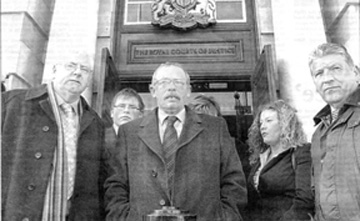
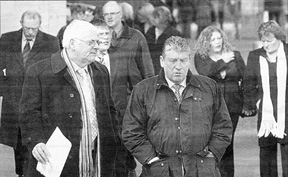
Speaking as the hearing began, Michael Gallagher, whose son, Aidan, was one of 29 people killed in the Real IRA blast, expressed hopes for a successful outcome.
Mr Gallagher, who has previously expressed concerns over the Irish Government's failure to deliver on promises of cooperation, said: "We have concerns about the Irish Government dragging their heels, but nothing can take away from the fact that it is a magnificent achievement that we have finally got to court. We are not seeking vengeance, we are seeking justice.
"This is our last chance for justice but we are hopeful and confident in our legal team."
While no one has been convicted of the atrocity, some families are suing the men they believe were involved in the attack for more than �10m.
The families are seeking compensatory, aggravated and exemplary damages against five defendants.
Those being sued are Michael McKevitt, Seamus Daly, Liam Campbell, Colm Murphy and Seamus McKenna. They all deny involvement in the bombing.
The court will move to Dublin later in the trial to allow evidence to be taken from Garda officers.
On Monday, day one of the hearing, the High Court in Belfast heard from lawyers for relatives how the Omagh bombing had been a massacre of innocents.
Lord Brennan, QC, who is representing the six families taking the action, said the case was unprecedented.
It was the first time in the UK and probably anywhere in the world that "private citizens are confronting terrorists" in the courts, he said.
Lord Brennan warned that if the families won their case, any award would be relentlessly enforced against the Real IRA and its 'lackey' organisations, the 32 County Sovereignty Movement and Irish Republican Prisoners' Welfare Association.
He said: "The result will be that every terrorist will have to live in fear of their essential belongings house, car, valuable possessions, may be taken from them".
In a claim for damages that has made legal history, the families are seeking to prove that the five men can be held liable for the devastating explosion in August 1998.
None of the accused were in court. McKevitt, the convicted Real IRA leader serving a 20-year sentence, has requested a video-link to his jail cell, while Campbell is the only one without any legal representation.
Lord Brennan said his clients had solid, wide-ranging evidence, which would fully expose the workings of the Real IRA and its leadership.
It involved forensic, bomb-making techniques, cell-site telephone analysis, the testimony of FBI double agent David Rupert and a sting operation against the Real IRA, the court was told.
Lord Brennan said that during the trial, which is expected to last eight weeks, evidence would come from police and security services in Northern Ireland, Britain and the Republic.
Part of the case will involve hearing evidence in Dublin from 24 gardai.
As the Omagh relatives listened from a packed public gallery, he accused the defendants of trying to stop the case from getting to trial.
"They may have hoped they would never have to defend themselves in court. They now do," Lord Brennan said.
"The Real IRA and its members, in which we include McKevitt, Campbell, Daly, McKenna and Murphy, could never have contemplated families could bring civil actions against terrorists to a court in this country. For them it was never part of the scheme of things. It is now."
His description of the bombing as a massacre of the innocents formed part of a brief objection by lawyers for some of the defendants, who claimed that some of the allegations might be interpreted as fact.
Michael O'Higgins, SC, for McKevitt said: "I object to the description of my client in the opening case as a terrorist."
But Lord Brennan insisted that in the civil case, the defendants' convictions were admissible.
He said anyone who left a car packed with 5001b of explosives on a street crowded with shoppers knew what the outcome would be.
Going into harrowing detail about the loss of life and injuries suffered at Omagh, Lord Brennan said the majority of those killed were women and children.
Eleven were aged under 18, with two babies among the dead. The victims came from the Republic, England and Spain, as well as Omagh.
One of the victims was decapitated, while others had arms and legs amputated.
Recalling the description of a senior consultant surgeon, who was confronted with the carnage at Tyrone County Hospital, Lord Brennan said: "It represented, in his words, a disaster of battlefield proportions."
The barrister also explained why the families were seeking the most punitive exemplary damages against the five men.
"Here in a profound measure was a combination of private grief and misery, coupled with public outrage," he said.
"It's our case the defendants were responsible for cowardice and inhumanity. That merits very special condemnation and exemplary damages".
Mr. Rupert, the court heard, was an American who came to Ireland in the 1990s, and carried out an intelligence operation which was "quite extraordinary in its length, its depth and its success".
The former trucker, whose testimony proved crucial in convicting McKevitt, has since gone into an FBI witness protection scheme, and was not available to give evidence.
But stressing the worth of his statements to the case, Lord Brennan said Mr. Rupert had met McKevitt 18 times.
"He infiltrated the Real IRA to its very centre. He actually finished up as an attendant at the army council of the Real IRA," Lord Brennan said.
"He was acting as a double agent, and ended up as an insider."
Historic civil action by bomb bereaved underway
By Emma Stewart
A LAST attempt in seeking justice for those killed and injured in the 1998 Omagh bombing got underway this week as an 'unprecedented' civil action hearing began against five dissident republicans being sued by families of the victims.
Speaking as the hearing began, Michael Gallagher, whose son, Aidan, was one of 29 people killed in the Real IRA blast, expressed hopes for a successful outcome.
Mr Gallagher, who has previously expressed concerns over the Irish Government's failure to deliver on promises of cooperation, said: "We have concerns about the Irish Government dragging their heels, but nothing can take away from the fact that it is a magnificent achievement that we have finally got to court. We are not seeking vengeance, we are seeking justice.
"This is our last chance for justice but we are hopeful and confident in our legal team."
While no one has been convicted of the atrocity, some families are suing the men they believe were involved in the attack for more than �10m.
The families are seeking compensatory, aggravated and exemplary damages against five defendants.
Those being sued are Michael McKevitt, Seamus Daly, Liam Campbell, Colm Murphy and Seamus McKenna. They all deny involvement in the bombing.
The court will move to Dublin later in the trial to allow evidence to be taken from Garda officers.
On Monday, day one of the hearing, the High Court in Belfast heard from lawyers for relatives how the Omagh bombing had been a massacre of innocents.
Lord Brennan, QC, who is representing the six families taking the action, said the case was unprecedented.
It was the first time in the UK and probably anywhere in the world that "private citizens are confronting terrorists" in the courts, he said.
Lord Brennan warned that if the families won their case, any award would be relentlessly enforced against the Real IRA and its 'lackey' organisations, the 32 County Sovereignty Movement and Irish Republican Prisoners' Welfare Association.
He said: "The result will be that every terrorist will have to live in fear of their essential belongings house, car, valuable possessions, may be taken from them".
In a claim for damages that has made legal history, the families are seeking to prove that the five men can be held liable for the devastating explosion in August 1998.
None of the accused were in court. McKevitt, the convicted Real IRA leader serving a 20-year sentence, has requested a video-link to his jail cell, while Campbell is the only one without any legal representation.
Lord Brennan said his clients had solid, wide-ranging evidence, which would fully expose the workings of the Real IRA and its leadership.
It involved forensic, bomb-making techniques, cell-site telephone analysis, the testimony of FBI double agent David Rupert and a sting operation against the Real IRA, the court was told.
Lord Brennan said that during the trial, which is expected to last eight weeks, evidence would come from police and security services in Northern Ireland, Britain and the Republic.
Part of the case will involve hearing evidence in Dublin from 24 gardai.
As the Omagh relatives listened from a packed public gallery, he accused the defendants of trying to stop the case from getting to trial.
"They may have hoped they would never have to defend themselves in court. They now do," Lord Brennan said.
"The Real IRA and its members, in which we include McKevitt, Campbell, Daly, McKenna and Murphy, could never have contemplated families could bring civil actions against terrorists to a court in this country. For them it was never part of the scheme of things. It is now."
His description of the bombing as a massacre of the innocents formed part of a brief objection by lawyers for some of the defendants, who claimed that some of the allegations might be interpreted as fact.
Michael O'Higgins, SC, for McKevitt said: "I object to the description of my client in the opening case as a terrorist."
But Lord Brennan insisted that in the civil case, the defendants' convictions were admissible.
He said anyone who left a car packed with 5001b of explosives on a street crowded with shoppers knew what the outcome would be.
Going into harrowing detail about the loss of life and injuries suffered at Omagh, Lord Brennan said the majority of those killed were women and children.
Eleven were aged under 18, with two babies among the dead. The victims came from the Republic, England and Spain, as well as Omagh.
One of the victims was decapitated, while others had arms and legs amputated.
Recalling the description of a senior consultant surgeon, who was confronted with the carnage at Tyrone County Hospital, Lord Brennan said: "It represented, in his words, a disaster of battlefield proportions."
The barrister also explained why the families were seeking the most punitive exemplary damages against the five men.
"Here in a profound measure was a combination of private grief and misery, coupled with public outrage," he said.
"It's our case the defendants were responsible for cowardice and inhumanity. That merits very special condemnation and exemplary damages".
Mr. Rupert, the court heard, was an American who came to Ireland in the 1990s, and carried out an intelligence operation which was "quite extraordinary in its length, its depth and its success".
The former trucker, whose testimony proved crucial in convicting McKevitt, has since gone into an FBI witness protection scheme, and was not available to give evidence.
But stressing the worth of his statements to the case, Lord Brennan said Mr. Rupert had met McKevitt 18 times.
"He infiltrated the Real IRA to its very centre. He actually finished up as an attendant at the army council of the Real IRA," Lord Brennan said.
"He was acting as a double agent, and ended up as an insider."
Further Information
Publisher: TYRONE CONSTITUTION
Ref: TC/1933
Published Date: 10-Apr-08
Related Images