TERRY WAITE LAUNCHES OMAGH BOMB DIGITAL ARCHIVE
Terry Waite launches Omagh Bomb Digital Archive
by Jonathan Rainey
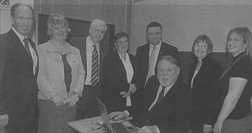
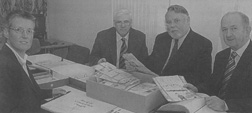
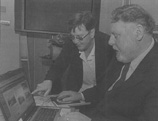
FORMER Beirut hostage, Terry Waite, helped to launch the Omagh Bomb Digital Archive in the town's library last week. The website, which can be viewed on the Internet at www.omagharchive.co.uk, is based on the archive of material housed in the library. It contains over 10,500 newspaper articles, 15,000 emails, 818 books of condolences and 3,000 floral tribute cards relating to the terrible atrocity that occurred in Omagh on Saturday, August 15 1998.
It has been developed by the Western Education and Library Board's (WELB) Library Service, in partnership with Omagh Support and Self Help Group (OSSHG) with funding from the Victims Strategy Implementation Fund.
Speaking at the launch on Thursday morning last, Mr Waite said: "It is important for any community to have a collection of events that may be happy or sad. These events enable us not only to remember the past, but to have a more creative future for all. The Omagh archive will help people who have suffered much to do just that."
The renowned humanitarian, who was held in captivity by Islamic extremists in Lebanon for almost five years, said it was important to come to terms with bitter and painful memories, instead of burying them.
For many years, Mr Waite has been associated with the British soldiers who were Japanese prisoners of war in the Far East during World War II, and revealed that many of the survivors of those 'dreadful' camps were deeply affected by their experiences as they grew older.
He said that, on their return to Britain at the end of the war, the POWs were given instructions by the military authorities not to talk about life in the camps.
Mr Waite said: "Many people have said to me whenever I've spoken about trauma, 'Oh, we make such a fuss about it, but the Japanese POWs managed perfectly well'. The fact of the matter is they had no option but to get on with life. But if you speak with the children of those men you hear stories of acute tensions in the family, acute difficulties, real problems.
"Often they will say that there's a whole area of experience that was somehow forbidden territory -we're not allowed to talk about it, we didn't know. And then the children will say, 'Oh yes, but when father got into his middle sixties, then the troubles really did begin to break out'."
Stressing the importance of coming to terms with painful memories, the former hostage said: "We need to record them, we need to remember them for healing, which may take a long, long time."
Vital
Mr Waite said it was also vital to have an accurate record preserved, so that the memory doesn't become distorted, as it can be distorted in popular films or novels.
"In this archive, we have access to what took place, tragic as though it may be," he added.
Also speaking at the launch, Michael Gallagher, chairman of the Omagh Self-Help and Support Group (OSSHG), said: "We believe that this is a very significant archive because it is the first collaborative venture between a victims group and a statutory body that we have got involved in. We hope that it will not only be beneficial to people in Omagh, but also nationally and internationally."
After giving a brief outline of the history of the OSSHG, Mr Gallagher added: "Our most important concern was that of the right to justice - sadly, that has eluded us so far."
The chairman highlighted the role of the media in the aftermath of the Omagh bomb. He said: "The reporting of the Omagh atrocity was handled very sensitively by the media. Their interest has not diminished over time. It is important to collect these reports for future generations, so that in years to come others will understand how we managed and responded to the worst atrocity of our time."
In presenting the new website, Helen Osborn, head of libraries and corporate services with the WELB, said: "This has been an enormous project. The archival resources digitised by the WELB Library Service is not only an historical record for the community, but also will be a living memory for victims and their families."
She continued: "The purpose of this archive is to ensure that all relevant material is properly and respectfully collected, preserved and organised for future use by victims and their families, the local community, academics, researchers and historians."
Paul Sweeney, permanent secretary of the Department of Culture, Arts and Leisure (DCAL), said that the archive was honouring the past, while creating the future.
He said: "This archive marks and honours the past. It demonstrates the sometimes awful power of the events which shape our communities. In making that material more widely available through the online archive, the people are not only honouring the past, but also creating the future, in what is a changing Northern Ireland. The online archive means that these records and the emotional force they convey can be accessed by anyone, anywhere in the world.
"In 'Delivering Tomorrow's Libraries', my department set out the objective of a library service that provides a dynamic focal point in the community, and reflects that community back to itself. I cannot think of a better example of that objective being met than this one."
by Jonathan Rainey
FORMER Beirut hostage, Terry Waite, helped to launch the Omagh Bomb Digital Archive in the town's library last week. The website, which can be viewed on the Internet at www.omagharchive.co.uk, is based on the archive of material housed in the library. It contains over 10,500 newspaper articles, 15,000 emails, 818 books of condolences and 3,000 floral tribute cards relating to the terrible atrocity that occurred in Omagh on Saturday, August 15 1998.
It has been developed by the Western Education and Library Board's (WELB) Library Service, in partnership with Omagh Support and Self Help Group (OSSHG) with funding from the Victims Strategy Implementation Fund.
Speaking at the launch on Thursday morning last, Mr Waite said: "It is important for any community to have a collection of events that may be happy or sad. These events enable us not only to remember the past, but to have a more creative future for all. The Omagh archive will help people who have suffered much to do just that."
The renowned humanitarian, who was held in captivity by Islamic extremists in Lebanon for almost five years, said it was important to come to terms with bitter and painful memories, instead of burying them.
For many years, Mr Waite has been associated with the British soldiers who were Japanese prisoners of war in the Far East during World War II, and revealed that many of the survivors of those 'dreadful' camps were deeply affected by their experiences as they grew older.
He said that, on their return to Britain at the end of the war, the POWs were given instructions by the military authorities not to talk about life in the camps.
Mr Waite said: "Many people have said to me whenever I've spoken about trauma, 'Oh, we make such a fuss about it, but the Japanese POWs managed perfectly well'. The fact of the matter is they had no option but to get on with life. But if you speak with the children of those men you hear stories of acute tensions in the family, acute difficulties, real problems.
"Often they will say that there's a whole area of experience that was somehow forbidden territory -we're not allowed to talk about it, we didn't know. And then the children will say, 'Oh yes, but when father got into his middle sixties, then the troubles really did begin to break out'."
Stressing the importance of coming to terms with painful memories, the former hostage said: "We need to record them, we need to remember them for healing, which may take a long, long time."
Vital
Mr Waite said it was also vital to have an accurate record preserved, so that the memory doesn't become distorted, as it can be distorted in popular films or novels.
"In this archive, we have access to what took place, tragic as though it may be," he added.
Also speaking at the launch, Michael Gallagher, chairman of the Omagh Self-Help and Support Group (OSSHG), said: "We believe that this is a very significant archive because it is the first collaborative venture between a victims group and a statutory body that we have got involved in. We hope that it will not only be beneficial to people in Omagh, but also nationally and internationally."
After giving a brief outline of the history of the OSSHG, Mr Gallagher added: "Our most important concern was that of the right to justice - sadly, that has eluded us so far."
The chairman highlighted the role of the media in the aftermath of the Omagh bomb. He said: "The reporting of the Omagh atrocity was handled very sensitively by the media. Their interest has not diminished over time. It is important to collect these reports for future generations, so that in years to come others will understand how we managed and responded to the worst atrocity of our time."
In presenting the new website, Helen Osborn, head of libraries and corporate services with the WELB, said: "This has been an enormous project. The archival resources digitised by the WELB Library Service is not only an historical record for the community, but also will be a living memory for victims and their families."
She continued: "The purpose of this archive is to ensure that all relevant material is properly and respectfully collected, preserved and organised for future use by victims and their families, the local community, academics, researchers and historians."
Paul Sweeney, permanent secretary of the Department of Culture, Arts and Leisure (DCAL), said that the archive was honouring the past, while creating the future.
He said: "This archive marks and honours the past. It demonstrates the sometimes awful power of the events which shape our communities. In making that material more widely available through the online archive, the people are not only honouring the past, but also creating the future, in what is a changing Northern Ireland. The online archive means that these records and the emotional force they convey can be accessed by anyone, anywhere in the world.
"In 'Delivering Tomorrow's Libraries', my department set out the objective of a library service that provides a dynamic focal point in the community, and reflects that community back to itself. I cannot think of a better example of that objective being met than this one."
Further Information
Publisher: TYRONE CONSTITUTION
Ref: TC/1858
Published Date: 23-Nov-06
Related Images