FAMILIES' ANGUISH AS OMAGH BOMB TRIAL GETS UNDERWAY
Families' anguish as Omagh bomb trial gets underway
By Claire Anthony
Proceedings relayed by video link to local college
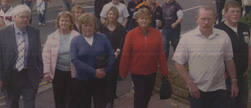
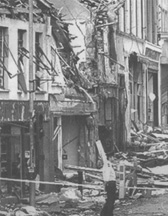
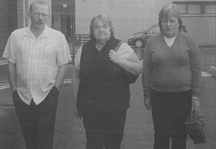
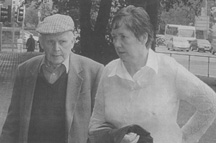
EIGHT years of waiting finally came to an end on Monday, as families of the Omagh bomb victims witnessed the emotionally-charged opening of the trial of the man accused of murdering their loved ones in the 1998 atrocity.
Many of the relatives made an early start as they travelled to Laganside Courts in Belfast for the opening day of what is likely to be the biggest murder trial in British legal history, and one of the last ever to be tried in a juryless Diplock court in Northern Ireland.
Others decided to avail of the unprecedented provision of a live video-link, which beamed the proceedings from the Belfast courtroom to the conference room in Omagh College, set up to seat 50 and with two large screens relaying events as they unfolded.
Sean Gerard Hoey (37), of Molly Road, Jonesborough, Co Armagh, was flanked by security guards as he sat in the dock, the relatives of those he is accused of murdering sitting just 20 feet away from him, behind a glass screen.
There were tearful scenes as a prosecution barrister took almost 30 harrowing minutes to read out the names of the victims, indicating where their bodies had lain on a map of the Market Street area. Hoey, dressed in a white shirt, fawn jacket and jeans, remained emotionless throughout.
An electrician, Hoey faces a total of 58 charges, including the 29 murders and multiple terrorist offences. He denies them all.
Opening the trial, barrister for the prosecution, Gordon Kerr QC, said that the prosecution would put forward both DNA and fibre evidence allegedly connecting Hoey to a series of attacks in the run-up to and after the signing of the Good Friday Agreement in April 1998.
These include the 5001b car bomb in Omagh as well as mortar attacks in Crossmaglen, Forthill and Bessbrook, a hoax bomb on the Belfast-Dublin railway line near Newry, and car bombs in Armagh, Newry and Banbridge. DNA matching Hoey's was found on a number of the devices he is charged in connection with.
"The extent of the DNA findings is such as to exclude the reasonable possibility that the findings can be explained in an innocent way," Mr Kerr said.
'Very difficult'
Speaking this week, Michael Gallagher, whose son, Aiden, was killed in the atrocity, said the opening day of the trial had been 'very difficult'.
He said:"They went through a mapping exercise, reading out the names of all 29 victims, and they said that every one of them had a number, and that number corresponded to the place where they fell on a map of the street. That was very difficult for the families - there were a lot of tears around us in the courtroom.
"We were grateful to get that first day over, and at long last after eight years, I hope that the system of justice has now begun for the families.
"Hoey was very impassive; he always adopts the same position in court, he stays nearly motionless. He was a fairly insignificant-looking figure sitting in the box between two police officers. We sat behind him behind a glass screen, and for some of the families that was the first time they had done that, and it's not an easy thing to sit there looking at the man who is accused of murdering your loved one."
Mr Kevin Skelton, whose wife, Mena, also died in the bomb, watched the opening day of the trial by video-link in Omagh. He said: "It was hard when they read out the position of everybody. I knew where Mena was, but to see it marked on a plan is a different thing.
"Hoey doesn't really affect me because at the end of the day he is innocent until proven guilty, the justice system must run its course. Even if he is convicted, one swallow doesn't make a summer."
Stanley McCombe, who was also made a widower when his wife, Ann, was killed in the blast, said the trial had triggered feelings of anger and sadness, and had 'brought it all back'.
"I'm sad, and very angry. It was very emotional when they were reading out what happened to our loved ones, and seeing Ann's picture in the papers brought it all back again. It's like the inquest all over again.
"There's all this talk about decommissioning and the IRA laying down their arms and saying they will commit to the democratic political process - but they're not telling the truth. If they were, they would name and shame the people who murdered my wife and let them pay for what they have done."
By Claire Anthony
Proceedings relayed by video link to local college
EIGHT years of waiting finally came to an end on Monday, as families of the Omagh bomb victims witnessed the emotionally-charged opening of the trial of the man accused of murdering their loved ones in the 1998 atrocity.
Many of the relatives made an early start as they travelled to Laganside Courts in Belfast for the opening day of what is likely to be the biggest murder trial in British legal history, and one of the last ever to be tried in a juryless Diplock court in Northern Ireland.
Others decided to avail of the unprecedented provision of a live video-link, which beamed the proceedings from the Belfast courtroom to the conference room in Omagh College, set up to seat 50 and with two large screens relaying events as they unfolded.
Sean Gerard Hoey (37), of Molly Road, Jonesborough, Co Armagh, was flanked by security guards as he sat in the dock, the relatives of those he is accused of murdering sitting just 20 feet away from him, behind a glass screen.
There were tearful scenes as a prosecution barrister took almost 30 harrowing minutes to read out the names of the victims, indicating where their bodies had lain on a map of the Market Street area. Hoey, dressed in a white shirt, fawn jacket and jeans, remained emotionless throughout.
An electrician, Hoey faces a total of 58 charges, including the 29 murders and multiple terrorist offences. He denies them all.
Opening the trial, barrister for the prosecution, Gordon Kerr QC, said that the prosecution would put forward both DNA and fibre evidence allegedly connecting Hoey to a series of attacks in the run-up to and after the signing of the Good Friday Agreement in April 1998.
These include the 5001b car bomb in Omagh as well as mortar attacks in Crossmaglen, Forthill and Bessbrook, a hoax bomb on the Belfast-Dublin railway line near Newry, and car bombs in Armagh, Newry and Banbridge. DNA matching Hoey's was found on a number of the devices he is charged in connection with.
"The extent of the DNA findings is such as to exclude the reasonable possibility that the findings can be explained in an innocent way," Mr Kerr said.
'Very difficult'
Speaking this week, Michael Gallagher, whose son, Aiden, was killed in the atrocity, said the opening day of the trial had been 'very difficult'.
He said:"They went through a mapping exercise, reading out the names of all 29 victims, and they said that every one of them had a number, and that number corresponded to the place where they fell on a map of the street. That was very difficult for the families - there were a lot of tears around us in the courtroom.
"We were grateful to get that first day over, and at long last after eight years, I hope that the system of justice has now begun for the families.
"Hoey was very impassive; he always adopts the same position in court, he stays nearly motionless. He was a fairly insignificant-looking figure sitting in the box between two police officers. We sat behind him behind a glass screen, and for some of the families that was the first time they had done that, and it's not an easy thing to sit there looking at the man who is accused of murdering your loved one."
Mr Kevin Skelton, whose wife, Mena, also died in the bomb, watched the opening day of the trial by video-link in Omagh. He said: "It was hard when they read out the position of everybody. I knew where Mena was, but to see it marked on a plan is a different thing.
"Hoey doesn't really affect me because at the end of the day he is innocent until proven guilty, the justice system must run its course. Even if he is convicted, one swallow doesn't make a summer."
Stanley McCombe, who was also made a widower when his wife, Ann, was killed in the blast, said the trial had triggered feelings of anger and sadness, and had 'brought it all back'.
"I'm sad, and very angry. It was very emotional when they were reading out what happened to our loved ones, and seeing Ann's picture in the papers brought it all back again. It's like the inquest all over again.
"There's all this talk about decommissioning and the IRA laying down their arms and saying they will commit to the democratic political process - but they're not telling the truth. If they were, they would name and shame the people who murdered my wife and let them pay for what they have done."
Further Information
Publisher: TYRONE CONSTITUTION
Ref: TC/1848
Published Date: 28-Sep-06
Related Images