£200,000 HARDSHIP FUND SET UP
£200,000 hardship fund set up
by Karen McPhilemy
A NEW £200,000 Hardship Fund for people still affected by the Omagh bomb, including those as far away as Madrid, was launched on Tuesday by the Omagh Victims' Fund.
Promoted by a locally-based recommendation body, the Hardship Fund is a grassroots scheme aiming to meet some of the financial needs of individuals and families who have suffered emotionally, or have been forced to change their way of life in the wake of the atrocity.
A maximum award of £3,000 can be given to an individual and up to £5,000 to a family in a bid to reduce the 'financial' burden inflicted on some people, following the 1998 bomb attack, which killed 29 people and unborn twins.
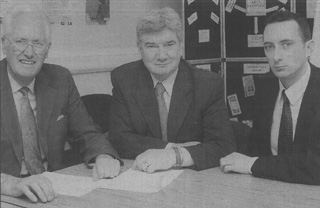
The fund, unveiled at the launch by chairman of the Omagh Fund, Mr Sean O'Dwyer, is open not only to Omagh itself, but also Buncrana and Madrid, as well as residents in other areas throughout Northern Ireland - or further afield -who feel their lives have suffered.
The Omagh Fund approved the establishment of the recommendation body to help in the promotion of the Fund, as well as the review of applications and to make suitable recommendations.
Chairing this body, will be Mr John McKinney, chairman of the Omagh Community House. Mr McKinney will review applications on a regular basis and make recommendations directly to the Omagh Fund.
Assistance
The body will have representation from local organisations that are close to the ground and can identify or assist people to apply to this Hardship Fund.
The recommendation body includes Forum in Omagh for Community Understanding and Support (FOCUS), the Omagh Churches Forum, the Northern Ireland Centre for Trauma and Transformation (NICTT), Tara Counselling and Personal Development Centre, Wave Trauma Centre and the services of a retired medical practitioner to provide independent medical advice to the body.
Financial difficulties
Encouraging people to avail of the new fund, Mr O'Dwyer, said: "This has been created to address the very real financial difficulties faced by many people suffering in the aftermath or the Omagh
bomb, whether they were affected directly or indirectly.
"We are aware that there are many people who may have incurred or are still sustaining financial loss as a result of these impacts. Hopefully this will go some way to reducing the financial burden on some people.
"We envisage that the Hardship Fund could be used for a variety of causes.
Perhaps you have incurred travelling expenses accompanying a friend or family member attending treatment for injuries as a result of the Omagh bomb or maybe you were forced to withdraw from your university course and need help with course fees so that you may return to education. You may even have reduced the number of hours that you work in order to look after a family member who was injured as result of the bomb. There are a number of scenarios and instances where this fund can be of some benefit.
Help
"We want to help those who have suffered, are suffering and may suffer in the future. The committee, however, must be satisfied that their hardship can be traced back to the bomb.
"We have heard of cases where a person's partner has had to take time from work to look after them due to their injuries. We want to help them, the money is here and we want it to go to the people.
"We don't just hope that this money will make everything better, but we do hope it will help, and that the organisations we have helped and are helping such as the Tara Centre and Wave, will be able to help them also. We don't want people suffering in 15 years time. We want them to lead their lives as normal as possible.
"Over the next few weeks we will be contacting key stakeholders in the community. It is important that everyone knows about this. People visiting their doctor or nurse with a problem should be made aware of this fund by those professionals.
Paying for treatment
"Some people may feel that a person who received compensation in the past for their injuries should not need money now. But there are people who have had compensation and now find that they need physiotherapy for their injuries but have to be put on a three month waiting list. We obviously would like help that person by paying for their treatment so they can be seen to as quick as possible - not four to six months later on NHS service.
"We would love to think that there are not people out there still suffering, but if there is, then we would also love to think that they will approach us. It is a simple process to go through and everyone will be dealt with in the strictest of confidence," he said.
Meanwhile, Mr McKinney, said: "We believe that there are many victims of the Omagh bomb who still suffer in silence and this Hardship Fund might just make that little bit of difference. The groups that sit on the recommendation body will be forwarding information regarding the Hardship Fund to all of the key stakeholders within Omagh in the coming weeks. It is our wish to promote this Fund within the affected communities, including Omagh, Buncrana and Madrid and to make it accessible as possible to those who need it most," he said.
To make an application to the Hardship Fund people can approach the recommendation body secretariat or any of the participating organisations for further information and an application form.
The contact details for each of the organisations is detailed below:
Mr John McKinney, Hardship Fund recommendation body secretariat, tel: 02882 242 040; Mrs Bernie Nixon, Omagh Churches Forum, tel: 02882 242 040; Mrs Geraldine Keys, FOCUS, tel: 02882 240 991; Mr David Bolton, Northern Ireland Centre for Trauma and Transformation (NICTT), tel: 02882 251 500; Ms Maura Twohig, Tara Counselling and Personal Development Centre; tel: 02882 250 024 and Ms Sandra Peake, Wave Trauma Centre, tel: 02882 252 522.
Further Information
Related Images