TRAUMA CENTRE OPENS IN OMAGH
Victims group stage protest
by Terry Patterson
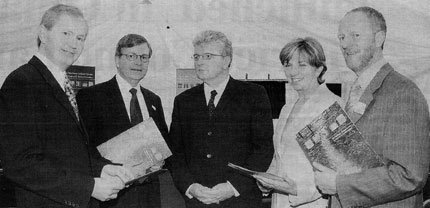
THE Northern Ireland Centre for Trauma and Transformation (NICTT), which has been operational since October last year, was officially opened by Des Bowne, the Northern Ireland Minister for Victims and Human Rights, in Omagh yesterday (Wednesday) morning.
NICTT has been initially funded for three years during which it is hoped it will provide therapeutic services for up to 800 people based on cognitive therapy, a strongly supported effective treatment for post-traumatic stress disorder and related conditions.
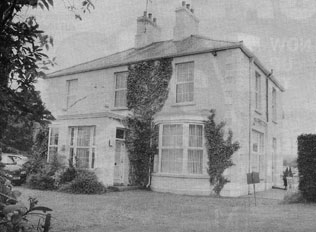
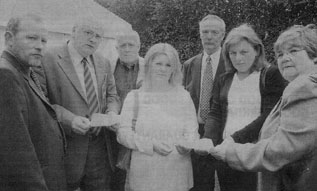
But already the centre at 2 Retreat Close is embroiled in controversy. The government established the initiative as a charitable trust headed by Professor Fabian Monds and that has angered the local Victims Support Group which held a muted protest as the opening ceremony went on.
Group spokesman, Michael Gallagher, claimed the charity move was a strategic one aimed at the evasion of funding the centre in its entirety through the Department of Health and Social Services.
The Omagh Fund has donated £1 million to the project while the Northern Ireland Office victims unit has pumped in £1.5 million and significantly, it was the NIO which handled yesterday's launch and not the DHSS.
Mr. Gallagher and other relatives of the victims of the Omagh bombing, including Stanley McCombe, insisted the centre should be funded as a Health Service facility and should not have to survive on charitable donations or handouts from victims groups.
"The government is taking money which is for victims and using it for their own purposes," claimed Mr. Gallagher. "I object to the manner in which this centre has been established and funded."
'Concerns'
And, in a statement, the victims group said: "While we welcome any initiative that will improve the services to those who have suffered not only in the Omagh bomb but also in the 33 years of the Troubles we have serious concerns regarding the structure and finance of this centre.
"In particular the fact that £1 million of money donated, which the public so generously gave for those who had suffered as a result of the 1998 atrocity, has contributed to it.
"And we have noted that the key people involved in it are the same people who were involved in the original trauma centre which closed because the Health Service believed it had achieved its objective.
"There is a strong suspicion the government is using money allocated for the victims to sustain this centre. Des Browne should make the position clear given the fact that he is the Health Minister and the Victims Minister."
And Mr. Gallagher added his personal weight to the argument when he concluded: "Former Health Service employees are running this centre, and they are now working with fundraisers to attract donations. The government is getting the centre by stealth."
While many of the staff of the former Bridge Centre, which was set up in the aftermath of the 1998 Omagh town centre bombing, have been seconded to the new trauma centre, its director, David Bolton, formerly director of community care at Sperrin Lakeland Health and Social Care Trust, has hit back at the criticism.
The Bridge Centre, financed by Sperrin Lakeland, closed in the spring of 2002 when it was felt it had basically outlived its usefulness as a support service aiding victims cope with the psychological effects of the Omagh horror.
'Groundbreaking'
But speaking at yesterday's opening Professor Monds said: "The new centre has enabled the groundbreaking work of the Bridge Centre to be harnessed for the good of others who have suffered over the past years of violent conflict across Northern Ireland and beyond. It is appropriate the new centre is situated in Omagh."
Mr. Bolton added: 'The services provided through the new centre will contribute to the wider task of addressing the impact of the past, and provide a much-needed addition to the range of services required to address trauma related suffering.
"Through our programme we hope to reach as many of those people as possible who have been caught up in distressing and traumatic events, and to support others who are doing similar work."
The director also said Sperrin Lakeland's approach had proved effective and was highly regarded by clinicians and researchers working in the field of trauma both in Britain and Ireland, and further afield.
He believed the new centre, would fill a valuable role as a voluntary trust and as an international pacesetter for research into trauma.
"This centre was set up to build on the generosity of people from across the world and the desire to do something positive," he said. "It is important for people who have been damaged by the Troubles. Our skills are much sought after.
'Independent'
"We are independent of the government so we have more freedom to conduct research and to look at a specialist area like trauma of victims."
Mr. Browne said: "Research has shown there is a clear need for specialist trauma services in this community. Government recognises the contribution that the approach developed by the team here in Omagh can make to the lives of those who have suffered.
"But neither this centre, nor the statutory agencies can, on their own, address all post-trauma needs that exist. Working in partnership, however, and by improving capacity through training and farther research and development, we can make great strides."
Professor David Clark, of the Institute of Psychiatry at the Maudsley and King's College, London, has supported the development of the centre and is its clinical and research adviser.
He said: "The trauma treatment work undertaken in Omagh after the 1998 tragedy is of considerable significance in the clinical world. The new centre provides a unique opportunity to provide a specialist trauma treatment service at local level, one that would normally only be available in major clinical or academic centres."
Welcoming the opening of the centre, Mr. Pat McDonnell, chairman of Omagh District Council, said it was a significant step in the provision of support mechanisms for victims and survivors of conflict and other traumas.
He continued: "It is particularly fitting that Omagh, given its past history, should be the location for such an excellent facility.
"Through the international and humanitarian work of the centre Omagh will now have the opportunity to reciprocate the outpouring of help and support which it received from all over the world in the aftermath of the Omagh bombing."
Sperrin Trust Board chairman, Richard Scott, said the Trust's trauma team had provided a range of support and therapeutic services to those bereaved and injured in the Omagh bombing.
He added: "It is important that the lessons learned and the experience gained through that work are not lost. We recognise the experience, skills and expertise will play an important part in the work of the new centre."
The Trauma Centre will provide therapeutic services to people affected by the Troubles and it will carry out research into trauma related matters, including treatments and a study of the psychological impact of the Troubles.
Its mission statement also provides for a training and education programme to support others interested in the field of psychological trauma, and it is to provide a humanitarian programme to assist other communities suffering major traumatic experiences.
The clinical director of NICTT is Dr. Kate Gillespie, a consultant psychiatrist and cognitive therapist, and the team manager is Michael Duffy, a cognitive therapist.
Its training adviser is the renowned trainer in cognitvie therapy, Dr. Christine Padesky, of California, and its business and fundraising manager is Barney Devine, who has 20 years experience working in the Northern Ireland community and voluntary sector.
Leaflet
In parallel with the opening of the centre a leaflet specially designed to reach those who may have developed a psychological trauma disorder as a result of the Troubles was launched.
Entitled 'Do you know somebody who has been affected by the Troubles?', the leaflet offers information for relatives, friends and colleagues and a checklist for those who are concerned about their own health and well being.
People keen to know more about the new centre are free to make personal contact with it or to have their family doctor refer them to it.
Further information is available from the Northern Ireland Centre for Trauma and Transformation,
telephone (028) 8225 1500, fax (028) 8225 5899, e-mail, info@nictt.org or from the website www.nictt.org
Further Information
Related Images