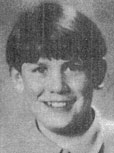
FATHER SPEAKS OF HAPPY MEMORIES OF SON WHO DIED
Father speaks of happy memories of son who died
THE father of a 12-year-old boy who died in the Omagh bomb has been told that there may have been a possibility his child would not have died had he been the only person injured in the bombing.
Following detailed cross examination of the two medical witnesses in the inquest relating to his son, James' death, Mr. Victor Barker was told that had James been the only casualty and received immediate resuscitation and emergency surgery, there was a possibility, due to his age and good health that he could have survived.
Prior to the start of evidence on his son's death, Mr. Barker apologised for his inability to attend due to business and domestic pressures.
He said he had been grateful to the Court for receiving transcripts of the proceedings, which both he and his wife had read "with great distress", and their thoughts and prayers had been with the other bereaved families.
He said his wife, Donna-Marie, had asked him to express her thoughts for all those who had gone through what must have been very difficult for them.
Constable Mark Benson told the Inquest that on his arrival at the bomb scene on the day he saw the remains of the bomb car on the road and about eight feet from it was a young boy lying injured.
He said he saw the boy was still alive, but was gasping to draw breath and appeared to be unconscious.
He said he felt over him and noticed the boy's left lower leg was broken and the bone sticking out.
A man came over and cupped the boy's head in his hands to comfort him while witness put field dressings on the boy's injuries. Another civilian put a cushion under the boy's head.
Constable Benson said the first civilian detected that the boy's pulse which was getting weak and they lifted him onto a stretcher and put him in an ambulance and he was transferred to Tyrone County Hospital.
In cross-examination by Mr. Barker, he said he did not believe that James was trying to speak while he was gasping, it seemed that he was unconscious, and he did not respond to the constable when spoken to.
Mr. Barker told the inquest that the family had been living in Ireland for a year prior to the bomb, having moved there from England.
In a statement, Mr. Barker said that he was going to play in a golf tournament with friends on the day of the bombing and that his son, James, was going to caddy for him.
He said that the sister of bomb victim, Fernando Blanco Baselga, was staying in their home at the time and for whatever reason, James asked to go on a trip to the Ulster American Folk Park, and his wife, Donna-Marie, had agreed to allow him to go.
He said he thought his son would have much rather been with his friends than carrying a golf bag for his father, and his wife had taken James to the school in Buncrana. He said that until the following day that, sadly, was the last they saw of their son.
He told the inquest that they had initially thought on the evening of August 15 that there had been an accident as opposed to a bombing, and they did not know where James was.
He said they spent an hour-and-a-half to two hours at the Garda station telephoning hospitals trying to locate James, and during that time they discovered that the young Spanish girl was in hospital in Belfast. She had suffered serious lacerations and was now recovering very slowly. He said they kept in touch with the girl's family.
He said the young girl had never really discussed what had happened and he said the whole situation was very difficult for her and the Barker family had not seen her since.
He said they felt, as did all people when they had another person's child in their care, a great sense of responsibility for that child.
Coroner: "It is terrible to think this happened due to a late change of mind".
Mr. Barker went on to tell the inquest that the afternoon before James died the family had enjoyed a lovely afternoon fishing with him.
Coroner: "I am sure those memories are very important". Mr. Barker: "Absolutely". The young boy's father went on say he did not blame anyone in any way, shape or form, for what happened in Omagh except those who planted the bomb.
In evidence Mr. Dominic Pinto, a consultant surgeon at Tyrone County Hospital, said that when he heard the explosion he went to the hospital and enquired if the accident plan had been put into effect before taking charge.
During the afternoon he said he had occasion to operate on a child with major abdominal bleeding, and he later identified the child as James Barker from a photograph.
He said James suffered a cardiac arrest and despite all attempts to revive him, the 12-year-old was pronounced dead at 6.30pm.
Using hospital records, Mr. Pinto was able to tell the inquest that James had been initially taken to Ward 3 at 4.10pm, and because of his low blood was given fluids intravenously. His condition was also monitored every 15 minutes, but he remained in a semi conscious state and staff were unable to raise his blood pressure.
He said the 12-year-old was taken to Intensive Care where he was incubated and a blood transfusion was started prior to an emergency operation.
The operation revealed a number of internal injuries including intra-abdominal bleeding, but James suffered from a cardiac arrest and died despite resuscitation.
Mr. Pinto said that the operation revealed that James was bleeding inside the abdominal cavity with no evidence of injury on the outside.
In cross-examination by Mr. Barker, Mr. Pinto said that he did not see James until 4.10pm, but someone had obviously seen him before that time.
He said that James would have been monitored prior to that time and it would have been a doctor that started the IV line and start fluids.
Possibility
Mr. Pinto went on to say that in a young patient like James, if he had been the only person who arrived at hospital, and all attention was focused on him, and staff had been able to stem the bleeding, there was a possibility that James might have survived - had the bleeding been the only injury he sustained.
Mr. Pinto said that James would not have been aware of anything to do with his condition.
He went on to reveal that when he gave the order to bring James into the operating theatre he was already with another patient upon whom he was also operating, and he had to ask another doctor to start the operation on James before he was able to join him to complete the procedure.
His voice breaking, Mr. Barker said he was grateful to the surgeon for answering his questions, and said that the family appreciated what he and his staff had done for James.
He said the family did not criticise the medical staff in any way, and his wife in particular had wanted him to convey these sentiments to him.
Dr. Derek Carson, the former Deputy State Pathologist, said that the cause of James' death was due to multiply internal injuries which combined to cause his death.
Dr. Carson went on to outline the young boy's many internal injuries and said that the bleeding could have caused shock. However, he added that it was impossible to put emphasis on the most severe.
He said James had undergone a complex operation to remove his spleen and the left kidney, as well as the repair of his liver.
He said that he could not say for certain if James could have survived, but nothing much could have been done about the retroperitoneal bleeding inside him. They would have had to treat his shock generally and hope he recovered.
The coroner, Mr. John Leckey, returned a finding in accordance with the findings of the post mortem report.
Extending sympathy to the Barker family, Mr. Leckey said that James's death had been tragic. He said one fact that emerged during the course of the hearing was that those effected by the atrocity had been shown much support, and he was sure those who had been thanked by the families were grateful for the fact that he had been able to thank them for what they had done on the day and since.
He said that since the close of the proceedings on Tuesday of last week he had read reports in the media of the optimism that those responsible would be brought before the courts.
He said it was of the utmost importance to the families that those responsible for the atrocity were convicted in the courts and punished.
Mr. Leckey went on to pay tribute to those in the pathology department and mortuary who looked after the dead, and said it quite often occurred that they were forgotten.
"I am sure we are all grateful for what they did and what the mortuary staff did to assist them. I think we should acknowledge Professor Crane and Dr. Carson and all the mortuary staff involved.
He went on to pay tribute to all who had helped in the running of the inquest and thanked them for their courtesy and assistance.
THE father of a 12-year-old boy who died in the Omagh bomb has been told that there may have been a possibility his child would not have died had he been the only person injured in the bombing.
Following detailed cross examination of the two medical witnesses in the inquest relating to his son, James' death, Mr. Victor Barker was told that had James been the only casualty and received immediate resuscitation and emergency surgery, there was a possibility, due to his age and good health that he could have survived.
Prior to the start of evidence on his son's death, Mr. Barker apologised for his inability to attend due to business and domestic pressures.
He said he had been grateful to the Court for receiving transcripts of the proceedings, which both he and his wife had read "with great distress", and their thoughts and prayers had been with the other bereaved families.
He said his wife, Donna-Marie, had asked him to express her thoughts for all those who had gone through what must have been very difficult for them.
Constable Mark Benson told the Inquest that on his arrival at the bomb scene on the day he saw the remains of the bomb car on the road and about eight feet from it was a young boy lying injured.
He said he saw the boy was still alive, but was gasping to draw breath and appeared to be unconscious.
He said he felt over him and noticed the boy's left lower leg was broken and the bone sticking out.
A man came over and cupped the boy's head in his hands to comfort him while witness put field dressings on the boy's injuries. Another civilian put a cushion under the boy's head.
Constable Benson said the first civilian detected that the boy's pulse which was getting weak and they lifted him onto a stretcher and put him in an ambulance and he was transferred to Tyrone County Hospital.
In cross-examination by Mr. Barker, he said he did not believe that James was trying to speak while he was gasping, it seemed that he was unconscious, and he did not respond to the constable when spoken to.
Mr. Barker told the inquest that the family had been living in Ireland for a year prior to the bomb, having moved there from England.
In a statement, Mr. Barker said that he was going to play in a golf tournament with friends on the day of the bombing and that his son, James, was going to caddy for him.
He said that the sister of bomb victim, Fernando Blanco Baselga, was staying in their home at the time and for whatever reason, James asked to go on a trip to the Ulster American Folk Park, and his wife, Donna-Marie, had agreed to allow him to go.
He said he thought his son would have much rather been with his friends than carrying a golf bag for his father, and his wife had taken James to the school in Buncrana. He said that until the following day that, sadly, was the last they saw of their son.
He told the inquest that they had initially thought on the evening of August 15 that there had been an accident as opposed to a bombing, and they did not know where James was.
He said they spent an hour-and-a-half to two hours at the Garda station telephoning hospitals trying to locate James, and during that time they discovered that the young Spanish girl was in hospital in Belfast. She had suffered serious lacerations and was now recovering very slowly. He said they kept in touch with the girl's family.
He said the young girl had never really discussed what had happened and he said the whole situation was very difficult for her and the Barker family had not seen her since.
He said they felt, as did all people when they had another person's child in their care, a great sense of responsibility for that child.
Coroner: "It is terrible to think this happened due to a late change of mind".
Mr. Barker went on to tell the inquest that the afternoon before James died the family had enjoyed a lovely afternoon fishing with him.
Coroner: "I am sure those memories are very important". Mr. Barker: "Absolutely". The young boy's father went on say he did not blame anyone in any way, shape or form, for what happened in Omagh except those who planted the bomb.
In evidence Mr. Dominic Pinto, a consultant surgeon at Tyrone County Hospital, said that when he heard the explosion he went to the hospital and enquired if the accident plan had been put into effect before taking charge.
During the afternoon he said he had occasion to operate on a child with major abdominal bleeding, and he later identified the child as James Barker from a photograph.
He said James suffered a cardiac arrest and despite all attempts to revive him, the 12-year-old was pronounced dead at 6.30pm.
Using hospital records, Mr. Pinto was able to tell the inquest that James had been initially taken to Ward 3 at 4.10pm, and because of his low blood was given fluids intravenously. His condition was also monitored every 15 minutes, but he remained in a semi conscious state and staff were unable to raise his blood pressure.
He said the 12-year-old was taken to Intensive Care where he was incubated and a blood transfusion was started prior to an emergency operation.
The operation revealed a number of internal injuries including intra-abdominal bleeding, but James suffered from a cardiac arrest and died despite resuscitation.
Mr. Pinto said that the operation revealed that James was bleeding inside the abdominal cavity with no evidence of injury on the outside.
In cross-examination by Mr. Barker, Mr. Pinto said that he did not see James until 4.10pm, but someone had obviously seen him before that time.
He said that James would have been monitored prior to that time and it would have been a doctor that started the IV line and start fluids.
Possibility
Mr. Pinto went on to say that in a young patient like James, if he had been the only person who arrived at hospital, and all attention was focused on him, and staff had been able to stem the bleeding, there was a possibility that James might have survived - had the bleeding been the only injury he sustained.
Mr. Pinto said that James would not have been aware of anything to do with his condition.
He went on to reveal that when he gave the order to bring James into the operating theatre he was already with another patient upon whom he was also operating, and he had to ask another doctor to start the operation on James before he was able to join him to complete the procedure.
His voice breaking, Mr. Barker said he was grateful to the surgeon for answering his questions, and said that the family appreciated what he and his staff had done for James.
He said the family did not criticise the medical staff in any way, and his wife in particular had wanted him to convey these sentiments to him.
Dr. Derek Carson, the former Deputy State Pathologist, said that the cause of James' death was due to multiply internal injuries which combined to cause his death.
Dr. Carson went on to outline the young boy's many internal injuries and said that the bleeding could have caused shock. However, he added that it was impossible to put emphasis on the most severe.
He said James had undergone a complex operation to remove his spleen and the left kidney, as well as the repair of his liver.
He said that he could not say for certain if James could have survived, but nothing much could have been done about the retroperitoneal bleeding inside him. They would have had to treat his shock generally and hope he recovered.
The coroner, Mr. John Leckey, returned a finding in accordance with the findings of the post mortem report.
Extending sympathy to the Barker family, Mr. Leckey said that James's death had been tragic. He said one fact that emerged during the course of the hearing was that those effected by the atrocity had been shown much support, and he was sure those who had been thanked by the families were grateful for the fact that he had been able to thank them for what they had done on the day and since.
He said that since the close of the proceedings on Tuesday of last week he had read reports in the media of the optimism that those responsible would be brought before the courts.
He said it was of the utmost importance to the families that those responsible for the atrocity were convicted in the courts and punished.
Mr. Leckey went on to pay tribute to those in the pathology department and mortuary who looked after the dead, and said it quite often occurred that they were forgotten.
"I am sure we are all grateful for what they did and what the mortuary staff did to assist them. I think we should acknowledge Professor Crane and Dr. Carson and all the mortuary staff involved.
He went on to pay tribute to all who had helped in the running of the inquest and thanked them for their courtesy and assistance.
Further Information
Publisher: TYRONE CONSTITUTION
Ref: TC/1580
Published Date: 12-Oct-00
Related Images