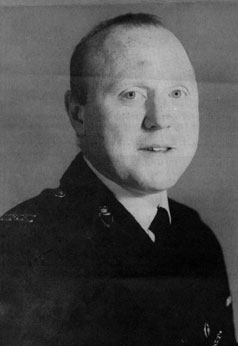
THERE WAS A LOT OF HUMANITY THERE THAT DAY, SERGEANT TELLS INQUEST
There was a lot of humanity there that day, Sergeant tells inquest
'The local people of Omagh were tremendous. We got an amazing amount of help from people too numerous to mention'
A POLICE sergeant was almost reduced to tears as he told the Omagh Inquest that as he ran to help people killed and injured in the bomb two years ago he thought one of the toddlers killed was his own daughter.
Sergeant Philip Marshall's testimony faltered several limes as he explained how he came across an infant girl, dead, in the window of the Salad Bowl.
Earlier in his testimony he told how he drove into Omagh following the bomb warnings, and was involved in clearance duties, but had difficulty in moving some people who had drink taken.
He said he could not locate a heavily laden vehicle in High Street, and he remembered shouting to another policeman before hearing a loud bang.
In Market Street he saw badly injured people, including one man whose head was on fire.
Arriving at the site of the explosion he saw people under part of a burning car, with people trapped under it "burning to death". He said he was handed a fire extinguisher and used it on the fire and also helped pull two people free from the wreckage.
He said he grabbed members of the public and police and tried to get them to stay with those who were severely injured.
As he outlined what he did at the scene, the sergeant explained that at one point he had to stand in the middle of the street and shout at the top of his voice to get the injured people to the bottom of Market Street.
A white cordon tape was put across the street, and he then instructed the police to form a line at the bottom of the steel and instructed them to carry out a search to locate any other casualties.
Around that time he saw an Army doctor, Captain Sam Potter, and he began to assist him in ascertaining those who were dead at the scene.
As the bodies were accounted for he instructed police to use makeshift stretchers, such as doors, to remove the bodies, which were initially placed in the arcade entry and six others were placed on the floor of a fashion shop, the frontage of which had been blown in by the ferocity of the blast.
He said he found his work at that stage very distressing.
He also said that he formed part of the Body Recovery and Identification Team, which he also found distressing.
In a statement to the inquest he said people had to understand that there was a lot of confusion in the first 10 to 15 minutes after the bomb exploded.
He said it got to the stage if people were begging for help they had to move on if they were able to walk as they were not as badly hurt as other people lying a few feet away.
"The reason I tried to allocate two people to each person was one was asked to give first aid and the other to talk. My instructions to people were to keep talking.
He said that there had been quite a lot of talk about what happened to people, but he wanted the bereaved families to know that there was somebody with their loved ones and talking to them.
"At no time did they die alone," he said, adding that people were with those who died throughout the identification process.
He said he was aware that due to the enormity of the situation it would not be long before members of the media arrived, and the bodies were moved from the street and out of sight.
"In doing so everybody was treated with the utmost of respect and compassion by everyone. I am very proud of what my officers did that day," he said, and the sergeant went on to pay tribute to members of the Fire Service and ambulance crews, who were "tremendous".
"The local people of Omagh were tremendous. We got an amazing amount of help from people too numerous to mention," he said.
Sergeant Marshall went on to say that he could not remember everything but he just kept shouting at everybody: "I did not want anybody to start to think about what they were actually doing. I kept them active. That is how we got through it. It was a combined effort there was a lot of humanity there that day".
He told the Inquest that if it had been one of his family that had died he would want to know what he had said, and added that even at the temporary mortuary in the Army Barracks at no time was anyone dead left on their own.
He said clergy were there praying as they went about the identification process, and there was always somebody there.
'The local people of Omagh were tremendous. We got an amazing amount of help from people too numerous to mention'
A POLICE sergeant was almost reduced to tears as he told the Omagh Inquest that as he ran to help people killed and injured in the bomb two years ago he thought one of the toddlers killed was his own daughter.
Sergeant Philip Marshall's testimony faltered several limes as he explained how he came across an infant girl, dead, in the window of the Salad Bowl.
Earlier in his testimony he told how he drove into Omagh following the bomb warnings, and was involved in clearance duties, but had difficulty in moving some people who had drink taken.
He said he could not locate a heavily laden vehicle in High Street, and he remembered shouting to another policeman before hearing a loud bang.
In Market Street he saw badly injured people, including one man whose head was on fire.
Arriving at the site of the explosion he saw people under part of a burning car, with people trapped under it "burning to death". He said he was handed a fire extinguisher and used it on the fire and also helped pull two people free from the wreckage.
He said he grabbed members of the public and police and tried to get them to stay with those who were severely injured.
As he outlined what he did at the scene, the sergeant explained that at one point he had to stand in the middle of the street and shout at the top of his voice to get the injured people to the bottom of Market Street.
A white cordon tape was put across the street, and he then instructed the police to form a line at the bottom of the steel and instructed them to carry out a search to locate any other casualties.
Around that time he saw an Army doctor, Captain Sam Potter, and he began to assist him in ascertaining those who were dead at the scene.
As the bodies were accounted for he instructed police to use makeshift stretchers, such as doors, to remove the bodies, which were initially placed in the arcade entry and six others were placed on the floor of a fashion shop, the frontage of which had been blown in by the ferocity of the blast.
He said he found his work at that stage very distressing.
He also said that he formed part of the Body Recovery and Identification Team, which he also found distressing.
In a statement to the inquest he said people had to understand that there was a lot of confusion in the first 10 to 15 minutes after the bomb exploded.
He said it got to the stage if people were begging for help they had to move on if they were able to walk as they were not as badly hurt as other people lying a few feet away.
"The reason I tried to allocate two people to each person was one was asked to give first aid and the other to talk. My instructions to people were to keep talking.
He said that there had been quite a lot of talk about what happened to people, but he wanted the bereaved families to know that there was somebody with their loved ones and talking to them.
"At no time did they die alone," he said, adding that people were with those who died throughout the identification process.
He said he was aware that due to the enormity of the situation it would not be long before members of the media arrived, and the bodies were moved from the street and out of sight.
"In doing so everybody was treated with the utmost of respect and compassion by everyone. I am very proud of what my officers did that day," he said, and the sergeant went on to pay tribute to members of the Fire Service and ambulance crews, who were "tremendous".
"The local people of Omagh were tremendous. We got an amazing amount of help from people too numerous to mention," he said.
Sergeant Marshall went on to say that he could not remember everything but he just kept shouting at everybody: "I did not want anybody to start to think about what they were actually doing. I kept them active. That is how we got through it. It was a combined effort there was a lot of humanity there that day".
He told the Inquest that if it had been one of his family that had died he would want to know what he had said, and added that even at the temporary mortuary in the Army Barracks at no time was anyone dead left on their own.
He said clergy were there praying as they went about the identification process, and there was always somebody there.
Further Information
Publisher: TYRONE CONSTITUTION
Ref: TC/1574
Published Date: 05-Oct-00
Related Images