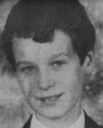
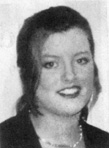
THEY HAD THEIR WHOLE LIVES AHEAD OF THEM
They had their whole lives ahead of them'
Reports by Olga Bradshaw, Anne Palmer and David Killen
THE Coroner hearing the inquests into the deaths of those murdered in the Omagh bombing, has spoken of his feelings with regard to the number of young people whose lives were prematurely and tragically ended in the atrocity.
Mr. John Leckey spoke of how all of the young people killed had their whole lives in front of them. Some parents had received their children's examination results just days after they had been killed.
Some of the young people had plans to return to school to study A levels, to go to college, or pursue their academic achievements and careers at university.
The bombers who planted the device, now believed to have contained as much as 440lbs of improvised explosives, had cruelly robbed the young people of their plans, their careers and their futures, Mr. Leckey told the temporary Coroners Court at Omagh Leisure Complex.
He said the bomb had also brought a tragic end to a day out in the town for a coach load of young people from Spain and Buncrana, who had visited the Ulster American Folk Park, four miles outside the town and travelled into the town where a festival was taking place that day.
Paying tribute to the parents and relatives of the murdered young people, he said that for a parent the worst thing imaginable was the loss of a child. It was something a parent would never completely recover from, although he hoped the passage of time, and obvious support the families had received and continued to receive, and the fact that their children had, not suffered, would be of some comfort to them.
A YOUNG girl who worked hard to obtain the qualifications needed to pursue her ambitions died within minutes of the blast.
Jolene Briege Marlow, of Newtownsaville was just 17, and was awaiting results of her examinations.
Mark Paul Armstrong said that as people were moved away from the courthouse he saw Jolene and Nicky Marlow with an elderly lady.
With a friend he was in Kells shop when he heard a deafening bang. The ground shook and the roof panels fell in.
The statement of Rosemary McNellis was read to the inquest.
She said she was in the town when her grandnieces, Jolene and Nicky Marlow came up to her.
They said there was a bomb at the courthouse and all three then walked down the street.
As they walked down the street the girls were behind her, Mrs. McNellis said. She thought they were at the front of most the crowd making its way town the street.
"Suddenly there was an awful bang and everything went black like a shower of coal. I was still standing but I saw Jolene and Nicky were lying on the ground. I do not remember anything after that, I must have passed out," she said.
James Marlow gave evidence that he formally identified the body of Jolene, his niece, to police.
Asked by the coroner, he said Jolene had just finished her A levels and was waiting for the results. She hoped to follow a career in physiotherapy or sports studies, he said.
The A level results came out the following week, he added.
Professor Crane said death was due to a laceration of the right iliac artery and vein due to shrapnel injuries. Internal bleeding would have caused rapid death, he said.
Asked by the coroner whether injuries of the nature Jolene suffered might have been survivable, Professor Crane said he did not think she could have been saved, even if she had been received in hospital very speedily.
Mr. Leckey said it was an absolute tragedy that Jolene should have died in this way.
He said she had wanted to make her career in physiotherapy and leisure studies and it was desperately sad that Jolene, having worked so hard to meet the high standards needed, "She had no opportunity to fulfil her ambitions," he said.
In a statement read out to the inquest, Jolene's parents, Joe and Bridie, expressed their thanks to all who had helped in the immediate aftermath.
That, they said, included police officers first aiders, lay people, clergy, ambulance personnel and the staff of the County Hospital.
They had special thanks for Constable Keith Hutchinson, the police liaison officer.
They added; "We would appeal to the people who caused this atrocity to consider their actions and we hope that no other families should suffer what the people of Omagh have gone through."
TWO young friends who had enjoyed life together, died together, the coroner said.
Mr. Leckey was speaking after the inquest into the death of Lorraine Wilson, which was held soon after that of her good friend, Samantha McFarland.
Clive Leslie Catterson told the inquest he saw Lorraine and Samantha McFarland in the Oxfam Shop some time before the explosion.
Later when he was evacuated from the shop in which he worked, he saw the two girls on the street.
With others he was in the Kozy Corner bar where he ordered a drink. There was a massive bang and something hit him in the face, he said.
"1 was thinking if the bomb was at the courthouse, how come the Kozy Corner was so badly damaged," he said.
Victoria Knox said that minutes before the blast she was in a car at Campsie Road and saw Lorraine and Samantha at Market Street. She had not realised there was a bomb alert, she added.
Sharon Corrigan said she saw Lorraine and Samantha outside Forster Richardson's jewellers.
People were walking down the street but at that stage there was no panic, she said.
Mr. Godfrey Wilson's evidence was that he identified the body of his daughter to police.
He told the coroner Lorraine had just finished her GCSEs. She had hoped to go on to become an air hostess or a chef, he added.
Professor Crane said death was due the perforation of the left carotid artery due to shrapnel wounds. Lorraine also sustained head injuries.
Bleeding from the artery was responsible for he death at the scene, he said.
Death would have been rapid. Even immediate medical assistance could not have saved Lorraine. Her injuries were too serious, he told the coroner.
Mr. Leckey said the inquest had got a picture of two friends who had enjoyed life together, and who tragically died together.
Samantha McFarland was a keen and gifted sportswoman, and her career plans included going to university to study business studies, the coroner's court heard.
Miss McFarland was found near the Salad Bowl at the bottom of Market Street, and despite receiving medical treatment from paramedics en route to hospital, she died 20 to 25 minutes after the bomb detonated.
Mr. Damien Maguire said he had been at work in the Cozy Corner on the day of the bomb, and shortly after 3pm five young lads came into the premises and told him there was a bomb scare.
He said he went out the front of the premises and saw two girls, Diane Wallace and Samantha McFarland in the street. Samantha was sitting on the window of S. D. Kells.
Two customers came in and he went back into the premises to serve them. The bomb then exploded.
Mr. James Joseph Mallon and his son, Ruairi Francis James Mallon, both told the inquest that they had started work at a house at Campsie Crescent and both of them heard a loud bang shortly after 3pm.
Both told how they ran into Market Street, and Mr. Mallon said his son told him "There's Samantha McFarland".
He said the young woman was lying outside the Salad Bowl, and he thought she was dead. He said that Samantha used to live beside them and he would have known her growing up.
Paramedic, Mr. Derek Patterson, said that once the young woman was put into the ambulance they set off for the hospital, but she went into cardiac arrest twice. They were not able to bring her around the second time.
Some days later, on September 8, he identified the young woman from a photograph album.
Coroner: "Presumably, due to the fact that you had to commence CPR on a number of occasions, you would have considered her position as grave".
Mr. Patterson: "She was in a comatose state. I tried to give her the advantage of my training, and did what I could".
The paramedic said Miss McFarland died sometime between 3.20pm and 3.35pm.
Sergeant Robert Wilson said that he assisted Mr. Jonathan McFarland to identify his sister's body at Lisanelly Army Barracks the day after the bombing.
His evidence was corroborated by Mr. McFarland.
Miss McFarland's father, Mr. Gerald McFarland, said that his daughter had been a student at Strabane Grammar School, and that he, too, identified the young woman at the barracks.
He told the inquest that Samantha had been an A level student, and she had several career plans which she had discussed with him from time to time.
He said that one path she was thinking of following was studying business studies at university.
Mr. McFarland went on to tell the inquest that his daughter was also a gifted equestrian, and she had been a very keen sportsperson.
In his findings, Dr. Derek Carson, said that the cause of Miss McFarland's death was brain injury associated with a fracture to the skull.
He said she had a number of other injuries, all of which were associated with the bombing, although there was a possibility that she was shielded somehow, as she did not have the same level of surface injuries as others.
He said that Samantha had been comatose from the outset due to the injury to her head, which was probably not survivable.
In response to questions from the family's legal representative, Dr. Carson said that Miss McFarland would have been unconscious and therefore incapable of understanding what was going on around her or of feeling pain.
"She would have been totally impervious to any feeling of pain or sensations," he said.
Mr. Leckey, said that yet again the hearing was focused on the death of a teenager.
He said Miss McFarland had plans for the future, and she had hoped to go to university, but, tragically, nothing was to come of that.
"1 am sure Samantha's death has been devastating to her family and friends. I would wish to extend very deep sympathy to them all," he said.
Mr. Jonathan Lowry, BL, who appeared on behalf of the McFarlands, said the family wished to express their thanks and gratitude to the ambulance service, the RUC, all the civilians who helped on "that terrible day", as well as the Army personnel at Lisanelly Barracks for their consideration and sensitivity.
Endorsing Mr. Lowry's comments, Mr. McFarland said that he, too, wished to thank all the services and those who had helped in any way.
"We were treated with the utmost respect and dignity, and I would like to express my thanks to all involved," he said.
THE mother of Alan Radford, told the Omagh Inquest that she cannot understand why people cannot live in peace and allow others of differing religious persuasion to live they way they want.
Mrs. Marion Radford said she had come to the opinion that she no longer wanted to live in Northern Ireland, and said she was tired of never being able to get into town because of bomb scares.
Mrs. Radford said that she and her son had gone into town together at around 2.30pm, and were told that there was a bomb scare at the Courthouse.
She recalled in her statement how she had mentioned going home, but Alan had told her to go to pay a bill. They went up Market Street toward the Northern Bank, but could not get through the police cordon.
"I remember saying I want to leave this country as I am sick of it. You cannot go into town because of bomb scares. He said it was probably only a hoax," she said.
Mrs. Radford said that she then went into a nearby jewellery shop, but became uneasy and went out, meeting Alan at the door.
They walked down Market Street and she went into the Salad Bowl, while Alan said he would be back in a moment.
Mrs. Radford said she felt a bit nervous, and thought that she just wanted to get Alan and get out of the town.
She recalled how she was just paying for her groceries when the bomb went off. A large piece of glass went into her head, and when she went out of the shop there were bodies at her feet and she could not see up the town.
She went on to tell how she asked people if they had seen her son, and how she thought that she must find Alan.
Someone asked her for her coat to cover someone, which she gave them and a woman came up and took her cardigan off and used it to wrap Mrs. Radford's bleeding head.
"The girl made me go and wait for the ambulance. I still did not want to go without Alan," she said.
Mrs. Radford went on to say that she later had to have medical treatment several weeks after the bomb, at Enniskillen, to remove glass from her head, and while she had recovered physically from the atrocity, she had not recovered mentally.
She said she discovered that Alan was dead on the Sunday at 1.30pm.
"I did not go to the Leisure Centre because I just could not go,'" she said. She added that although she had not heard from her son, she still hoped.
Mrs. Radford said that Alan had just left school and was to study catering at Omagh College.
Detective Inspector Colin Milford told the Inquest that the teenager's body was identified to him by Mr. Paul Radford, Alan's brother. Mr. Radford gave corroborative evidence.
Coroner: "It must have been a dreadful experience having to identify your brother's body".
Mr. Radford: "What can 1 say? It was terrible".
In his findings, Professor Jack Crane, State Pathologist, said that the cause of Alan's death was due to multiple injuries due to a bomb.
He had both external and internal injuries caused by shrapnel, and the combined effects of those injuries would have caused his death, the pathologist said in his summary.
Professor Crane said that Alan would have lost consciousness very quickly, and would have died fairly rapidly from his blood loss.
Answering questions from Mr. Gerald McAlinden, who appeared for the next of kin Professor Crane said that Alan would only have been conscious for a minute at the most, and would have been within a matter of yards of the bomb when it detonated.
Offering his sympathy to the Radford family, Mr. John Leckey said that it was obvious that all the families had been through a dreadful time. He said it must have been a nightmare for Mrs. Radford to spend overnight waiting until she discovered the son's dreadful death.
"I am sure no one would want to be in such a dreadful position," he said, adding that Alan was like others who died in that they had worked hard to pass their exams and had their careers in front of them.
"It was the same with Alan. He had just left school and was hoping to study catering at Omagh College. Fate decided otherwise. Not only fate, but the evil perpetrators of the atrocity," he said.
Mr. McAlinden said that like Brenda Logue, Alan also died a few days before receiving his exam results.
"These two young people represented the future of Omagh," he said, adding that their future had been prevented and taken away because of a bomb.
He said it was hoped that the whole community would stand together to ensure that nothing like this would happen again.
He said Mrs. Radford was deeply traumatised by the death of her son, and would never got over his loss.
However, he said she had thanked her friends, family and neighbours who had helped her through the past couple of years.
He said she also thanked the police and other emergency service personnel for all their efforts at the scene and those who had cared for her son. He said she also thanked those at the Leisure Centre and at the Army Barracks, as well as the staff involved in the Inquest for their compassion and sympathy and manner in which the Inquest had been conducted.
Responding, Mr. Leckey, said that the family's remarks were very much appreciated, but he warned there were still evil people "out there".
He said that there had been two hoax bomb scares since the Inquest started, and he added: "You really wonder what motivates someone to cause additional distress to all those in Omagh who are undergoing stress at the present time".
A TEENAGER'S mother received her murdered daughter's GCSE results days after the bombing of Market Street.
The Coroner's Court heard how 17-year-old Brenda Logue had been looking forward to returning to school to take A levels, and had harboured a desire to go on to study leisure and tourism.
Extending sympathy to the family Mr. John Leckey, Coroner, said it is dreadful to think that a 17-year-old's hopes for the future had come to an end in such a dreadful fashion.
Brenda's mother, Mrs. Mary Philomena Logue, said she had gone to town with Brenda and her mother and she had browsed around before going to the Carlton Restaurant for lunch with Brenda.
She said that she had been in a shoe shop when a policeman came in and said there was a bomb and people should move to the bottom of the town.
Mrs Logue said her daughter went to look for her grandmother, whom she found and they milled about the bottom end of the town.
Three to five minutes after getting there the bomb exploded.
Mrs. Logue said she found her mother and looked in rubble and called twice for her daughter but could not find her.
She said she spent time walking in circles before going back to the car, and when she returned the police would not let her go back up the town. She was put on anUlsterbus and found her mother.
Mrs. Logue said she asked people if they had seen Brenda, and she spent the night in the Leisure Centre.
On Sunday her brother-in-law, Padraig, went to Lisanelly Barracks where he identified the teenager.
Thanking Mrs. Logue for giving evidence, the Coroner, Mr. John Leckey, said he knew it must have been very difficult for her.
Mr. Padraig McKernan, confirmed that he identified his niece at Lisanelly Barracks.
Coroner: "That was very much an ordeal for you, doing that".
Mr. McKernan: "Yes".
In his report, Dr. Derek Carson, deputy state pathologist, said that Brenda's cause of death had been multiple injuries due to a bomb explosion. He added that from the wounds the teenager suffered it was his perception that she would have been fairly close to the site of the explosion.
"Her injuries were of a severity to cause immediate death. She would not have known anything about it," he said.
Mr. Leckey, in extending sympathy to the family, said that he had been told the teenager's GCSE results had come through a few days after the bomb, and it had been the young woman's intention to go back to school.
"It is dreadful to think someone of 17, that all her hopes should end in such a dreadful fashion," he said.
Mr. Gerald McAlinden, who appeared on behalf of the family, said Mrs. Logue had not got over her daughter's death, and never would.
He said Mrs. Logue had asked him to thank the individuals and group of people who had helped her since her daughter's death.
He paid particular tribute to the other members of the family, friends and neighbours who had comforted Mrs. Logue, and said she was particularly appreciative of the efforts made by the police and others at the scene, those at the Leisure Centre, and those at the Army Barracks who cared for her daughter, for her, and for her relatives.
Coroner: "You have said something that others have also touched on - that how grateful they are for the support they received from a wide range of people. That sort of range of support must have been vital. Also, I am sure that the people to whom Mrs. Logue expresses gratitude would be appreciative of that expression".
Reports by Olga Bradshaw, Anne Palmer and David Killen
THE Coroner hearing the inquests into the deaths of those murdered in the Omagh bombing, has spoken of his feelings with regard to the number of young people whose lives were prematurely and tragically ended in the atrocity.
Mr. John Leckey spoke of how all of the young people killed had their whole lives in front of them. Some parents had received their children's examination results just days after they had been killed.
Some of the young people had plans to return to school to study A levels, to go to college, or pursue their academic achievements and careers at university.
The bombers who planted the device, now believed to have contained as much as 440lbs of improvised explosives, had cruelly robbed the young people of their plans, their careers and their futures, Mr. Leckey told the temporary Coroners Court at Omagh Leisure Complex.
He said the bomb had also brought a tragic end to a day out in the town for a coach load of young people from Spain and Buncrana, who had visited the Ulster American Folk Park, four miles outside the town and travelled into the town where a festival was taking place that day.
Paying tribute to the parents and relatives of the murdered young people, he said that for a parent the worst thing imaginable was the loss of a child. It was something a parent would never completely recover from, although he hoped the passage of time, and obvious support the families had received and continued to receive, and the fact that their children had, not suffered, would be of some comfort to them.
A YOUNG girl who worked hard to obtain the qualifications needed to pursue her ambitions died within minutes of the blast.
Jolene Briege Marlow, of Newtownsaville was just 17, and was awaiting results of her examinations.
Mark Paul Armstrong said that as people were moved away from the courthouse he saw Jolene and Nicky Marlow with an elderly lady.
With a friend he was in Kells shop when he heard a deafening bang. The ground shook and the roof panels fell in.
The statement of Rosemary McNellis was read to the inquest.
She said she was in the town when her grandnieces, Jolene and Nicky Marlow came up to her.
They said there was a bomb at the courthouse and all three then walked down the street.
As they walked down the street the girls were behind her, Mrs. McNellis said. She thought they were at the front of most the crowd making its way town the street.
"Suddenly there was an awful bang and everything went black like a shower of coal. I was still standing but I saw Jolene and Nicky were lying on the ground. I do not remember anything after that, I must have passed out," she said.
James Marlow gave evidence that he formally identified the body of Jolene, his niece, to police.
Asked by the coroner, he said Jolene had just finished her A levels and was waiting for the results. She hoped to follow a career in physiotherapy or sports studies, he said.
The A level results came out the following week, he added.
Professor Crane said death was due to a laceration of the right iliac artery and vein due to shrapnel injuries. Internal bleeding would have caused rapid death, he said.
Asked by the coroner whether injuries of the nature Jolene suffered might have been survivable, Professor Crane said he did not think she could have been saved, even if she had been received in hospital very speedily.
Mr. Leckey said it was an absolute tragedy that Jolene should have died in this way.
He said she had wanted to make her career in physiotherapy and leisure studies and it was desperately sad that Jolene, having worked so hard to meet the high standards needed, "She had no opportunity to fulfil her ambitions," he said.
In a statement read out to the inquest, Jolene's parents, Joe and Bridie, expressed their thanks to all who had helped in the immediate aftermath.
That, they said, included police officers first aiders, lay people, clergy, ambulance personnel and the staff of the County Hospital.
They had special thanks for Constable Keith Hutchinson, the police liaison officer.
They added; "We would appeal to the people who caused this atrocity to consider their actions and we hope that no other families should suffer what the people of Omagh have gone through."
TWO young friends who had enjoyed life together, died together, the coroner said.
Mr. Leckey was speaking after the inquest into the death of Lorraine Wilson, which was held soon after that of her good friend, Samantha McFarland.
Clive Leslie Catterson told the inquest he saw Lorraine and Samantha McFarland in the Oxfam Shop some time before the explosion.
Later when he was evacuated from the shop in which he worked, he saw the two girls on the street.
With others he was in the Kozy Corner bar where he ordered a drink. There was a massive bang and something hit him in the face, he said.
"1 was thinking if the bomb was at the courthouse, how come the Kozy Corner was so badly damaged," he said.
Victoria Knox said that minutes before the blast she was in a car at Campsie Road and saw Lorraine and Samantha at Market Street. She had not realised there was a bomb alert, she added.
Sharon Corrigan said she saw Lorraine and Samantha outside Forster Richardson's jewellers.
People were walking down the street but at that stage there was no panic, she said.
Mr. Godfrey Wilson's evidence was that he identified the body of his daughter to police.
He told the coroner Lorraine had just finished her GCSEs. She had hoped to go on to become an air hostess or a chef, he added.
Professor Crane said death was due the perforation of the left carotid artery due to shrapnel wounds. Lorraine also sustained head injuries.
Bleeding from the artery was responsible for he death at the scene, he said.
Death would have been rapid. Even immediate medical assistance could not have saved Lorraine. Her injuries were too serious, he told the coroner.
Mr. Leckey said the inquest had got a picture of two friends who had enjoyed life together, and who tragically died together.
Samantha McFarland was a keen and gifted sportswoman, and her career plans included going to university to study business studies, the coroner's court heard.
Miss McFarland was found near the Salad Bowl at the bottom of Market Street, and despite receiving medical treatment from paramedics en route to hospital, she died 20 to 25 minutes after the bomb detonated.
Mr. Damien Maguire said he had been at work in the Cozy Corner on the day of the bomb, and shortly after 3pm five young lads came into the premises and told him there was a bomb scare.
He said he went out the front of the premises and saw two girls, Diane Wallace and Samantha McFarland in the street. Samantha was sitting on the window of S. D. Kells.
Two customers came in and he went back into the premises to serve them. The bomb then exploded.
Mr. James Joseph Mallon and his son, Ruairi Francis James Mallon, both told the inquest that they had started work at a house at Campsie Crescent and both of them heard a loud bang shortly after 3pm.
Both told how they ran into Market Street, and Mr. Mallon said his son told him "There's Samantha McFarland".
He said the young woman was lying outside the Salad Bowl, and he thought she was dead. He said that Samantha used to live beside them and he would have known her growing up.
Paramedic, Mr. Derek Patterson, said that once the young woman was put into the ambulance they set off for the hospital, but she went into cardiac arrest twice. They were not able to bring her around the second time.
Some days later, on September 8, he identified the young woman from a photograph album.
Coroner: "Presumably, due to the fact that you had to commence CPR on a number of occasions, you would have considered her position as grave".
Mr. Patterson: "She was in a comatose state. I tried to give her the advantage of my training, and did what I could".
The paramedic said Miss McFarland died sometime between 3.20pm and 3.35pm.
Sergeant Robert Wilson said that he assisted Mr. Jonathan McFarland to identify his sister's body at Lisanelly Army Barracks the day after the bombing.
His evidence was corroborated by Mr. McFarland.
Miss McFarland's father, Mr. Gerald McFarland, said that his daughter had been a student at Strabane Grammar School, and that he, too, identified the young woman at the barracks.
He told the inquest that Samantha had been an A level student, and she had several career plans which she had discussed with him from time to time.
He said that one path she was thinking of following was studying business studies at university.
Mr. McFarland went on to tell the inquest that his daughter was also a gifted equestrian, and she had been a very keen sportsperson.
In his findings, Dr. Derek Carson, said that the cause of Miss McFarland's death was brain injury associated with a fracture to the skull.
He said she had a number of other injuries, all of which were associated with the bombing, although there was a possibility that she was shielded somehow, as she did not have the same level of surface injuries as others.
He said that Samantha had been comatose from the outset due to the injury to her head, which was probably not survivable.
In response to questions from the family's legal representative, Dr. Carson said that Miss McFarland would have been unconscious and therefore incapable of understanding what was going on around her or of feeling pain.
"She would have been totally impervious to any feeling of pain or sensations," he said.
Mr. Leckey, said that yet again the hearing was focused on the death of a teenager.
He said Miss McFarland had plans for the future, and she had hoped to go to university, but, tragically, nothing was to come of that.
"1 am sure Samantha's death has been devastating to her family and friends. I would wish to extend very deep sympathy to them all," he said.
Mr. Jonathan Lowry, BL, who appeared on behalf of the McFarlands, said the family wished to express their thanks and gratitude to the ambulance service, the RUC, all the civilians who helped on "that terrible day", as well as the Army personnel at Lisanelly Barracks for their consideration and sensitivity.
Endorsing Mr. Lowry's comments, Mr. McFarland said that he, too, wished to thank all the services and those who had helped in any way.
"We were treated with the utmost respect and dignity, and I would like to express my thanks to all involved," he said.
THE mother of Alan Radford, told the Omagh Inquest that she cannot understand why people cannot live in peace and allow others of differing religious persuasion to live they way they want.
Mrs. Marion Radford said she had come to the opinion that she no longer wanted to live in Northern Ireland, and said she was tired of never being able to get into town because of bomb scares.
Mrs. Radford said that she and her son had gone into town together at around 2.30pm, and were told that there was a bomb scare at the Courthouse.
She recalled in her statement how she had mentioned going home, but Alan had told her to go to pay a bill. They went up Market Street toward the Northern Bank, but could not get through the police cordon.
"I remember saying I want to leave this country as I am sick of it. You cannot go into town because of bomb scares. He said it was probably only a hoax," she said.
Mrs. Radford said that she then went into a nearby jewellery shop, but became uneasy and went out, meeting Alan at the door.
They walked down Market Street and she went into the Salad Bowl, while Alan said he would be back in a moment.
Mrs. Radford said she felt a bit nervous, and thought that she just wanted to get Alan and get out of the town.
She recalled how she was just paying for her groceries when the bomb went off. A large piece of glass went into her head, and when she went out of the shop there were bodies at her feet and she could not see up the town.
She went on to tell how she asked people if they had seen her son, and how she thought that she must find Alan.
Someone asked her for her coat to cover someone, which she gave them and a woman came up and took her cardigan off and used it to wrap Mrs. Radford's bleeding head.
"The girl made me go and wait for the ambulance. I still did not want to go without Alan," she said.
Mrs. Radford went on to say that she later had to have medical treatment several weeks after the bomb, at Enniskillen, to remove glass from her head, and while she had recovered physically from the atrocity, she had not recovered mentally.
She said she discovered that Alan was dead on the Sunday at 1.30pm.
"I did not go to the Leisure Centre because I just could not go,'" she said. She added that although she had not heard from her son, she still hoped.
Mrs. Radford said that Alan had just left school and was to study catering at Omagh College.
Detective Inspector Colin Milford told the Inquest that the teenager's body was identified to him by Mr. Paul Radford, Alan's brother. Mr. Radford gave corroborative evidence.
Coroner: "It must have been a dreadful experience having to identify your brother's body".
Mr. Radford: "What can 1 say? It was terrible".
In his findings, Professor Jack Crane, State Pathologist, said that the cause of Alan's death was due to multiple injuries due to a bomb.
He had both external and internal injuries caused by shrapnel, and the combined effects of those injuries would have caused his death, the pathologist said in his summary.
Professor Crane said that Alan would have lost consciousness very quickly, and would have died fairly rapidly from his blood loss.
Answering questions from Mr. Gerald McAlinden, who appeared for the next of kin Professor Crane said that Alan would only have been conscious for a minute at the most, and would have been within a matter of yards of the bomb when it detonated.
Offering his sympathy to the Radford family, Mr. John Leckey said that it was obvious that all the families had been through a dreadful time. He said it must have been a nightmare for Mrs. Radford to spend overnight waiting until she discovered the son's dreadful death.
"I am sure no one would want to be in such a dreadful position," he said, adding that Alan was like others who died in that they had worked hard to pass their exams and had their careers in front of them.
"It was the same with Alan. He had just left school and was hoping to study catering at Omagh College. Fate decided otherwise. Not only fate, but the evil perpetrators of the atrocity," he said.
Mr. McAlinden said that like Brenda Logue, Alan also died a few days before receiving his exam results.
"These two young people represented the future of Omagh," he said, adding that their future had been prevented and taken away because of a bomb.
He said it was hoped that the whole community would stand together to ensure that nothing like this would happen again.
He said Mrs. Radford was deeply traumatised by the death of her son, and would never got over his loss.
However, he said she had thanked her friends, family and neighbours who had helped her through the past couple of years.
He said she also thanked the police and other emergency service personnel for all their efforts at the scene and those who had cared for her son. He said she also thanked those at the Leisure Centre and at the Army Barracks, as well as the staff involved in the Inquest for their compassion and sympathy and manner in which the Inquest had been conducted.
Responding, Mr. Leckey, said that the family's remarks were very much appreciated, but he warned there were still evil people "out there".
He said that there had been two hoax bomb scares since the Inquest started, and he added: "You really wonder what motivates someone to cause additional distress to all those in Omagh who are undergoing stress at the present time".
A TEENAGER'S mother received her murdered daughter's GCSE results days after the bombing of Market Street.
The Coroner's Court heard how 17-year-old Brenda Logue had been looking forward to returning to school to take A levels, and had harboured a desire to go on to study leisure and tourism.
Extending sympathy to the family Mr. John Leckey, Coroner, said it is dreadful to think that a 17-year-old's hopes for the future had come to an end in such a dreadful fashion.
Brenda's mother, Mrs. Mary Philomena Logue, said she had gone to town with Brenda and her mother and she had browsed around before going to the Carlton Restaurant for lunch with Brenda.
She said that she had been in a shoe shop when a policeman came in and said there was a bomb and people should move to the bottom of the town.
Mrs Logue said her daughter went to look for her grandmother, whom she found and they milled about the bottom end of the town.
Three to five minutes after getting there the bomb exploded.
Mrs. Logue said she found her mother and looked in rubble and called twice for her daughter but could not find her.
She said she spent time walking in circles before going back to the car, and when she returned the police would not let her go back up the town. She was put on anUlsterbus and found her mother.
Mrs. Logue said she asked people if they had seen Brenda, and she spent the night in the Leisure Centre.
On Sunday her brother-in-law, Padraig, went to Lisanelly Barracks where he identified the teenager.
Thanking Mrs. Logue for giving evidence, the Coroner, Mr. John Leckey, said he knew it must have been very difficult for her.
Mr. Padraig McKernan, confirmed that he identified his niece at Lisanelly Barracks.
Coroner: "That was very much an ordeal for you, doing that".
Mr. McKernan: "Yes".
In his report, Dr. Derek Carson, deputy state pathologist, said that Brenda's cause of death had been multiple injuries due to a bomb explosion. He added that from the wounds the teenager suffered it was his perception that she would have been fairly close to the site of the explosion.
"Her injuries were of a severity to cause immediate death. She would not have known anything about it," he said.
Mr. Leckey, in extending sympathy to the family, said that he had been told the teenager's GCSE results had come through a few days after the bomb, and it had been the young woman's intention to go back to school.
"It is dreadful to think someone of 17, that all her hopes should end in such a dreadful fashion," he said.
Mr. Gerald McAlinden, who appeared on behalf of the family, said Mrs. Logue had not got over her daughter's death, and never would.
He said Mrs. Logue had asked him to thank the individuals and group of people who had helped her since her daughter's death.
He paid particular tribute to the other members of the family, friends and neighbours who had comforted Mrs. Logue, and said she was particularly appreciative of the efforts made by the police and others at the scene, those at the Leisure Centre, and those at the Army Barracks who cared for her daughter, for her, and for her relatives.
Coroner: "You have said something that others have also touched on - that how grateful they are for the support they received from a wide range of people. That sort of range of support must have been vital. Also, I am sure that the people to whom Mrs. Logue expresses gratitude would be appreciative of that expression".
Further Information
Publisher: TYRONE CONSTITUTION
Ref: TC/1557
Published Date: 28-Sep-00
Related Images