SIGNS OF HOPE AS REGENERATION OF TOWN'S ECONOMY FOLLOWED HARROWING DROUGHT
Signs of hope as regeneration of town's economy followed harrowing drought
ONE of the most positive outcomes of the post-bomb era in Omagh has been the burgeoning success of the business sector.
Omagh's retail industry has moved from strength to strength, and is an ever-differing scene from the provincial market town of 1998.
The legacy left by the bomb on the town's business sector is one which can never be estimated in monetary value, yet the regeneration of the town's economy clearly followed a harrowing drought suffered by the business community.
As Omagh become synonymous with something altogether different, retail and shopping were the last thing on the minds of many of Omagh's consumers.
However, strategies implemented by the local business fraternity and independent panels sought to address the problem, albeit with a degree of uncertainty.
Many of the regeneration proposals may have been employed in Omagh regardless of the bomb, in line with work already underway in other provincial towns, yet how these would work in an environment such as Omagh's were anybody's guess.
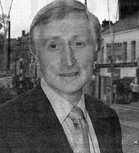
"It's very difficult to quantify what direct impact the bomb had on the local business sector," admitted current president of Omagh Chamber of Commerce, Marcus Isherwood, "Business people in the town never focused on what damage had been done, or any exact figures relating to damage, it was more a case of looking forward."
The town centre was closed off for some time in the immediate aftermath, with untold hardship caused to family-run businesses, the bulk of which made up Lower Market Street.
"It did disrupt the business, but it was important to look forward right from day one," added Mr Isherwood.
Several strategies were implemented to help the business community at the time, with Omagh 2010, Omagh Taskforce and Omagh Business Forum all to the fore.
"Each group had measurable goals to try to achieve, which they did success-fully," said Mr Isherwood. "For example, 'Give a Day to Omagh' an example of how we tried to get people back on the streets, to show the help and support the people could give those businesses affected."
The vision of the 2010 Taskforce, as depicted on its own manifesto, was to create a "vibrant and enterprising place that inspires confidence, excellence and the development of opportunities for all members of the community." Indeed, the 2010 vision cited a vibrant town and an enterprising economy as its two main focal points.
Having a contingency plan to resurrect a flailing retail economy in the aftermath of such an event was always going to be a difficult operation, particularly when regeneration schemes are not fool proof in a normal environment. As such, regeneration plans, which had proved successful in other towns of similar size and economic muscle, were not easily implemented in Omagh.
"It was very difficult, and the thing that made it possible was the ordinary people of Omagh, and further afield, helping out," said Mr Isherwood, "The business community would have found it impossible otherwise.
"There was no magic wand that we could wave and hope everything would rectify itself, just ordinary people giving all their hard work."
The emergence of the retail giants into Omagh since 1998 has been the standout success on the business front since the blast. The opening of the Showgrounds Retail Park, or Sedan Avenue Retail Park as it was known during its infancy, was quickly followed by the introduction of the Great Northern Retail Park on Tamlaght Road, fittingly located adjacent to the completed throughpass, which for so long remained a large jigsaw piece for the further expansion of the local business outside of the town's boundaries.
Large multi-national companies later moved into existing premises on the outskirts of the town, with the continued strength of the Gortrush Industrial Estate facilitating its expansion through new office and unit sites.
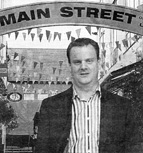
The redevelopment of 'Main Street', on the site of the old Royal Arms Mews on Market Street, was seen as a redeeming feature in the new-look town centre. Indeed, the business sector grew hand-in-hand with the aesthetic backdrop of the town centre, with the building of the Strule Arts Centre and improvements to the water flow at Bells Bridge, the completion of the new Omagh College and the ongoing work facilitating a new river walk along the Strule.
In all, 580 jobs have been created in the town since the regeneration process began, with over 200,000 sq ft of new retail space created.
"The retail offering in the town now has moved dramatically, the emergence of the PLCs, coupled with what is already on offer in Omagh is very strong," said Mr Isherwood.
However successful the multinationals have been since their arrival, the family-run core of the businesses in the town centre, have felt the pinch more so. The continued closure of the town during the investigation and subsequent renovation were followed by the reconstruction of Market Street and the restriction of through traffic, as part of the 2010 package.
"I think that the family-run businesses went through a whole range of challenges but nowadays given the fact that we have a greater draw into the town, they are enjoying successes. The greatest importance is that it really brought people together, it was very powerful and it will remain so. The whole unity of the town, between customers and businesses alike has been the lasting legacy on the businesses sector," concluded Mr Isherwood.
Patrick Bogues, proprietor of Bogues Jewellers and Forster Richardson Jewellers on Market Street, a long-time trader in Omagh, had a first hand experience in the rejuvenation of the town's business, as a founding member of the Omagh Business Forum.
"I think that you don't get much character in a town which is all multi-nationals," said Mr Bogues, "so its extremely important that the town centre retains much of its family-run business.
"I believe that the exercise of reconstruction was extremely successful, it achieved most of its targets well in advance. We have always regarded the redevelopment of the town as part of the healing process, its part of getting on with the loss of loved ones. We have seen the investment as getting over this process."
Mr Bogues alluded to the large expanse of extra retail space that has been created in the interim and noted local shoppers no longer favour Cookstown, Enniskillen and Londonderry as first choice shopping destinations, as they did in the past.
"We have a town centre to be proud of. We have expanded the floor space in the town from about 350,000 sq feet to 500,000 sq feet. The opportunity for shoppers is great, there's not as much leakage to other towns, as we would have seen in the past. We actually have the opposite now, with people coming in from other areas," said Mr Bogues.
Alas, the success of the retail sector came at a price to some, with many independent businesses, many located in the town centre, forced out since the onset of aggressive competition from the multinationals.
"Local businesses don't have huge resources to fall back on," admitted Mr Bogues. "Many friends of mine have been forced out by multinationals and I do think more should be done here to help small business, such as in the republic, where they are more careful in their planning laws, for example, out of town centres. Here, we just have to be judicious in how we proceed.
"I don't want to see development stopped, as a businessman I believe competition is necessary. The significance of the 2010 objective was it was business driven, because, at the time, Omagh District Council produced a document on how to respond to the bomb. What's happened now is the council is working on a 15-year plan. We just have to wait and see what comes out of it."
In conclusion, Mr Bogue gave his thoughts on how the efforts of the business community, in the immediate aftermath of the bomb, have impacted on the economic stability of today.
"For someone like me, it's very difficult to think of the bomb without thinking of the loss. We have lost good people who were personal friends of mine. We can't forget that and never will. In terms of looking forward, what was good about the 2010 project was we all worked together, the local people and local and central government. We addressed things that we needed to look at for a long time. The town centre itself can be used for many other things rather than retail, for example, the Strule Arts Centre. We have a much higher-class offer so that we can attract a higher-class shopper."
The next step for the retail sector is the implementation of Omagh District Council's 2025 strategy, which aims to enhance and consolidate the economic position of the town.
ONE of the most positive outcomes of the post-bomb era in Omagh has been the burgeoning success of the business sector.
Omagh's retail industry has moved from strength to strength, and is an ever-differing scene from the provincial market town of 1998.
The legacy left by the bomb on the town's business sector is one which can never be estimated in monetary value, yet the regeneration of the town's economy clearly followed a harrowing drought suffered by the business community.
As Omagh become synonymous with something altogether different, retail and shopping were the last thing on the minds of many of Omagh's consumers.
However, strategies implemented by the local business fraternity and independent panels sought to address the problem, albeit with a degree of uncertainty.
Many of the regeneration proposals may have been employed in Omagh regardless of the bomb, in line with work already underway in other provincial towns, yet how these would work in an environment such as Omagh's were anybody's guess.
"It's very difficult to quantify what direct impact the bomb had on the local business sector," admitted current president of Omagh Chamber of Commerce, Marcus Isherwood, "Business people in the town never focused on what damage had been done, or any exact figures relating to damage, it was more a case of looking forward."
The town centre was closed off for some time in the immediate aftermath, with untold hardship caused to family-run businesses, the bulk of which made up Lower Market Street.
"It did disrupt the business, but it was important to look forward right from day one," added Mr Isherwood.
Several strategies were implemented to help the business community at the time, with Omagh 2010, Omagh Taskforce and Omagh Business Forum all to the fore.
"Each group had measurable goals to try to achieve, which they did success-fully," said Mr Isherwood. "For example, 'Give a Day to Omagh' an example of how we tried to get people back on the streets, to show the help and support the people could give those businesses affected."
The vision of the 2010 Taskforce, as depicted on its own manifesto, was to create a "vibrant and enterprising place that inspires confidence, excellence and the development of opportunities for all members of the community." Indeed, the 2010 vision cited a vibrant town and an enterprising economy as its two main focal points.
Having a contingency plan to resurrect a flailing retail economy in the aftermath of such an event was always going to be a difficult operation, particularly when regeneration schemes are not fool proof in a normal environment. As such, regeneration plans, which had proved successful in other towns of similar size and economic muscle, were not easily implemented in Omagh.
"It was very difficult, and the thing that made it possible was the ordinary people of Omagh, and further afield, helping out," said Mr Isherwood, "The business community would have found it impossible otherwise.
"There was no magic wand that we could wave and hope everything would rectify itself, just ordinary people giving all their hard work."
The emergence of the retail giants into Omagh since 1998 has been the standout success on the business front since the blast. The opening of the Showgrounds Retail Park, or Sedan Avenue Retail Park as it was known during its infancy, was quickly followed by the introduction of the Great Northern Retail Park on Tamlaght Road, fittingly located adjacent to the completed throughpass, which for so long remained a large jigsaw piece for the further expansion of the local business outside of the town's boundaries.
Large multi-national companies later moved into existing premises on the outskirts of the town, with the continued strength of the Gortrush Industrial Estate facilitating its expansion through new office and unit sites.
The redevelopment of 'Main Street', on the site of the old Royal Arms Mews on Market Street, was seen as a redeeming feature in the new-look town centre. Indeed, the business sector grew hand-in-hand with the aesthetic backdrop of the town centre, with the building of the Strule Arts Centre and improvements to the water flow at Bells Bridge, the completion of the new Omagh College and the ongoing work facilitating a new river walk along the Strule.
In all, 580 jobs have been created in the town since the regeneration process began, with over 200,000 sq ft of new retail space created.
"The retail offering in the town now has moved dramatically, the emergence of the PLCs, coupled with what is already on offer in Omagh is very strong," said Mr Isherwood.
However successful the multinationals have been since their arrival, the family-run core of the businesses in the town centre, have felt the pinch more so. The continued closure of the town during the investigation and subsequent renovation were followed by the reconstruction of Market Street and the restriction of through traffic, as part of the 2010 package.
"I think that the family-run businesses went through a whole range of challenges but nowadays given the fact that we have a greater draw into the town, they are enjoying successes. The greatest importance is that it really brought people together, it was very powerful and it will remain so. The whole unity of the town, between customers and businesses alike has been the lasting legacy on the businesses sector," concluded Mr Isherwood.
Patrick Bogues, proprietor of Bogues Jewellers and Forster Richardson Jewellers on Market Street, a long-time trader in Omagh, had a first hand experience in the rejuvenation of the town's business, as a founding member of the Omagh Business Forum.
"I think that you don't get much character in a town which is all multi-nationals," said Mr Bogues, "so its extremely important that the town centre retains much of its family-run business.
"I believe that the exercise of reconstruction was extremely successful, it achieved most of its targets well in advance. We have always regarded the redevelopment of the town as part of the healing process, its part of getting on with the loss of loved ones. We have seen the investment as getting over this process."
Mr Bogues alluded to the large expanse of extra retail space that has been created in the interim and noted local shoppers no longer favour Cookstown, Enniskillen and Londonderry as first choice shopping destinations, as they did in the past.
"We have a town centre to be proud of. We have expanded the floor space in the town from about 350,000 sq feet to 500,000 sq feet. The opportunity for shoppers is great, there's not as much leakage to other towns, as we would have seen in the past. We actually have the opposite now, with people coming in from other areas," said Mr Bogues.
Alas, the success of the retail sector came at a price to some, with many independent businesses, many located in the town centre, forced out since the onset of aggressive competition from the multinationals.
"Local businesses don't have huge resources to fall back on," admitted Mr Bogues. "Many friends of mine have been forced out by multinationals and I do think more should be done here to help small business, such as in the republic, where they are more careful in their planning laws, for example, out of town centres. Here, we just have to be judicious in how we proceed.
"I don't want to see development stopped, as a businessman I believe competition is necessary. The significance of the 2010 objective was it was business driven, because, at the time, Omagh District Council produced a document on how to respond to the bomb. What's happened now is the council is working on a 15-year plan. We just have to wait and see what comes out of it."
In conclusion, Mr Bogue gave his thoughts on how the efforts of the business community, in the immediate aftermath of the bomb, have impacted on the economic stability of today.
"For someone like me, it's very difficult to think of the bomb without thinking of the loss. We have lost good people who were personal friends of mine. We can't forget that and never will. In terms of looking forward, what was good about the 2010 project was we all worked together, the local people and local and central government. We addressed things that we needed to look at for a long time. The town centre itself can be used for many other things rather than retail, for example, the Strule Arts Centre. We have a much higher-class offer so that we can attract a higher-class shopper."
The next step for the retail sector is the implementation of Omagh District Council's 2025 strategy, which aims to enhance and consolidate the economic position of the town.
Further Information
Publisher: TYRONE CONSTITUTION
Ref: TC10An/37
Published Date: 14-Aug-08
Related Images