COUNTY STAFF PULLED TOGETHER EXTREMELY WELL
County' staff pulled together 'extremely well' to cope with' battlefield scene' - Retired consultant surgeon
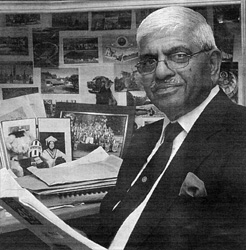
RETIRED consultant surgeon, Mr Dominic Pinto OBE, remembers the chaos of August 15, 1998, and how the staff at the Tyrone County Hospital pulled together to cope with what he can only describe as a 'complete battlefield'.
Now, as we approach the 10th anniversary of the atrocity, Mr Pinto reflects on the day's tragic events, recalling the strength and compassion of a close-knit community.
As he reads aloud the almost unbelievable number of patients admitted and transferred to other hospitals that day, (320), one thing is clear, Mr Pinto has never, and will never, forget the level of sheer chaos he faced as the only on-duty consultant surgeon at the Tyrone County, on August 15, 1998.
"As it was a Saturday, I was out playing golf as a father and son team. It was when we reached the bottom nine, that I heard the noise (the bomb going off). I turned towards the town and I could see this dust rising up in the air," he said.
"I phoned the hospital to find out whether there was a major incident, but they didn't know anything about it. However, I knew it must be something big because I could see the smoke. So I left, got into the car and drove to the hospital.
"Because I turned off at the library, I didn't actually see anything, and I didn't really know how big this was until I drove in the direction of the hospital, only to find that there were cars bumper to bumper all the way to the roundabout.
"When you come up to hospital from that roundabout you can either go to the front of the hospital, or you can go to the back of the hospital to casualty. I usually go in the front so that's what I did on this occasion -there was nothing there to see, it was quiet. I parked my car, and walked in to the hospital. It was only when I opened the doors to the corridor that I realised what was happening. It was pandemonium, like a battle field. People were lying in corridors with broken bones and bleeding. Everyone was arriving in, not only the injured, but also the relatives."
Remembering the first thing he did at the hospital, Mr Pinto continued: "We had to put the major incident plan into action, and have a look to see what the injuries were. The major incident plan was drawn up by myself, after I arrived here in 1980."
Noting that 'the real thing is much different', he said: "If you've got an ambulance bringing in two or three you can look at the patient, you can assess the situation, but here we didn't have that, we had chaos. Because the hospital wasn't very far from the site, we had injured people arriving on foot, there was a bus filled with people and others came in their own cars.
"In a short space of time we had over 300 people plus relatives.
Having contacted Altnagelvin to alert them to orthopaedic transfers, and the Royal Victoria Hospital to ready themselves for the transfer of severe burns patients, he prepared for surgery.
"I remember wondering to myself how I was going to deal with it all, when a friend of mine, a consultant surgeon from South Tyrone Hospital, came walking up to me.
"Seeing him there was like a miracle, and I remember saying to him 'thank God you're here, come on'. Then we just got on with it.
"We operated until late in the night. We had to bring order out of chaos because otherwise you couldn't function. Of course what made it worse was that I knew a lot of the people that were injured and they knew me. Everybody wants you to do something for them and you can't.
"There were 320 patients altogether, of which 247 came to Tyrone County, 47 went to the Erne, 26 to South Tyrone. But the major ones were all here. The ones that went to Altnagelvin were mainly orthopaedic problems, the ones that went to the Royal went because they needed specialist units, six were burns and then the rest were head injuries, eye injuries and compound fractures. "
Commenting on some of his most harrowing memories, Mr Pinto, who 10 years prior to the Omagh bomb, had also dealt with the victims of the Ballygawley bus bombing, as well as past experience in Uganda, continued: "The worst thing was that you knew a lot of people. Two of the victims were golfing friends of mine, one who died and another who had quite a serious injury. In a way you were involved and not involved, but as a professional person you have just got to get on with it.
"The thing I can still recall is that late at night when I'd finished operating and went round to see the patients, the first thing I noticed was how quiet it was from the chaotic scenes I met when I arrived. There was absolute quiet, and everything was spotlessly clean. It had gone from blood everywhere, to being beautifully clean, with patients lying comfortably in their beds. It had gone from chaos to complete order. It was something that I will always remember. Especially the quiet."
Reflecting on how well the staff had coped, Mr Pinto, said: "Everyone did their work extremely well, from not only the doctors and nurses, but the laboratory staff, the radiology staff, the cleaners, the catering staff, and the administrative staff. Everybody played their part extremely well.
"How everyone coped so well is reflective of human nature I guess. We are a small town, and the Tyrone County Hospital has always been a close community, unlike other big hospitals where it is a little impersonal. Here everybody pulls their weight and does something for each other. People who were off duty came back in to help.
"We also had people from outside who came and offered their services - doctors, nurses and ordinary lay people. We even had pizzas and so forth sent from Castlederg, people actually sent food just so that we could eat and keep our strength up. People came up with lots of things that we needed.
"Because we are a community everyone drew help from each other and that was the most important thing".
Referring to the removal of service from the hospital in recent years, Mr Pinto said "the sad part about it is that this great community that we had at the Tyrone County Hospital is being ruined by the management now. They made a great mistake and it was a political decision, nothing to do with the welfare of the people."
In the months and years after the bomb, Mr Pinto charted the progress of many of the patients he treated that day: "It was a comfort to see those people over the years progressing and getting their life back on track. I think the best one you see is the girl who had the burns, Donna-Marie McGillion (nee Keyes). I am full of admiration for her, how she's got on with her life. She had terrible burns and went through numerous things, only to come out the other end a marvellous person.
"There are others like her, the girl who lost her eye sight, Claire Bowes (nee Gallagher) - she was the first person I saw.
"It was strange because there didn't appear to be anything wrong with her, except the shrapnel just between her eyes, which had lodged enough to leave her blind. She was a daughter of the radiographer who was on duty. I remember her asking 'did you see my daughter?', and when I did see her she was sitting talking away quite happily.
"I asked her 'can you see me?', and she said 'no I can't see anything'. Even though she was left blind, she went on and did her A-levels, studied music and as you know she is now married."
He continued: "I've lived in this town 28 years and know the people well and they have moved on. It's nice to see the progress made in Omagh and the refusal not to sort of fall back on to what had happened in the past. It's not that we forget, but we've got to move on and they're doing so extremely well. We share the sadness of the families and are with them in our prayers, but each one will have to find then-own way of dealing with it and I think most of them have done extremely well in coping".
RETIRED consultant surgeon, Mr Dominic Pinto OBE, remembers the chaos of August 15, 1998, and how the staff at the Tyrone County Hospital pulled together to cope with what he can only describe as a 'complete battlefield'.
Now, as we approach the 10th anniversary of the atrocity, Mr Pinto reflects on the day's tragic events, recalling the strength and compassion of a close-knit community.
As he reads aloud the almost unbelievable number of patients admitted and transferred to other hospitals that day, (320), one thing is clear, Mr Pinto has never, and will never, forget the level of sheer chaos he faced as the only on-duty consultant surgeon at the Tyrone County, on August 15, 1998.
"As it was a Saturday, I was out playing golf as a father and son team. It was when we reached the bottom nine, that I heard the noise (the bomb going off). I turned towards the town and I could see this dust rising up in the air," he said.
"I phoned the hospital to find out whether there was a major incident, but they didn't know anything about it. However, I knew it must be something big because I could see the smoke. So I left, got into the car and drove to the hospital.
"Because I turned off at the library, I didn't actually see anything, and I didn't really know how big this was until I drove in the direction of the hospital, only to find that there were cars bumper to bumper all the way to the roundabout.
"When you come up to hospital from that roundabout you can either go to the front of the hospital, or you can go to the back of the hospital to casualty. I usually go in the front so that's what I did on this occasion -there was nothing there to see, it was quiet. I parked my car, and walked in to the hospital. It was only when I opened the doors to the corridor that I realised what was happening. It was pandemonium, like a battle field. People were lying in corridors with broken bones and bleeding. Everyone was arriving in, not only the injured, but also the relatives."
Remembering the first thing he did at the hospital, Mr Pinto continued: "We had to put the major incident plan into action, and have a look to see what the injuries were. The major incident plan was drawn up by myself, after I arrived here in 1980."
Noting that 'the real thing is much different', he said: "If you've got an ambulance bringing in two or three you can look at the patient, you can assess the situation, but here we didn't have that, we had chaos. Because the hospital wasn't very far from the site, we had injured people arriving on foot, there was a bus filled with people and others came in their own cars.
"In a short space of time we had over 300 people plus relatives.
Having contacted Altnagelvin to alert them to orthopaedic transfers, and the Royal Victoria Hospital to ready themselves for the transfer of severe burns patients, he prepared for surgery.
"I remember wondering to myself how I was going to deal with it all, when a friend of mine, a consultant surgeon from South Tyrone Hospital, came walking up to me.
"Seeing him there was like a miracle, and I remember saying to him 'thank God you're here, come on'. Then we just got on with it.
"We operated until late in the night. We had to bring order out of chaos because otherwise you couldn't function. Of course what made it worse was that I knew a lot of the people that were injured and they knew me. Everybody wants you to do something for them and you can't.
"There were 320 patients altogether, of which 247 came to Tyrone County, 47 went to the Erne, 26 to South Tyrone. But the major ones were all here. The ones that went to Altnagelvin were mainly orthopaedic problems, the ones that went to the Royal went because they needed specialist units, six were burns and then the rest were head injuries, eye injuries and compound fractures. "
Commenting on some of his most harrowing memories, Mr Pinto, who 10 years prior to the Omagh bomb, had also dealt with the victims of the Ballygawley bus bombing, as well as past experience in Uganda, continued: "The worst thing was that you knew a lot of people. Two of the victims were golfing friends of mine, one who died and another who had quite a serious injury. In a way you were involved and not involved, but as a professional person you have just got to get on with it.
"The thing I can still recall is that late at night when I'd finished operating and went round to see the patients, the first thing I noticed was how quiet it was from the chaotic scenes I met when I arrived. There was absolute quiet, and everything was spotlessly clean. It had gone from blood everywhere, to being beautifully clean, with patients lying comfortably in their beds. It had gone from chaos to complete order. It was something that I will always remember. Especially the quiet."
Reflecting on how well the staff had coped, Mr Pinto, said: "Everyone did their work extremely well, from not only the doctors and nurses, but the laboratory staff, the radiology staff, the cleaners, the catering staff, and the administrative staff. Everybody played their part extremely well.
"How everyone coped so well is reflective of human nature I guess. We are a small town, and the Tyrone County Hospital has always been a close community, unlike other big hospitals where it is a little impersonal. Here everybody pulls their weight and does something for each other. People who were off duty came back in to help.
"We also had people from outside who came and offered their services - doctors, nurses and ordinary lay people. We even had pizzas and so forth sent from Castlederg, people actually sent food just so that we could eat and keep our strength up. People came up with lots of things that we needed.
"Because we are a community everyone drew help from each other and that was the most important thing".
Referring to the removal of service from the hospital in recent years, Mr Pinto said "the sad part about it is that this great community that we had at the Tyrone County Hospital is being ruined by the management now. They made a great mistake and it was a political decision, nothing to do with the welfare of the people."
In the months and years after the bomb, Mr Pinto charted the progress of many of the patients he treated that day: "It was a comfort to see those people over the years progressing and getting their life back on track. I think the best one you see is the girl who had the burns, Donna-Marie McGillion (nee Keyes). I am full of admiration for her, how she's got on with her life. She had terrible burns and went through numerous things, only to come out the other end a marvellous person.
"There are others like her, the girl who lost her eye sight, Claire Bowes (nee Gallagher) - she was the first person I saw.
"It was strange because there didn't appear to be anything wrong with her, except the shrapnel just between her eyes, which had lodged enough to leave her blind. She was a daughter of the radiographer who was on duty. I remember her asking 'did you see my daughter?', and when I did see her she was sitting talking away quite happily.
"I asked her 'can you see me?', and she said 'no I can't see anything'. Even though she was left blind, she went on and did her A-levels, studied music and as you know she is now married."
He continued: "I've lived in this town 28 years and know the people well and they have moved on. It's nice to see the progress made in Omagh and the refusal not to sort of fall back on to what had happened in the past. It's not that we forget, but we've got to move on and they're doing so extremely well. We share the sadness of the families and are with them in our prayers, but each one will have to find then-own way of dealing with it and I think most of them have done extremely well in coping".
Further Information
Publisher: TYRONE CONSTITUTION
Ref: TC10An/30
Published Date: 14-Aug-08
Related Images