WHAT HAPPENED ON THAT DAY HAS SHAPED THE PERSON I HAVE TURNED INTO TODAY
What happened on that day has shaped the person I have turned into today..'
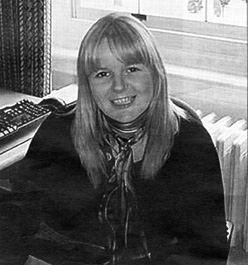
Louise Scott, 27, former Tyrone Constitution reporter and current press officer for the UUP at Stormont, recounts the moment her home town became the epicentre of Northern Ireland's worst single act of terrorism, and the difference that ten years can make.
At the age of 17 I was caught up in the bomb in Omagh as I was working at my Saturday job in Nicholl and Shiels Coffee Shop, on the first floor of a building just yards from where the car bomb exploded.
Over the last few years the horrors of the Omagh bomb have been detailed throughout the columns of our local and national press and it is not my intention to relive the moment the bomb went off - suffice to say that what happened that day has stayed with me over the last 10 years.
In the immediate aftermath of the bomb I spent a number of days in hospital while I recovered from my injuries. After the bomb exploded I -like so many people - made my way to the Tyrone County Hospital.
The scenes there were indescribable.
At this stage one woman came up to me and told me she would take me to the Erne hospital in Enniskillen, which she duly did. For that I am most grateful.
I remember driving through Dromore and people standing open-mouthed on the street corners, as the injured were transported through their village to Enniskillen.
On arrival the scene was once again chaotic as the staff tried to deal with the huge influx of casualties. I was ushered to a bed in the hall where I waited. At this stage my family knew that I had been taken to the Erne and were making then-way there. Unfortunately, my dad was on holiday in Cork and he and my step-mum Iris had to make their way back quickly while towing a caravan.
The scene that I remember most at this stage was my Granda Smyth coming to visit me and the look on his face.
I had just been wheeled out of theatre, where doctors had stitched my wounds - I had deep lacerations down the left-hand side of my body and needed over 200 stitches - this part is still a little blurry - and I remember Granda grabbing my hand so tight and saying to me, 'Not you, it shouldn't be you'.
Seeing the obvious pain on my Granda's face was almost unbearable and exceeded the physical pain I was feeling at that time.
However, the difficult part for me was not the physical injuries I had suffered, but coming to terms with the emotional effects of such a traumatic experience.
I remember the first night I came home from hospital, and a number of friends had come over to visit me. At that stage I was still very tired and I said my 'good nights' and went up to bed on my own.
In the few seconds where I reached and turned out the lights, my whole world came crashing around me.
In the darkness while I fumbled to try to find the light switch again every emotion I thought imaginable came flooding over me - anger, hate, helplessness, guilt, anxiety and fear. Looking back I think that it was only then that the realisation of what had happened hit me.
Until that point I had been in hospital, surrounded by medical staff, family and friends. Until that point I had never been on my own. Until that point - that moment of darkness - I had never fully realised how lucky I was to be alive.
If I am honest it took me an awfully long time to be able to sleep with the light off again.
What happened on that day has shaped the person I have turned into today. After the bomb I became obsessed with watching the documentaries and news items relating to it. At first it was, to some extent, a source of knowledge - as if knowing what had happened would help me understand. I remember a friend asking me why I watched such programmes as I obviously found them emotionally distressing. To be honest I have no answer, except that I hoped they would help me deal with what I was feeling, and it was this that concreted my already strong desire to become a journalist.
After I graduated from University I was very disillusioned with politics in Northern Ireland, as nothing of purpose seemed to have changed since the bomb. It was then that I decided to move to Japan to teach English for a number of years.
In a way I think this was a determined choice to remove myself geographically as far as possible from the events of that day.
However, on my return in 2004, I decided that I would return to college and study to be a journalist. This choice led me to where I am today - working as a press officer for the Ulster Unionist Party at Stormont.
As I sit in my office and look out at the statue of Sir Edward Carson, I sometimes find it remarkable where my career has led me.
Ten years ago it would have been unthinkable that Peter Robinson and Martin McGuinness would be standing side by side in government, in a bid to move towards normalised politics. It is this normalisation allowing us to look at the bread and butter issues such as housing, rising food prices and education that the people of Northern Ireland want.
That is what the people of Northern Ireland deserve.
A recent political survey found that most people under the age of 30 in Northern Ireland have never experienced the troubles - leaving me and the many people my age and younger caught up in the bombing a minority. As Northern Ireland moves forward, I hope that we really are the last generation to suffer at the hands of terrorism.
For me I have been able to move on - I have been lucky. I do not deny that at times I still struggle with what I have come through, however I am now able to look to the future with the love and support of my boyfriend, Matt, and my family and friends.
Louise Scott, 27, former Tyrone Constitution reporter and current press officer for the UUP at Stormont, recounts the moment her home town became the epicentre of Northern Ireland's worst single act of terrorism, and the difference that ten years can make.
At the age of 17 I was caught up in the bomb in Omagh as I was working at my Saturday job in Nicholl and Shiels Coffee Shop, on the first floor of a building just yards from where the car bomb exploded.
Over the last few years the horrors of the Omagh bomb have been detailed throughout the columns of our local and national press and it is not my intention to relive the moment the bomb went off - suffice to say that what happened that day has stayed with me over the last 10 years.
In the immediate aftermath of the bomb I spent a number of days in hospital while I recovered from my injuries. After the bomb exploded I -like so many people - made my way to the Tyrone County Hospital.
The scenes there were indescribable.
At this stage one woman came up to me and told me she would take me to the Erne hospital in Enniskillen, which she duly did. For that I am most grateful.
I remember driving through Dromore and people standing open-mouthed on the street corners, as the injured were transported through their village to Enniskillen.
On arrival the scene was once again chaotic as the staff tried to deal with the huge influx of casualties. I was ushered to a bed in the hall where I waited. At this stage my family knew that I had been taken to the Erne and were making then-way there. Unfortunately, my dad was on holiday in Cork and he and my step-mum Iris had to make their way back quickly while towing a caravan.
The scene that I remember most at this stage was my Granda Smyth coming to visit me and the look on his face.
I had just been wheeled out of theatre, where doctors had stitched my wounds - I had deep lacerations down the left-hand side of my body and needed over 200 stitches - this part is still a little blurry - and I remember Granda grabbing my hand so tight and saying to me, 'Not you, it shouldn't be you'.
Seeing the obvious pain on my Granda's face was almost unbearable and exceeded the physical pain I was feeling at that time.
However, the difficult part for me was not the physical injuries I had suffered, but coming to terms with the emotional effects of such a traumatic experience.
I remember the first night I came home from hospital, and a number of friends had come over to visit me. At that stage I was still very tired and I said my 'good nights' and went up to bed on my own.
In the few seconds where I reached and turned out the lights, my whole world came crashing around me.
In the darkness while I fumbled to try to find the light switch again every emotion I thought imaginable came flooding over me - anger, hate, helplessness, guilt, anxiety and fear. Looking back I think that it was only then that the realisation of what had happened hit me.
Until that point I had been in hospital, surrounded by medical staff, family and friends. Until that point I had never been on my own. Until that point - that moment of darkness - I had never fully realised how lucky I was to be alive.
If I am honest it took me an awfully long time to be able to sleep with the light off again.
What happened on that day has shaped the person I have turned into today. After the bomb I became obsessed with watching the documentaries and news items relating to it. At first it was, to some extent, a source of knowledge - as if knowing what had happened would help me understand. I remember a friend asking me why I watched such programmes as I obviously found them emotionally distressing. To be honest I have no answer, except that I hoped they would help me deal with what I was feeling, and it was this that concreted my already strong desire to become a journalist.
After I graduated from University I was very disillusioned with politics in Northern Ireland, as nothing of purpose seemed to have changed since the bomb. It was then that I decided to move to Japan to teach English for a number of years.
In a way I think this was a determined choice to remove myself geographically as far as possible from the events of that day.
However, on my return in 2004, I decided that I would return to college and study to be a journalist. This choice led me to where I am today - working as a press officer for the Ulster Unionist Party at Stormont.
As I sit in my office and look out at the statue of Sir Edward Carson, I sometimes find it remarkable where my career has led me.
Ten years ago it would have been unthinkable that Peter Robinson and Martin McGuinness would be standing side by side in government, in a bid to move towards normalised politics. It is this normalisation allowing us to look at the bread and butter issues such as housing, rising food prices and education that the people of Northern Ireland want.
That is what the people of Northern Ireland deserve.
A recent political survey found that most people under the age of 30 in Northern Ireland have never experienced the troubles - leaving me and the many people my age and younger caught up in the bombing a minority. As Northern Ireland moves forward, I hope that we really are the last generation to suffer at the hands of terrorism.
For me I have been able to move on - I have been lucky. I do not deny that at times I still struggle with what I have come through, however I am now able to look to the future with the love and support of my boyfriend, Matt, and my family and friends.
Further Information
Publisher: TYRONE CONSTITUTION
Ref: TC10An/28
Published Date: 14-Aug-08
Related Images