I KNEW MY OLD STOMPING GROUND WAS HURTING BADLY
I knew my old stomping ground was hurting badly and needed gentle treatment...'
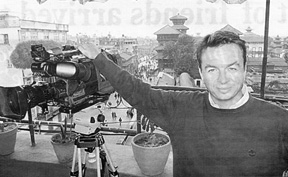
John Irvine, former Tyrone Constitution reporter and current Washington Correspondent for ITN, returned to Omagh in 1998 as the then ITN Ireland correspondent, to report on the unfolding tragedy of August 15. He now lives in Washington DC with his wife and two children.
Says John: "One of the things I've learned during my 25 years as a journalist is that the most despicable things happen in even the loveliest of places. And I have always regarded Omagh as a lovely place.
"My first day on the job as the Con's latest cub reporter was July 13, 1983. It was a glorious day that would deliver a rough baptism. Four UDR men were killed when the IRA detonated a culvert bomb under their Land Rover as it travelled along the Ballygawley Road.
"Those were the bad old days and yet the town of Omagh - to my mind anyway - always felt like something of a haven. Yes, the conflict affected many other places in Tyrone, but Omagh was different somehow. Relaxed. At ease with itself.
"I lived above the then MJ O'Kane's Bar just down from the courthouse. My room-mate was a barman in McElroy's. What a great disco on a Sunday night. Miles better than anything in Belfast back then.
"The Con editor at the time was Norman Armstrong. A tough taskmaster, he also possessed an abundance of patience and perseverance. And in dealing with me he needed it! A bit of a Belfast smart alec, I was also a slow learner.
"Thankfully Norman's then deputy, Wesley Atchison (the current editor, who twisted my arm into writing this) sat beside me. A supreme diplomat and mentor, he managed to guide me through a sometimes fraught six-month probation - a proving period that I completed so indecisively it had to be extended by another six months!
"I spent four years at the Con reporting every story you could imagine. Court cases; council meetings; the conflict; births; deaths; marriages; stolen cars; Orange marches; even the sesquincentenary of Seskinore RBP 314.
"Omagh District Council was always a rich source of news. Omagh was the first council to have a Sinn Fein chairman. What I didn't report back then was the great hospitality that chairman Seamus Kerr showed to me and other reporters in his parlour after the monthly meetings. One such occasion session even ended in a raucous sing-song, but that's a story that should remain largely untold even now.
"The people of Omagh were good to me and I don't think I ever had a cross word with anyone. And, all that I learned as a Con reporter has had an application in every job I've had since.
"In the way that people remember where they were when they heard JFK had been assassinated I remember exactly where I was when news came through that there'd been a bomb explosion in Omagh.
"I was then Ireland Correspondent for ITN. The mainstream paramilitaries had been on ceasefire for a while. Only the dissident groups were creating problems. There had been several bomb explosions in Co Armagh. But all of them had been preceded by warnings and I assumed Omagh would be no different.
"But a friend from UTV phoned and warned me that this was very different indeed. I'd been counting down to a visit to the ITN bureau in Washington DC, where I was to do a fortnight's holiday cover.
"Omagh was a huge story that would command worldwide media attention. I'm sure other ITN correspondents would have covered the story well, but they didn't know Omagh the way I did. I knew my old stomping ground was hurting badly and needed gentle treatment. For that reason I was glad I was the one sent to cover the atrocity.
"The attack was an affront on so many levels. The troubles were supposed to be over and yet men, women and children had been cut down. When the conflict raged people were killed. Shock was tempered by bitter experience. However, although it took nearly 30 years to break it, the cycle of violence wasn't endless. We all thought that deal struck at Stormont just a few months earlier had cemented the peace.
"And so this outrage was carnage out of the blue.
"The worst ever atrocity happened when the war was over.
"Omagh was the bloodiest most shocking attack Northern Ireland ever witnessed. And yet it brought the best out in Omagh. The sense of community I mentioned at the beginning shone through, and spread.
"Why? Because all those who could so easily have been there, but were not, knew someone who was. This was an attack on everyone, truly a 'there but for the grace of God' massacre, and the vast majority of us responded by mentally re-affirming our utter rejection of the bullet and the bomb. Before Omagh you could imagine the Province sliding back, but after Omagh you couldn't.
"One side of the community provided the victims of Bloody Sunday, the other side the victims of Bloody Friday - but there are no sides to Bloody Saturday, to Omagh. Nothing like it has happened since. Did all those people die needlessly? Of course. Did they die in vain? I don't think so".
John Irvine, former Tyrone Constitution reporter and current Washington Correspondent for ITN, returned to Omagh in 1998 as the then ITN Ireland correspondent, to report on the unfolding tragedy of August 15. He now lives in Washington DC with his wife and two children.
Says John: "One of the things I've learned during my 25 years as a journalist is that the most despicable things happen in even the loveliest of places. And I have always regarded Omagh as a lovely place.
"My first day on the job as the Con's latest cub reporter was July 13, 1983. It was a glorious day that would deliver a rough baptism. Four UDR men were killed when the IRA detonated a culvert bomb under their Land Rover as it travelled along the Ballygawley Road.
"Those were the bad old days and yet the town of Omagh - to my mind anyway - always felt like something of a haven. Yes, the conflict affected many other places in Tyrone, but Omagh was different somehow. Relaxed. At ease with itself.
"I lived above the then MJ O'Kane's Bar just down from the courthouse. My room-mate was a barman in McElroy's. What a great disco on a Sunday night. Miles better than anything in Belfast back then.
"The Con editor at the time was Norman Armstrong. A tough taskmaster, he also possessed an abundance of patience and perseverance. And in dealing with me he needed it! A bit of a Belfast smart alec, I was also a slow learner.
"Thankfully Norman's then deputy, Wesley Atchison (the current editor, who twisted my arm into writing this) sat beside me. A supreme diplomat and mentor, he managed to guide me through a sometimes fraught six-month probation - a proving period that I completed so indecisively it had to be extended by another six months!
"I spent four years at the Con reporting every story you could imagine. Court cases; council meetings; the conflict; births; deaths; marriages; stolen cars; Orange marches; even the sesquincentenary of Seskinore RBP 314.
"Omagh District Council was always a rich source of news. Omagh was the first council to have a Sinn Fein chairman. What I didn't report back then was the great hospitality that chairman Seamus Kerr showed to me and other reporters in his parlour after the monthly meetings. One such occasion session even ended in a raucous sing-song, but that's a story that should remain largely untold even now.
"The people of Omagh were good to me and I don't think I ever had a cross word with anyone. And, all that I learned as a Con reporter has had an application in every job I've had since.
"In the way that people remember where they were when they heard JFK had been assassinated I remember exactly where I was when news came through that there'd been a bomb explosion in Omagh.
"I was then Ireland Correspondent for ITN. The mainstream paramilitaries had been on ceasefire for a while. Only the dissident groups were creating problems. There had been several bomb explosions in Co Armagh. But all of them had been preceded by warnings and I assumed Omagh would be no different.
"But a friend from UTV phoned and warned me that this was very different indeed. I'd been counting down to a visit to the ITN bureau in Washington DC, where I was to do a fortnight's holiday cover.
"Omagh was a huge story that would command worldwide media attention. I'm sure other ITN correspondents would have covered the story well, but they didn't know Omagh the way I did. I knew my old stomping ground was hurting badly and needed gentle treatment. For that reason I was glad I was the one sent to cover the atrocity.
"The attack was an affront on so many levels. The troubles were supposed to be over and yet men, women and children had been cut down. When the conflict raged people were killed. Shock was tempered by bitter experience. However, although it took nearly 30 years to break it, the cycle of violence wasn't endless. We all thought that deal struck at Stormont just a few months earlier had cemented the peace.
"And so this outrage was carnage out of the blue.
"The worst ever atrocity happened when the war was over.
"Omagh was the bloodiest most shocking attack Northern Ireland ever witnessed. And yet it brought the best out in Omagh. The sense of community I mentioned at the beginning shone through, and spread.
"Why? Because all those who could so easily have been there, but were not, knew someone who was. This was an attack on everyone, truly a 'there but for the grace of God' massacre, and the vast majority of us responded by mentally re-affirming our utter rejection of the bullet and the bomb. Before Omagh you could imagine the Province sliding back, but after Omagh you couldn't.
"One side of the community provided the victims of Bloody Sunday, the other side the victims of Bloody Friday - but there are no sides to Bloody Saturday, to Omagh. Nothing like it has happened since. Did all those people die needlessly? Of course. Did they die in vain? I don't think so".
Further Information
Publisher: TYRONE CONSTITUTION
Ref: TC10An/27
Published Date: 14-Aug-08
Related Images