TERRY WAITE BRINGS MESSAGE OF HOPE AND INSPIRATION TO PEOPLE OF THE OMAGH AREA
Terry Waite brings hope and inspiration to people of the Omagh area
By Wesley Atchison
FORMER Beirut hostage Terry Waite has brought a renewed uplifting message of hope and inspiration to the bereaved and injured of the Omagh bomb atrocity of August 1998 - and to the people of the town and area generally.
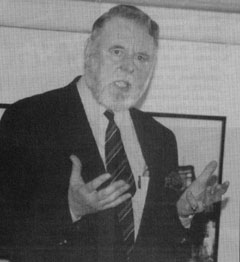
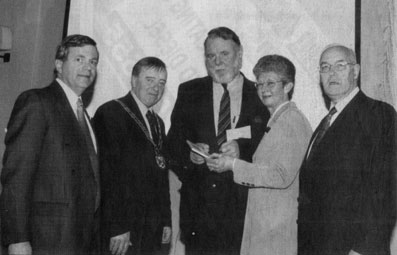
Mr. Waite was in Omagh on Thursday night last to officially launch a CD Rom which will serve as an archive of the material relating to the bomb and its aftermath. The creation of the CD Rom, which is not for sale but intended mainly for research purposes, was the brainchild of the Western Education and Library Board's library service.
And it was achieved with the cooperation and assistance of Omagh District Council Council and Sperrin Lakeland Health and Social Care Trust, with funding from the Department of Education.
The archive collection includes individual cards, reports, minutes, photographs, books of condolence, press and media coverage, including video footage.
"The purpose of this collection is to ensure that all relevant material is properly and respectfully collected, preserved and organised for future use by victims and their families, the people of Omagh and other affected areas, academics, researchers and historians," said a library spokesman.
The car bomb explosion claimed the lives of 29 people and two unborn children, as well as injuring 370. Apart from those who were physically injured, many who experienced the horrific carnage have been left to deal with the mental scars.
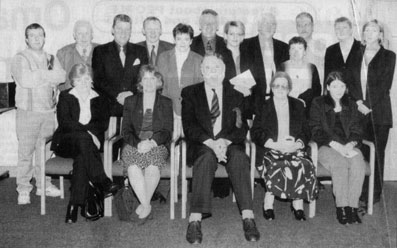
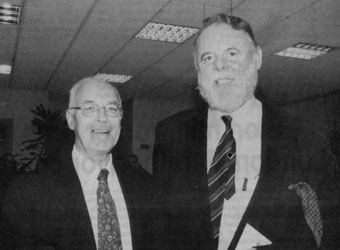
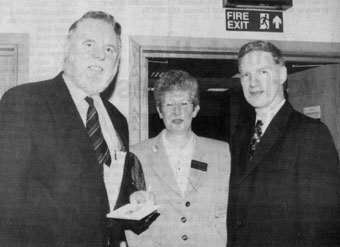
Mr. Waite who faced solitary confinement for four to five years chained to a wall, gave his seal of approval to the CD Rom at the launch in library headquarters in Omagh. The event was attended by representatives of many of the bereaved families, the Duke of Abercorn was also among the audience.
All present were urged by Mr. Waite - who has become a friend to the town with several visits already under his belt - to face the future with courage, dignity and realism and said that suffering need not destroy.
Mr. Waite said his family connections with Northern Ireland were strong, as his wife was born in the Province and they were married here some 37 years ago. He also said that on a previous visit to Omagh with the Warrington choir he discovered the name of his grandmother in church records in the town and that, in fact, she had been married in Omagh.
"So the connections go back many, many years indeed," he said.
He continued: "As we look back on the events as recalled in the 'One Day in August' CD Rom it is difficult to smile because innocent people lost their lives and there is not a great deal to smile about in that.
"But one good thing about a CD Rom being produced like this in my opinion is the way in which it gives another opportunity for people to come together and to talk openly about their experiences.
Share
"It is far better to openly talk and share experiences, though not to gloat over them, than it is to suppress them," said Mr. Waite.
And he also told his hushed audience: " We don't live in a just and fair world. I wish to God that we did, but we don't. In many cases it is very unjust.
"We don't live in a world where suffering is equally shared out among the population. Unquestionably some people suffer more than others and the innocent suffer."
Referring to his own experiences, he said that one great lesson he learnt was that suffering need not destroy.
"It can destroy, but it need not," he said. "Something creative can emerge from it and normally does if it is given a chance."
"But it's a hard process and it's a courageous act for many families to be here tonight to be reminded very visibly of this particular event."
Mr. Waite said that he often got a little tired of being referred to as a former hostage.
"I did have another life - 1 did other things - I'm not just a former hostage," he said.
And he said there was also a life before the Omagh atrocity, and a life after it.
He said that good could open up in unexpected ways as "we face the future with courage, dignity and realism."
The chairman of Omagh District Council. Mr. Liam McQuaid, congratulated the Western Education and Library Board who, he said, had painstakingly compiled the archive of material.
Darkest day
Said Mr. McQuaid: "You have created a lasting record of the darkest day in our recent past, evidence of man's inhumanity to man and further proof, if it were needed, that after 30 years of bloodshed, violence solves nothing and creates only pain, heartache and the festering sore of hatred.
"When the history of the province is finally compiled, this archive will undoubtedly be invaluable to the researchers and academics whose job it will be to sanitise the events of what has been a very turbulent time," he added.
Mr. McQuaid said that the atrocity inflicted on Omagh on that fateful day in August 1998 would be forever etched on the hearts and minds of the people. not only of the Omagh district, but all around the world.
"That sunny Saturday afternoon we became inextricably linked with the people of Buncrana and Madrid as we shared a grief and sense of loss that was virtually unparalleled in the recent history of the troubles."
Mr. McQuaid also referred to the council's immediate response to the atrocity, the setting up of the Memorial Fund and the "herculean effort" to put the town back on the road to recovery.
Explaining the background to the production of the CD Rom, Mrs. Rosemary Adams, the Western Education and Library Board's assistant chief librarian, said the presentation was in a multi-media format and would be complimentary to the actual archive housed in library headquarters in Omagh.
Mrs. Adams said: "After the shock of the first 48 hours, the enormity of what had happened and the massive media coverage reinforced the need for the library to document and record this tragedy.
"By Tuesday morning the desk in Local History was piled with newspaper coverage. With the outpouring of public sympathy and revulsion it was apparent how much material was being generated - not only media coverage but letters and cards from all over the world, poems, flowers and subsequently the Books of Condolence."
Mrs. Adams said it was a huge resource of materials which had to be organised, conserved and stored for the future. The library had to decide how so much material would be organised to make it easily available to the community, she added.
"Librarians are used to working with paper -bibliographies and indices. Looking to the new technology a CD Rom seemed to be the answer to ensure that the Archive material could be easily searched."
Continued Mrs. Adams: "There is no doubt that in years to come many people, especially the young, related to the bereaved and injured will want to know what did happen on Saturday, August 15. That is why the Library Service has undertaken this mammoth task.
"Staff had to work with newspaper and television footage which was extremely difficult and stressful. It was difficult for the Library Service to envisage how to get from paper copy to CD ROM."
Mrs. Adams said that 'One Day in August' covers the bombing and the following year.
"We quickly realised that the development of the CD ROM was going to take time so we set the limit of the CD ROM to the first year only as being both manageable and meaningful".
Mrs. Adams said it was important to let the public know what was in the archive and "One Day in August' was a snapshot of what the archive contains.
"It is only the beginning of the work to develop the material held. The CD Rom is the way forward in presenting information. The new technology of digitisation will facilitate the dissemination of material, especially local history resources. We are still open to receive material for the archive," Mrs. Adams said.
"So if you do have anything you would like to pass to the library or indeed if you have any material on Omagh and its area which is of local interest we would be pleased to add it to our stock," she added.
By Wesley Atchison
FORMER Beirut hostage Terry Waite has brought a renewed uplifting message of hope and inspiration to the bereaved and injured of the Omagh bomb atrocity of August 1998 - and to the people of the town and area generally.
Mr. Waite was in Omagh on Thursday night last to officially launch a CD Rom which will serve as an archive of the material relating to the bomb and its aftermath. The creation of the CD Rom, which is not for sale but intended mainly for research purposes, was the brainchild of the Western Education and Library Board's library service.
And it was achieved with the cooperation and assistance of Omagh District Council Council and Sperrin Lakeland Health and Social Care Trust, with funding from the Department of Education.
The archive collection includes individual cards, reports, minutes, photographs, books of condolence, press and media coverage, including video footage.
"The purpose of this collection is to ensure that all relevant material is properly and respectfully collected, preserved and organised for future use by victims and their families, the people of Omagh and other affected areas, academics, researchers and historians," said a library spokesman.
The car bomb explosion claimed the lives of 29 people and two unborn children, as well as injuring 370. Apart from those who were physically injured, many who experienced the horrific carnage have been left to deal with the mental scars.
Mr. Waite who faced solitary confinement for four to five years chained to a wall, gave his seal of approval to the CD Rom at the launch in library headquarters in Omagh. The event was attended by representatives of many of the bereaved families, the Duke of Abercorn was also among the audience.
All present were urged by Mr. Waite - who has become a friend to the town with several visits already under his belt - to face the future with courage, dignity and realism and said that suffering need not destroy.
Mr. Waite said his family connections with Northern Ireland were strong, as his wife was born in the Province and they were married here some 37 years ago. He also said that on a previous visit to Omagh with the Warrington choir he discovered the name of his grandmother in church records in the town and that, in fact, she had been married in Omagh.
"So the connections go back many, many years indeed," he said.
He continued: "As we look back on the events as recalled in the 'One Day in August' CD Rom it is difficult to smile because innocent people lost their lives and there is not a great deal to smile about in that.
"But one good thing about a CD Rom being produced like this in my opinion is the way in which it gives another opportunity for people to come together and to talk openly about their experiences.
Share
"It is far better to openly talk and share experiences, though not to gloat over them, than it is to suppress them," said Mr. Waite.
And he also told his hushed audience: " We don't live in a just and fair world. I wish to God that we did, but we don't. In many cases it is very unjust.
"We don't live in a world where suffering is equally shared out among the population. Unquestionably some people suffer more than others and the innocent suffer."
Referring to his own experiences, he said that one great lesson he learnt was that suffering need not destroy.
"It can destroy, but it need not," he said. "Something creative can emerge from it and normally does if it is given a chance."
"But it's a hard process and it's a courageous act for many families to be here tonight to be reminded very visibly of this particular event."
Mr. Waite said that he often got a little tired of being referred to as a former hostage.
"I did have another life - 1 did other things - I'm not just a former hostage," he said.
And he said there was also a life before the Omagh atrocity, and a life after it.
He said that good could open up in unexpected ways as "we face the future with courage, dignity and realism."
The chairman of Omagh District Council. Mr. Liam McQuaid, congratulated the Western Education and Library Board who, he said, had painstakingly compiled the archive of material.
Darkest day
Said Mr. McQuaid: "You have created a lasting record of the darkest day in our recent past, evidence of man's inhumanity to man and further proof, if it were needed, that after 30 years of bloodshed, violence solves nothing and creates only pain, heartache and the festering sore of hatred.
"When the history of the province is finally compiled, this archive will undoubtedly be invaluable to the researchers and academics whose job it will be to sanitise the events of what has been a very turbulent time," he added.
Mr. McQuaid said that the atrocity inflicted on Omagh on that fateful day in August 1998 would be forever etched on the hearts and minds of the people. not only of the Omagh district, but all around the world.
"That sunny Saturday afternoon we became inextricably linked with the people of Buncrana and Madrid as we shared a grief and sense of loss that was virtually unparalleled in the recent history of the troubles."
Mr. McQuaid also referred to the council's immediate response to the atrocity, the setting up of the Memorial Fund and the "herculean effort" to put the town back on the road to recovery.
Explaining the background to the production of the CD Rom, Mrs. Rosemary Adams, the Western Education and Library Board's assistant chief librarian, said the presentation was in a multi-media format and would be complimentary to the actual archive housed in library headquarters in Omagh.
Mrs. Adams said: "After the shock of the first 48 hours, the enormity of what had happened and the massive media coverage reinforced the need for the library to document and record this tragedy.
"By Tuesday morning the desk in Local History was piled with newspaper coverage. With the outpouring of public sympathy and revulsion it was apparent how much material was being generated - not only media coverage but letters and cards from all over the world, poems, flowers and subsequently the Books of Condolence."
Mrs. Adams said it was a huge resource of materials which had to be organised, conserved and stored for the future. The library had to decide how so much material would be organised to make it easily available to the community, she added.
"Librarians are used to working with paper -bibliographies and indices. Looking to the new technology a CD Rom seemed to be the answer to ensure that the Archive material could be easily searched."
Continued Mrs. Adams: "There is no doubt that in years to come many people, especially the young, related to the bereaved and injured will want to know what did happen on Saturday, August 15. That is why the Library Service has undertaken this mammoth task.
"Staff had to work with newspaper and television footage which was extremely difficult and stressful. It was difficult for the Library Service to envisage how to get from paper copy to CD ROM."
Mrs. Adams said that 'One Day in August' covers the bombing and the following year.
"We quickly realised that the development of the CD ROM was going to take time so we set the limit of the CD ROM to the first year only as being both manageable and meaningful".
Mrs. Adams said it was important to let the public know what was in the archive and "One Day in August' was a snapshot of what the archive contains.
"It is only the beginning of the work to develop the material held. The CD Rom is the way forward in presenting information. The new technology of digitisation will facilitate the dissemination of material, especially local history resources. We are still open to receive material for the archive," Mrs. Adams said.
"So if you do have anything you would like to pass to the library or indeed if you have any material on Omagh and its area which is of local interest we would be pleased to add it to our stock," she added.
Further Information
Publisher: TYRONE CONSTITUTION
Ref: TC/0876
Published Date: 03-May-01
Related Images