GRITTY TRAFFIC WARDEN BACK ON THE BEAT
Gritty traffic warden back on the beat
"Omagh will bounce back. I do not believe in any way the bombing damaged community relations, the positively held belief of injury victim, Rosemary Ingram, which should not, in any way, be allowed mask her feelings of great sympathy towards the bereaved and injured.
Her sister-in-law, Ann McCombe, was, after all, one of the three Watterson Brothers staff to die at the scene of the August 15, 1998, act of terrorist savagery.
Mrs. Ingram, who resumed her traffic warden duties in late June, also holds some similarly forthright views on the management of the Omagh Fund set up to aid casualties and their families.
"It was a lovely gesture by the public, but I feel much larger payments should have been made by now to those among the bereaved and injured who suffered the greatest hardships," she said, making it patently clear she did not include herself in that roster. "I know many 'victims' who feel as I do.
"I believe those who gave so generously to the fund would have wished that, too, as that was where they intended their money to go. It would be wrong if the fund was not deployed in the most part to ease those hardships to the greatest extent possible.
"Of course, those of us who survived agree that being alive is more important than any amount of money. But now that the fund is there, the proceeds should be distributed appropriately."
Defying medical advice to go 'back on the beat' after recovery and convalescence from horrific shrapnel wounds inflicted by the Real IRA car bomb, believing it was in her own best interests an aid to her recovery Mrs. Ingram returned following a 10-month absence.
"In the latter stages of my recuperation I had four counselling sessions with Dr. Kate Gillespie at the Bridge Centre in Campsie, and another is planned after this weekend's anniversary to check on my mood. The trauma people did not want me to go back when 1 did. But, once the doctor realised how determined I was, she gave me good advice on how to cope," revealed Rosemary.
That advice included going to the Dublin Road corner, where she had been on duty when the explosion tore the heart out of the town, and confronting her demons, although she had been unable to venture into that area alone until earlier this year, some six months after the incident.
"Initially, over a period of months after the bombing, I never went out unless my husband took me away in the car. It was 1999 before I returned to the town centre, and then, at first, I would dash in and out of a shop as quickly as 1 could," said Rosemary.
'More confident'
"But Dr. Gillespie advised me not to shy away from the area, and provided me with sound guidance on how to communicate with those who would want to talk to me once I was back on duty. I am growing more confident about it all every day.
"The doctor urged me to stand quietly at the scene, and repeat a few words, 'the bomb's no longer here, it can't hurt me, it's just my memories', and I did."
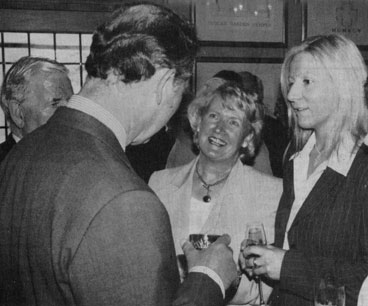
And Rosemary related how Prince Charles had also helped the healing process, after meeting him at his Highgrove home just weeks before she picked up the threads of her career.
"I was one of four Omagh people in a party of 32 victims of the Northern Ireland Troubles to have lunch with Prince Charles at the end of May. The group spent three days in England, based at a plush Kensington Hotel in London," she divulged.
"We were taken to Highgrove, and it was very much a private affair, out of the gaze of the media. He spoke to each one of us individually, and we had a truly fantastic time. We were wined and dined, and he told me he did not remember seeing me in hospital.
"I felt that just showed the genuine interest Prince Charles had in the Omagh bombing and its victims, and how attentive and observant he was, because, of course, he had not seen me. I was treated in the Erne Hospital, while he had only visited Tyrone County Hospital."
Many greeted Mrs. Ingram's reappearance on the streets of Omagh as a breath of fresh air, she said. However, others indicated just how the awesome scale of the atrocity, which left 29 dead and 350 maimed or grievously hurt, had marginalised some of the injured.
"Some people had obviously been unable to put a name to a face, and told me with a genuine inquisitiveness, 'I've missed you, where have you been all this time?,' Rosemary disclosed.
A native of Mountjoy, she now lives in the Hospital Road area of Omagh with her retired husband, Tom. The couple have three adult children, Andrew, Douglas and Gillian, and one grandchild, Matthew.
Promoted to senior traffic warden just two years prior to the bombing of the town centre she has patrolled now for 18 years, Rosemary is responsible for the other four local wardens one male, three female and is well aware of the love-hate relationship which exists between herself, her staff and the motorist.
But, in the course of those almost two decades, she has done much to improve the press of the small group she now leads, by aiding drivers with nowhere to park rather than write a ticket.
'Helping people'
"Yes, I have gained something of a reputation for helping people with their messages, like popping in their post, when all parking spaces are taken," smiled Rosemary.
"And it has clearly done a great deal of good. I have been welcomed back by so many people, quite a few saying that my return to duty was another important step in the town's return to normality, and I received more than 200 get-well cards while I was off.
"Seven weeks after returning to duty I can truthfully say I made the right decision, and 1 intend working on. I have good days and bad days, and the odd sleepless night, and, recently, seeing workmen on the site has affected me.
"1 would also still be apprehensive of crowds, and could panic. Last Tuesday, when the town was buzzing about Manchester United, I went home and cried. It was probably the mixed emotions of the visit of United, and what it was all about."
Apart from the traumatic experiences, which included her being named locally as one of the first to die in the explosion, a fact she is readily aware of, and of her, in actual fact, scooping up a baby girl, and carrying her to hospital as she was pushed into a car, Mrs. Ingram continues to suffer from shrapnel injuries.
"I was not told, until many weeks later, that, unfortunately, the little girl had died. She had had to be taken away from me when 1 was getting out of the car at the County as my legs just went weak. I do not remember if 1 was blown off my feet by the blast; all 1 remember is a massive thump between my shoulder blades, followed by a most almighty bang," explained Rosemary.
"I know 1 was reported dead, but I did not even think I was hurt at first, although others have told me since that 1 was tossed over by the force of the explosion."
As part of the security operation mounted after the bomb warning was received, the RUC had directed her to stop traffic entering Market Street, and to help ease traffic out of the street against the one-way system.
Rosemary takes up the story: "At first, when I felt the thump, I though I had been hit by a vehicle coming out of Market Street, but now I think myself very lucky. I thank God I'm alive. I suffered multiple, deep, shrapnel wounds to my legs, lower and upper, buttocks, back, and head.
'Embedded'
"The surgeons felt a number of the metal pieces, which were so deeply embedded in my ankles, calves and shoulders, were best left alone and not removed, and said some would come to the surface of their own accord.
"I have since had ear problems as some nerve endings were damaged by the blast. I was twice in theatre during the two weeks spent in the Erne, and I have had to make several outpatient visits. Others are planned."
And Rosemary has another, if somewhat odd, problem. She cannot really sunbathe for any length of time, or go out in very strong sunshine, unless her injuries are well protected, for the shrapnel still in her body heats up. It also meant any physiotherapy on the affected areas could not include heat treatment.
But, typically, she wonders about the young man who took her and others to Enniskillen, in the first instance.
"I would suspect he was in his early 30s, and he took me and a few others his car was full from the County to the Erne," Rosemary said.
In the wake of the bomb, many, including representatives of the local branch of St. Vincent de Paul, came to visit her during her recuperation, some of whom, she said, she only knew to say 'hello' to.
"There have been so many good people, so many genuine people, inquiring, calling, that I have really been touched," said Rosemary, who believed those people, along with the bereaved and injured, should have the opportunity this weekend to mark the first anniversary of the bombing.
But she was equally adamant as she went on: "After August 15, 1999, it should not happen again, and I just hope the media will leave us alone, too. Life has to move on, and we will have our own memories, anyway. Ann's death has been a great loss to the family, and my younger brother, Stanley, in particular.
"I feel there should be some small reminder of the events of last year built into the redeveloped site, but it must not become a shrine. We will never forget."
"Omagh will bounce back. I do not believe in any way the bombing damaged community relations, the positively held belief of injury victim, Rosemary Ingram, which should not, in any way, be allowed mask her feelings of great sympathy towards the bereaved and injured.
Her sister-in-law, Ann McCombe, was, after all, one of the three Watterson Brothers staff to die at the scene of the August 15, 1998, act of terrorist savagery.
Mrs. Ingram, who resumed her traffic warden duties in late June, also holds some similarly forthright views on the management of the Omagh Fund set up to aid casualties and their families.
"It was a lovely gesture by the public, but I feel much larger payments should have been made by now to those among the bereaved and injured who suffered the greatest hardships," she said, making it patently clear she did not include herself in that roster. "I know many 'victims' who feel as I do.
"I believe those who gave so generously to the fund would have wished that, too, as that was where they intended their money to go. It would be wrong if the fund was not deployed in the most part to ease those hardships to the greatest extent possible.
"Of course, those of us who survived agree that being alive is more important than any amount of money. But now that the fund is there, the proceeds should be distributed appropriately."
Defying medical advice to go 'back on the beat' after recovery and convalescence from horrific shrapnel wounds inflicted by the Real IRA car bomb, believing it was in her own best interests an aid to her recovery Mrs. Ingram returned following a 10-month absence.
"In the latter stages of my recuperation I had four counselling sessions with Dr. Kate Gillespie at the Bridge Centre in Campsie, and another is planned after this weekend's anniversary to check on my mood. The trauma people did not want me to go back when 1 did. But, once the doctor realised how determined I was, she gave me good advice on how to cope," revealed Rosemary.
That advice included going to the Dublin Road corner, where she had been on duty when the explosion tore the heart out of the town, and confronting her demons, although she had been unable to venture into that area alone until earlier this year, some six months after the incident.
"Initially, over a period of months after the bombing, I never went out unless my husband took me away in the car. It was 1999 before I returned to the town centre, and then, at first, I would dash in and out of a shop as quickly as 1 could," said Rosemary.
'More confident'
"But Dr. Gillespie advised me not to shy away from the area, and provided me with sound guidance on how to communicate with those who would want to talk to me once I was back on duty. I am growing more confident about it all every day.
"The doctor urged me to stand quietly at the scene, and repeat a few words, 'the bomb's no longer here, it can't hurt me, it's just my memories', and I did."
And Rosemary related how Prince Charles had also helped the healing process, after meeting him at his Highgrove home just weeks before she picked up the threads of her career.
"I was one of four Omagh people in a party of 32 victims of the Northern Ireland Troubles to have lunch with Prince Charles at the end of May. The group spent three days in England, based at a plush Kensington Hotel in London," she divulged.
"We were taken to Highgrove, and it was very much a private affair, out of the gaze of the media. He spoke to each one of us individually, and we had a truly fantastic time. We were wined and dined, and he told me he did not remember seeing me in hospital.
"I felt that just showed the genuine interest Prince Charles had in the Omagh bombing and its victims, and how attentive and observant he was, because, of course, he had not seen me. I was treated in the Erne Hospital, while he had only visited Tyrone County Hospital."
Many greeted Mrs. Ingram's reappearance on the streets of Omagh as a breath of fresh air, she said. However, others indicated just how the awesome scale of the atrocity, which left 29 dead and 350 maimed or grievously hurt, had marginalised some of the injured.
"Some people had obviously been unable to put a name to a face, and told me with a genuine inquisitiveness, 'I've missed you, where have you been all this time?,' Rosemary disclosed.
A native of Mountjoy, she now lives in the Hospital Road area of Omagh with her retired husband, Tom. The couple have three adult children, Andrew, Douglas and Gillian, and one grandchild, Matthew.
Promoted to senior traffic warden just two years prior to the bombing of the town centre she has patrolled now for 18 years, Rosemary is responsible for the other four local wardens one male, three female and is well aware of the love-hate relationship which exists between herself, her staff and the motorist.
But, in the course of those almost two decades, she has done much to improve the press of the small group she now leads, by aiding drivers with nowhere to park rather than write a ticket.
'Helping people'
"Yes, I have gained something of a reputation for helping people with their messages, like popping in their post, when all parking spaces are taken," smiled Rosemary.
"And it has clearly done a great deal of good. I have been welcomed back by so many people, quite a few saying that my return to duty was another important step in the town's return to normality, and I received more than 200 get-well cards while I was off.
"Seven weeks after returning to duty I can truthfully say I made the right decision, and 1 intend working on. I have good days and bad days, and the odd sleepless night, and, recently, seeing workmen on the site has affected me.
"1 would also still be apprehensive of crowds, and could panic. Last Tuesday, when the town was buzzing about Manchester United, I went home and cried. It was probably the mixed emotions of the visit of United, and what it was all about."
Apart from the traumatic experiences, which included her being named locally as one of the first to die in the explosion, a fact she is readily aware of, and of her, in actual fact, scooping up a baby girl, and carrying her to hospital as she was pushed into a car, Mrs. Ingram continues to suffer from shrapnel injuries.
"I was not told, until many weeks later, that, unfortunately, the little girl had died. She had had to be taken away from me when 1 was getting out of the car at the County as my legs just went weak. I do not remember if 1 was blown off my feet by the blast; all 1 remember is a massive thump between my shoulder blades, followed by a most almighty bang," explained Rosemary.
"I know 1 was reported dead, but I did not even think I was hurt at first, although others have told me since that 1 was tossed over by the force of the explosion."
As part of the security operation mounted after the bomb warning was received, the RUC had directed her to stop traffic entering Market Street, and to help ease traffic out of the street against the one-way system.
Rosemary takes up the story: "At first, when I felt the thump, I though I had been hit by a vehicle coming out of Market Street, but now I think myself very lucky. I thank God I'm alive. I suffered multiple, deep, shrapnel wounds to my legs, lower and upper, buttocks, back, and head.
'Embedded'
"The surgeons felt a number of the metal pieces, which were so deeply embedded in my ankles, calves and shoulders, were best left alone and not removed, and said some would come to the surface of their own accord.
"I have since had ear problems as some nerve endings were damaged by the blast. I was twice in theatre during the two weeks spent in the Erne, and I have had to make several outpatient visits. Others are planned."
And Rosemary has another, if somewhat odd, problem. She cannot really sunbathe for any length of time, or go out in very strong sunshine, unless her injuries are well protected, for the shrapnel still in her body heats up. It also meant any physiotherapy on the affected areas could not include heat treatment.
But, typically, she wonders about the young man who took her and others to Enniskillen, in the first instance.
"I would suspect he was in his early 30s, and he took me and a few others his car was full from the County to the Erne," Rosemary said.
In the wake of the bomb, many, including representatives of the local branch of St. Vincent de Paul, came to visit her during her recuperation, some of whom, she said, she only knew to say 'hello' to.
"There have been so many good people, so many genuine people, inquiring, calling, that I have really been touched," said Rosemary, who believed those people, along with the bereaved and injured, should have the opportunity this weekend to mark the first anniversary of the bombing.
But she was equally adamant as she went on: "After August 15, 1999, it should not happen again, and I just hope the media will leave us alone, too. Life has to move on, and we will have our own memories, anyway. Ann's death has been a great loss to the family, and my younger brother, Stanley, in particular.
"I feel there should be some small reminder of the events of last year built into the redeveloped site, but it must not become a shrine. We will never forget."
Further Information
Publisher: TYRONE CONSTITUTION
Ref: TC/0705
Published Date: 12-Aug-99
Related Images