HEALTH CHIEF RECORDS PRIDE IN RESPONSE OF STAFF TO EMERGENCY
Health chief records 'immense pride in positive response of staff to huge emergency
Trust hears impassioned plea for retention of County's acute services
AS directors of Sperrin Lakeland Health and Social Care Trust last week delivered a 90-minute report on its response to the Omagh bombing, one non-executive director made an impassioned plea for the retention of acute services at Tyrone County Hospital.
Mrs. Anne Gibson, a Lisnaskea solicitor said: "A hospital is not just a building but the people who work there, and the calibre of the people who work there.
"Their humanity, compassion and professionalism over the past 10 days cannot be disregarded when decisions are made. The decision makers would do well to take on board, and to consider the loss to the entire rural area, if the services of these people were to be foreclosed."
Mrs. Gibson said she knew she was speaking as one who was on the periphery of the atrocity, but told Thursday's monthly meeting of the Trust Board at the hospital Postgraduate Centre, of her high regard for those who had responded to the bombing.
She said that, in the days following the attack, her initial feelings of shock and horror which ran the full range of human emotion, switched to admiration for the emergency services and security forces, and for the sensitivity shown by the media.
"And to admiration for the ordinary people, and for the dignified reaction from the victims," she added. "There is hope for the future, and for the future of Tyrone County Hospital."
Supporting Mrs. Gibson, Lady Katie Hamilton, another non-executive director, said the bombing had highlighted the value of the hospital.
'Unthinkable'
"To be without it would be unthinkable," she added.
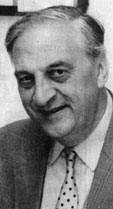
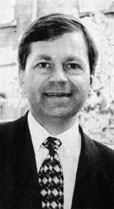
The meeting heard reports from Trust chairman, Mr. Richard Scott, its chief executive, Mr. Hugh Mills, and on behalf of its various directorates.
After asking the members of the Board to stand in silence for some moments of reflection, Mr. Scott opened the meeting with a summary of events at the 'County' and Erne hospitals on August 15 and since, He said staff had had to deal with a scene that should not be part of a civilised society, and deal with the emotion of witnessing, at first hand, such devastation in their own community, and among people they knew personally.
"There may be a need to help people appreciate the enormity of this event, not only in terms of the seriousness of the casualties that presented at our two hospitals, but also the sheer volume," he remarked.
Mr. Scott said off-duty and visiting medical staff who had responded to the bombing had "obviously saved lives", when normally, on a quiet Saturday afternoon in August, a small A&E duty team would have expected nothing more than the usual mix of sporting injuries from local clubs and the fall-out of the previous evening's partying.
Instead, a department which, on a busy night, might deal with 15 casualties, was thrown into turmoil, and witnessed a horrific scene, he said.
"Suddenly staff were faced with two bus loads of bleeding and injured men, women and children, along with the more seriously injured arriving by ambulance," added the chairman.
'Huge emergency'
"This was a huge emergency. Five separate hospitals were all required to activate their emergency plans, in addition to those activated by our ambulance service colleagues, the military, the police and the fire service."
But he went on: "When we reflect on the extent to which people have pulled together, not only on the day, but since that time, in terms of offering whatever support they could, 1 am confident any intentions of the terrorists to divide the community have not been fulfilled.
"We are a strong community, now united both in our revulsion, and in our mutual caring and support for all who have suffered. At some stage we hope to send letters of thanks to all who have made their contributions.
"Unfortunately, it is inevitable that we shall miss out some people, perhaps many people, whose help was given anonymously, but we shall do our best."
Underpinning his chairman's remarks on the level of the emergency, Mr. Mills said its scale was such that the Trust could not have achieved what it did without support from so many quarters.
Apart from the medical profession he paid tribute to the voluntary organisations whose "support was immediate", and continued: "We are indebted to the wider community for the significant humanitarian response."
The chief executive also revealed how the Trust senior management team had met daily at 8.30am each morning in the wake of the bombing to co-ordinate the ongoing response, and he unveiled details of of how the atrocity had hit Trust Staff.
"While gratefully none of our staff were among the dead, there are four among the injured, 26 of our staff are closely related to those deceased, and 36 staff are related to those injured," he disclosed.
"In every staff room there are those who knew the deceased and who know the injured. Continuing to maintain our day to day services is a challenge in these circumstances."
In both the 'County' and Erne hospitals, said Mr. Mills, the chaplains had co-ordinated opportunities for staff to pray together, and meetings were also held at both sites where staff, inclusive of those who had worked with families at Omagh Leisure Complex, could get together to share their thoughts, experiences and feelings.
'Initiatives'
"One of the initiatives suggested by the chairman [Mr. Scott] is to encourage staff to record in writing their role in respect of the emergency, and their thoughts and feelings evoked by this tragic event," he said.
"This will be encouraged both for therapeutic reasons, and as a means of recording and documenting the events."
A wide spectrum of feelings and emotions had been experienced by all involved with the response, said Mr. Mills.
He went on: "But one which I have shared with staff is our immense feeling of pride, to have witnessed the positive response of our staff in health and social services.
"It is a privilege for me, as chief executive, to be part of this organisation, and to work with so many committed and dedicated staff. It has been an honour for us to serve the needs of the Omagh community at this tragic time."
Clinical services director, Mr. Ronnie Barton, said the first casualties arrived at the Erne Hospital's accident and emergency unit, where, initially, only a duty doctor and two nurses had been rostered, just 30 minutes after the car bomb was detonated.
"Casualties came thick and fast for the next hour by car, ambulance and truck, with 25 patients brought in by helicopter. Due to the number, patients were cared for in the 'old physio' department adjacent to A&E and also in outpatients," said Mr. Barton.
The director also disclosed how the Erne A&E had coped with two persons injured in a serious road accident in the midst of dealing with bomb victims.
"One of the injured was transferred to Belfast (because of his injuries) and the other was admitted to ICU at the Erne," he said, adding that 27 persons injured in the Omagh bombing had also been admitted to the Enniskillen hospital on the Saturday.
"I am pleased to report that none of those lost their lives," Mr. Barton noted.
Traumatised
Mr. Gabriel Carey, director of mental health and elderly services, said the major objective of his directorate in the aftermath of the bomb had been to devise an effective response to staff and public who had been traumatised by the atrocity.
"Sadness, mood swings, guilt, regret, anger and fear are all reactions," he said.
"The paramount consideration is to emphasise that the emotional and physical reactions experienced by people caught up in the bombing, and in the response to it, are quite normal."
Mr. Vincent Ryan, director of planning, contracting and information, said the need for information in the wake of the car bombing had never been as great, nor as urgent.
He had co-ordinated the initial enquiry response at the Erne, and said the Enniskillen Hospital had received 70 enquiries in the first hour.
Mr. Ryan said the tragedy had reminded staff at the Erne of the 1987 Poppy Day bombing in the town.
"Sometimes they reflected in tears, and sometimes in anger," he told the Board. "Those memories were of a time gone by when the people of Enniskillen lost their own loved ones like those in Omagh."
Mr. Michael MacCrossan, financial director, said he had coordinated work in relation to monetary donations to patient comfort funds, but his team was now actively engaged in costing additional resources required to cope with the tragedy and its aftermath.
A plan outlining the resources required was to be communicated to Dr. Mo Mowlam, the Secretary of State, by tomorrow (Friday), he said.
Mr. MacCrossan continued: "The Trust staff are grateful for the support from senior officers of the Western Health and Social Services Board, who have been released to assist with the preparation of the plan, given the day to day workload of our managers since the tragedy."
Director of human resources, Mr. Gerry McLaughlin, said he had done anything he could to help other staff when he arrived at the Tyrone County Hospital.
'Real teamwork'
Now, 10 days later, Mr. McLaughlin, said: "I can say with confidence I know what real teamwork involves, and I can say that with a degree of pride through observing all of the staff groups supporting one another on the Saturday and Sunday.
"It was comparable to watching on a massive screen all aspects of health and personal social services coming together and working together."
Mr. McLaughlin said the many and varied visits by dignitaries, sports stars, and well-wishers, in addition to friends and family, were a great comfort to staff.
"They were an indication to us that the wider community shared in our grief and, by their presence and kind words, they helped us all to an extent that is probably greater than we can yet appreciate," he added.
Of Trust staff, Mr. McLaughlin said: "They gave no thought to the personal cost to themselves. With this in mind, over the year ahead, Trust management and our staff side colleagues must work together to do everything possible to meet the needs of everyone for, if we are to deal with the immediate and long-term effects on our community we must also heal ourselves."
Bridget O'Rawe, director of corporate affairs, praised Mrs. Janet Hall the Trust public relations and communications officer at the outset of her report.
She said Mrs. Hall had reported immediately to the 'County' on being alerted to the bombing, while she, herself, had gone to the Erne.
"Communication between the two hospitals was difficult in the initial stages due to damage caused to telephone lines as a result of the bomb," she explained.
Miss O'Rawe said Mrs. Hall had co-ordinated three press conferences in the immediate aftermath of the bomb, two the next day (Sunday), and one on the following Wednesday.
"These proved extremely valuable in informing the public of events as they unfolded," she added.
"Janet also co-ordinated one-off interviews with key staff, liaised with patients, staff and relatives regarding their willingness to be interviewed by the press, and the doorstep interviews with the respective VIP visitors to the hospital."
Her directorate was still continuing to compile lists of those who had spontaneously volunteered to assist and of those organisations which had expressed sympathy and offered means of practical support, Boards members heard Miss O'Rawe say.
"This latter list has been circulated among relevant officers in the event of such support needing to be called upon. All such offers have been acknowledged by the chairman," she went on.
"We have been inunadated with messages of support and sympathy from right across the Province, Great Britain, the Republic of Ireland, and from as far away as Australia."
In the course of the reporting, all speakers paid generous tribute to those who had answered the broadcast appeal for help. They came from both sides of the border, they included many retired and off-duty staff, and they included several visiting and holidaying personnel.
Mr. Mills captured the essence of their contribution, when he summed up the Sperrin Lakeland response in the words of Albert Schweitzer: "You who will be truly happy will have sought for and found a way to serve."
Trust hears impassioned plea for retention of County's acute services
AS directors of Sperrin Lakeland Health and Social Care Trust last week delivered a 90-minute report on its response to the Omagh bombing, one non-executive director made an impassioned plea for the retention of acute services at Tyrone County Hospital.
Mrs. Anne Gibson, a Lisnaskea solicitor said: "A hospital is not just a building but the people who work there, and the calibre of the people who work there.
"Their humanity, compassion and professionalism over the past 10 days cannot be disregarded when decisions are made. The decision makers would do well to take on board, and to consider the loss to the entire rural area, if the services of these people were to be foreclosed."
Mrs. Gibson said she knew she was speaking as one who was on the periphery of the atrocity, but told Thursday's monthly meeting of the Trust Board at the hospital Postgraduate Centre, of her high regard for those who had responded to the bombing.
She said that, in the days following the attack, her initial feelings of shock and horror which ran the full range of human emotion, switched to admiration for the emergency services and security forces, and for the sensitivity shown by the media.
"And to admiration for the ordinary people, and for the dignified reaction from the victims," she added. "There is hope for the future, and for the future of Tyrone County Hospital."
Supporting Mrs. Gibson, Lady Katie Hamilton, another non-executive director, said the bombing had highlighted the value of the hospital.
'Unthinkable'
"To be without it would be unthinkable," she added.
The meeting heard reports from Trust chairman, Mr. Richard Scott, its chief executive, Mr. Hugh Mills, and on behalf of its various directorates.
After asking the members of the Board to stand in silence for some moments of reflection, Mr. Scott opened the meeting with a summary of events at the 'County' and Erne hospitals on August 15 and since, He said staff had had to deal with a scene that should not be part of a civilised society, and deal with the emotion of witnessing, at first hand, such devastation in their own community, and among people they knew personally.
"There may be a need to help people appreciate the enormity of this event, not only in terms of the seriousness of the casualties that presented at our two hospitals, but also the sheer volume," he remarked.
Mr. Scott said off-duty and visiting medical staff who had responded to the bombing had "obviously saved lives", when normally, on a quiet Saturday afternoon in August, a small A&E duty team would have expected nothing more than the usual mix of sporting injuries from local clubs and the fall-out of the previous evening's partying.
Instead, a department which, on a busy night, might deal with 15 casualties, was thrown into turmoil, and witnessed a horrific scene, he said.
"Suddenly staff were faced with two bus loads of bleeding and injured men, women and children, along with the more seriously injured arriving by ambulance," added the chairman.
'Huge emergency'
"This was a huge emergency. Five separate hospitals were all required to activate their emergency plans, in addition to those activated by our ambulance service colleagues, the military, the police and the fire service."
But he went on: "When we reflect on the extent to which people have pulled together, not only on the day, but since that time, in terms of offering whatever support they could, 1 am confident any intentions of the terrorists to divide the community have not been fulfilled.
"We are a strong community, now united both in our revulsion, and in our mutual caring and support for all who have suffered. At some stage we hope to send letters of thanks to all who have made their contributions.
"Unfortunately, it is inevitable that we shall miss out some people, perhaps many people, whose help was given anonymously, but we shall do our best."
Underpinning his chairman's remarks on the level of the emergency, Mr. Mills said its scale was such that the Trust could not have achieved what it did without support from so many quarters.
Apart from the medical profession he paid tribute to the voluntary organisations whose "support was immediate", and continued: "We are indebted to the wider community for the significant humanitarian response."
The chief executive also revealed how the Trust senior management team had met daily at 8.30am each morning in the wake of the bombing to co-ordinate the ongoing response, and he unveiled details of of how the atrocity had hit Trust Staff.
"While gratefully none of our staff were among the dead, there are four among the injured, 26 of our staff are closely related to those deceased, and 36 staff are related to those injured," he disclosed.
"In every staff room there are those who knew the deceased and who know the injured. Continuing to maintain our day to day services is a challenge in these circumstances."
In both the 'County' and Erne hospitals, said Mr. Mills, the chaplains had co-ordinated opportunities for staff to pray together, and meetings were also held at both sites where staff, inclusive of those who had worked with families at Omagh Leisure Complex, could get together to share their thoughts, experiences and feelings.
'Initiatives'
"One of the initiatives suggested by the chairman [Mr. Scott] is to encourage staff to record in writing their role in respect of the emergency, and their thoughts and feelings evoked by this tragic event," he said.
"This will be encouraged both for therapeutic reasons, and as a means of recording and documenting the events."
A wide spectrum of feelings and emotions had been experienced by all involved with the response, said Mr. Mills.
He went on: "But one which I have shared with staff is our immense feeling of pride, to have witnessed the positive response of our staff in health and social services.
"It is a privilege for me, as chief executive, to be part of this organisation, and to work with so many committed and dedicated staff. It has been an honour for us to serve the needs of the Omagh community at this tragic time."
Clinical services director, Mr. Ronnie Barton, said the first casualties arrived at the Erne Hospital's accident and emergency unit, where, initially, only a duty doctor and two nurses had been rostered, just 30 minutes after the car bomb was detonated.
"Casualties came thick and fast for the next hour by car, ambulance and truck, with 25 patients brought in by helicopter. Due to the number, patients were cared for in the 'old physio' department adjacent to A&E and also in outpatients," said Mr. Barton.
The director also disclosed how the Erne A&E had coped with two persons injured in a serious road accident in the midst of dealing with bomb victims.
"One of the injured was transferred to Belfast (because of his injuries) and the other was admitted to ICU at the Erne," he said, adding that 27 persons injured in the Omagh bombing had also been admitted to the Enniskillen hospital on the Saturday.
"I am pleased to report that none of those lost their lives," Mr. Barton noted.
Traumatised
Mr. Gabriel Carey, director of mental health and elderly services, said the major objective of his directorate in the aftermath of the bomb had been to devise an effective response to staff and public who had been traumatised by the atrocity.
"Sadness, mood swings, guilt, regret, anger and fear are all reactions," he said.
"The paramount consideration is to emphasise that the emotional and physical reactions experienced by people caught up in the bombing, and in the response to it, are quite normal."
Mr. Vincent Ryan, director of planning, contracting and information, said the need for information in the wake of the car bombing had never been as great, nor as urgent.
He had co-ordinated the initial enquiry response at the Erne, and said the Enniskillen Hospital had received 70 enquiries in the first hour.
Mr. Ryan said the tragedy had reminded staff at the Erne of the 1987 Poppy Day bombing in the town.
"Sometimes they reflected in tears, and sometimes in anger," he told the Board. "Those memories were of a time gone by when the people of Enniskillen lost their own loved ones like those in Omagh."
Mr. Michael MacCrossan, financial director, said he had coordinated work in relation to monetary donations to patient comfort funds, but his team was now actively engaged in costing additional resources required to cope with the tragedy and its aftermath.
A plan outlining the resources required was to be communicated to Dr. Mo Mowlam, the Secretary of State, by tomorrow (Friday), he said.
Mr. MacCrossan continued: "The Trust staff are grateful for the support from senior officers of the Western Health and Social Services Board, who have been released to assist with the preparation of the plan, given the day to day workload of our managers since the tragedy."
Director of human resources, Mr. Gerry McLaughlin, said he had done anything he could to help other staff when he arrived at the Tyrone County Hospital.
'Real teamwork'
Now, 10 days later, Mr. McLaughlin, said: "I can say with confidence I know what real teamwork involves, and I can say that with a degree of pride through observing all of the staff groups supporting one another on the Saturday and Sunday.
"It was comparable to watching on a massive screen all aspects of health and personal social services coming together and working together."
Mr. McLaughlin said the many and varied visits by dignitaries, sports stars, and well-wishers, in addition to friends and family, were a great comfort to staff.
"They were an indication to us that the wider community shared in our grief and, by their presence and kind words, they helped us all to an extent that is probably greater than we can yet appreciate," he added.
Of Trust staff, Mr. McLaughlin said: "They gave no thought to the personal cost to themselves. With this in mind, over the year ahead, Trust management and our staff side colleagues must work together to do everything possible to meet the needs of everyone for, if we are to deal with the immediate and long-term effects on our community we must also heal ourselves."
Bridget O'Rawe, director of corporate affairs, praised Mrs. Janet Hall the Trust public relations and communications officer at the outset of her report.
She said Mrs. Hall had reported immediately to the 'County' on being alerted to the bombing, while she, herself, had gone to the Erne.
"Communication between the two hospitals was difficult in the initial stages due to damage caused to telephone lines as a result of the bomb," she explained.
Miss O'Rawe said Mrs. Hall had co-ordinated three press conferences in the immediate aftermath of the bomb, two the next day (Sunday), and one on the following Wednesday.
"These proved extremely valuable in informing the public of events as they unfolded," she added.
"Janet also co-ordinated one-off interviews with key staff, liaised with patients, staff and relatives regarding their willingness to be interviewed by the press, and the doorstep interviews with the respective VIP visitors to the hospital."
Her directorate was still continuing to compile lists of those who had spontaneously volunteered to assist and of those organisations which had expressed sympathy and offered means of practical support, Boards members heard Miss O'Rawe say.
"This latter list has been circulated among relevant officers in the event of such support needing to be called upon. All such offers have been acknowledged by the chairman," she went on.
"We have been inunadated with messages of support and sympathy from right across the Province, Great Britain, the Republic of Ireland, and from as far away as Australia."
In the course of the reporting, all speakers paid generous tribute to those who had answered the broadcast appeal for help. They came from both sides of the border, they included many retired and off-duty staff, and they included several visiting and holidaying personnel.
Mr. Mills captured the essence of their contribution, when he summed up the Sperrin Lakeland response in the words of Albert Schweitzer: "You who will be truly happy will have sought for and found a way to serve."
Further Information
Publisher: TYRONE CONSTITUTION
Ref: TC/0550
Published Date: 03-Sep-98
Related Images