MAN IN DOCK OVER OMAGH BOMBING
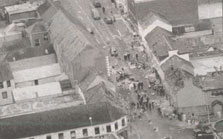
OMAGH 29 people died in the atrocity. Did this man help make the bomb?
By IAN GRAHAM PA NEWS
MAN IN DOCK OVER OMAGH BOMBING
A MAN appeared in court in Northern Ireland yesterday, charged in connection with the Omagh bomb atrocity.
Sean Gerard Hoey, 34, an unemployed electrician from Molly Road, Jonesborough, Co Armagh, was charged with possession of an explosive substance, namely a tuner power unit used in the bombing, which slaughtered 29 people, including a woman pregnant with unborn twins.
He was also charged with membership of the Real IRA, the dissident republican group which claimed responsibility for the worst terrorist atrocity carried out in over 30 years of violence, in Northern Ireland.
He is the first person to be charged in Northern Ireland in connection with the August 1998 bombing.
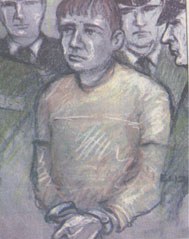
He appeared in the dock at Craigavon Magistrates Court in Co Armagh, handcuffed and surrounded by nine armed police officers.
Several relatives of those who died in the bombing, sat in the public gallery during the brief hearing.
Hoey spoke only twice, saying "yes" to confirm his name and "yes" to confirm he understood the charges.
He faced a total of 15 charges, only one relating to Omagh, and even that was not formally mentioned in the charge.
There were 12 other similar charges of possessing an explosive substance, the membership charge and another of conspiring to cause an explosion in Lisburn, Co Antrim, three months before the Omagh bombing.
He was remanded in custody, to reappear at the same court by video link, on October 2.
A police officer told the court that when charged, Hoey had replied not guilty to each charge. But the Detective Chief Inspector said he believed he could connect the accused with each charge.
The charge in relation to the Omagh bombing stated "that on a date unknown between the 12th day of March 1997 and the 16th day of August 1998, within the jurisdiction of the County Court, unlawfully and maliciously had in your possession or under your control a certain explosive substance namely, a timer power unit described as a Mark 19 model, with intent by means thereof to endanger life or cause serious injury to property in the United Kingdom or to enable some other person so to do contrary to Section 3 (1) (b) of the Explosive Substances Act 1883".
The 24 detectives still dedicated to the Omagh bomb enquiry have reviewed a whole range of bomb offences and 12 of the charges, all identical to that relating to Omagh involve other attacks.
A 14th charge relates to the conspiracy to cause an explosion in Lisburn, on the 30th April 1998.
The final charge was membership of the Real IRA between the 12th March 1997 and the 2nd September 2003, when he was arrested during a major police operation involving some 200 officers in his home village of Jonesborough.
In answer to questions from a defence solicitor, Detective Chief Inspector agreed that the accused had been previously interviewed on three occasions, and released without charge.
He said evidence was of a forensic nature, telephone analysis and the similarity between the timer power units used in the attacks.
The defence solicitor insisted that on the possession charges there was "absolutely no evidence" to connect his client with the charges.
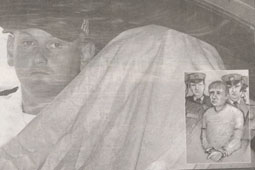
The accused arrived and left the court huddled in the back of an unmarked police car, with a blue blanket over his head.
Michael Gallagher, whose son was one of the 29 killed, along with more than 200 who were injured in the bombing, sat impassively in the public gallery surrounded by other relatives during the hearing.
He said afterwards: "For me personally it was difficult to watch a very insignificant person in the dock, who is accused of destroying the lives of so many people."
To date only one person has been convicted on the Omagh atrocity-publican Colm Murphy, who received 14 years in the Special Criminal Court, in Dublin, for helping to plot the attack.
Last month Michael McKevitt was convicted of directing terrorism in the Irish Republic. He was allegedly the leader of the Real IRA at the time of the Omagh bombing, however he has not been convicted directly of involvement in the attack.
By IAN GRAHAM PA NEWS
MAN IN DOCK OVER OMAGH BOMBING
A MAN appeared in court in Northern Ireland yesterday, charged in connection with the Omagh bomb atrocity.
Sean Gerard Hoey, 34, an unemployed electrician from Molly Road, Jonesborough, Co Armagh, was charged with possession of an explosive substance, namely a tuner power unit used in the bombing, which slaughtered 29 people, including a woman pregnant with unborn twins.
He was also charged with membership of the Real IRA, the dissident republican group which claimed responsibility for the worst terrorist atrocity carried out in over 30 years of violence, in Northern Ireland.
He is the first person to be charged in Northern Ireland in connection with the August 1998 bombing.
He appeared in the dock at Craigavon Magistrates Court in Co Armagh, handcuffed and surrounded by nine armed police officers.
Several relatives of those who died in the bombing, sat in the public gallery during the brief hearing.
Hoey spoke only twice, saying "yes" to confirm his name and "yes" to confirm he understood the charges.
He faced a total of 15 charges, only one relating to Omagh, and even that was not formally mentioned in the charge.
There were 12 other similar charges of possessing an explosive substance, the membership charge and another of conspiring to cause an explosion in Lisburn, Co Antrim, three months before the Omagh bombing.
He was remanded in custody, to reappear at the same court by video link, on October 2.
A police officer told the court that when charged, Hoey had replied not guilty to each charge. But the Detective Chief Inspector said he believed he could connect the accused with each charge.
The charge in relation to the Omagh bombing stated "that on a date unknown between the 12th day of March 1997 and the 16th day of August 1998, within the jurisdiction of the County Court, unlawfully and maliciously had in your possession or under your control a certain explosive substance namely, a timer power unit described as a Mark 19 model, with intent by means thereof to endanger life or cause serious injury to property in the United Kingdom or to enable some other person so to do contrary to Section 3 (1) (b) of the Explosive Substances Act 1883".
The 24 detectives still dedicated to the Omagh bomb enquiry have reviewed a whole range of bomb offences and 12 of the charges, all identical to that relating to Omagh involve other attacks.
A 14th charge relates to the conspiracy to cause an explosion in Lisburn, on the 30th April 1998.
The final charge was membership of the Real IRA between the 12th March 1997 and the 2nd September 2003, when he was arrested during a major police operation involving some 200 officers in his home village of Jonesborough.
In answer to questions from a defence solicitor, Detective Chief Inspector agreed that the accused had been previously interviewed on three occasions, and released without charge.
He said evidence was of a forensic nature, telephone analysis and the similarity between the timer power units used in the attacks.
The defence solicitor insisted that on the possession charges there was "absolutely no evidence" to connect his client with the charges.
The accused arrived and left the court huddled in the back of an unmarked police car, with a blue blanket over his head.
Michael Gallagher, whose son was one of the 29 killed, along with more than 200 who were injured in the bombing, sat impassively in the public gallery surrounded by other relatives during the hearing.
He said afterwards: "For me personally it was difficult to watch a very insignificant person in the dock, who is accused of destroying the lives of so many people."
To date only one person has been convicted on the Omagh atrocity-publican Colm Murphy, who received 14 years in the Special Criminal Court, in Dublin, for helping to plot the attack.
Last month Michael McKevitt was convicted of directing terrorism in the Irish Republic. He was allegedly the leader of the Real IRA at the time of the Omagh bombing, however he has not been convicted directly of involvement in the attack.
Further Information
Publisher: SUNDAY LIFE
Ref: SL/159
Published Date: 07-Sep-03
Related Images