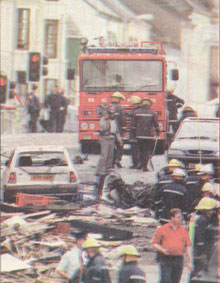
CATCHING THE OMAGH BOMBERS IS OUR GOAL
CATCHING THE OMAGH BOMBERS IS OUR GOAL
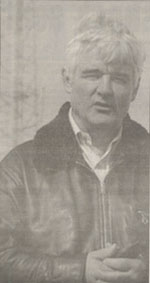
BBC television reporter JOHN WARE gives his account of the Panorama team's Omagh campaign motives
GETTING people out of jail who have been wrongly convicted has always been recognised as a journalistic pursuit in the public interest.
By the same token, helping to lock up people who commit crimes as heinous as the Omagh bombing is no less a proper role for public service broadcasting. I speak, not just as the reporter of last Monday's Panorama naming four of the Omagh suspects, but also as a former presenter of the BBC's Rough Justice programme who pursued several miscarriages of justice.
In spite of a joint RUC-Garda investigation of unprecedented scale, the Omagh bomb Inquiry has hit a familiar roadblock: the silence of witnesses. It beggars belief there does not exist today along the border, friends, relatives or neighbours who don't know something about the 15 men suspected of being involved in all the different stages of the bombing, that would be of assistance to the authorities.
These witnesses are either understandably afraid to speak; or, as a point of principle, they refuse to deal with gardai or the RUC because the
RUC would be involved in a trial whether in Belfast or Dublin; or because they believe that no good will came of more Irishmen going to jail.
The overriding purpose of last Monday's programme was to appeal to the good will of potential witnesses in whatever category.
And without knowledge of the names of suspects, such witnesses may be unaware of vital evidence they might possess.
David Trimble suggested we were playing the TV ratings game. This was oddly cynical. Panoramas on the Troubles have traditionally scored our lowest ratings. The Taoiseach Bertie Ahern said we had "bandied names about" and the Shadow Northern Ireland Secretary Andrew MacKay said we were "grossly irresponsible" and "self indulgent".
Both argued we could prejudice future proceedings, thereby depriving the relatives of seeing the guilty locked up.
This was also the basis of the attempt to injunct us in the High Court by Lawrence Rushe, who suffered the tragic loss of his wife, Libby.
I do not see how the programme can possibly have prejudiced the prospects of a trial. Indeed, its overriding purpose was to enhance them.
If charges are ever brought against the suspects we named they will be tried in the Special Criminal Court in Dublin. As with Diplock courts in Northern Ireland, this would be a judge-only trial. It's a well recognised legal principle that judges largely regard themselves as incorruptible and therefore immune to events that take place outside their court.
The Court would properly be concerned, not with what was seen on Panorama, but solely with the evidence before the court.
Therefore, the Court would not be influenced by the failure of the four suspects to answer my questions about the use of the mobile phones on the day of the bombing.
The Court would, however, be interested to hear what their answers might be in the witness box.
The High Court in Belfast last Monday saw the newly empowered Northern Ireland Human Rights Commission flex its muscles. It argued that
transmission would breach no fewer than five articles of the European Convention of Human Rights, recently incorporated into UK law. They said everyone's rights were being breached - not just the relatives' right to see a prosecution, but also the rights of the police to pursue their investigation, the rights of the suspects to a fair trial, privacy and a family life, and to protection from what they referred to as 'trial by media'. The Commission argued that "no public interest" would be advanced by the programme.
The logic of the Commission's case would mean that no prime facie evidence of criminal conduct should ever be exposed in public for fear of prejudicing something or someone. It seems strange to have to remind an organisation committed to upholding human rights, that such a blanket ban would be unacceptable in a liberal democracy such as ours.
I believe the Commission was misguided and that the programme was overwhelmingly in the public interest.
As one lady who wrote to me from Co Tipperary said: "I hope your programme torments the conscience of somebody, and I think it will."
BBC television reporter JOHN WARE gives his account of the Panorama team's Omagh campaign motives
GETTING people out of jail who have been wrongly convicted has always been recognised as a journalistic pursuit in the public interest.
By the same token, helping to lock up people who commit crimes as heinous as the Omagh bombing is no less a proper role for public service broadcasting. I speak, not just as the reporter of last Monday's Panorama naming four of the Omagh suspects, but also as a former presenter of the BBC's Rough Justice programme who pursued several miscarriages of justice.
In spite of a joint RUC-Garda investigation of unprecedented scale, the Omagh bomb Inquiry has hit a familiar roadblock: the silence of witnesses. It beggars belief there does not exist today along the border, friends, relatives or neighbours who don't know something about the 15 men suspected of being involved in all the different stages of the bombing, that would be of assistance to the authorities.
These witnesses are either understandably afraid to speak; or, as a point of principle, they refuse to deal with gardai or the RUC because the
RUC would be involved in a trial whether in Belfast or Dublin; or because they believe that no good will came of more Irishmen going to jail.
The overriding purpose of last Monday's programme was to appeal to the good will of potential witnesses in whatever category.
And without knowledge of the names of suspects, such witnesses may be unaware of vital evidence they might possess.
David Trimble suggested we were playing the TV ratings game. This was oddly cynical. Panoramas on the Troubles have traditionally scored our lowest ratings. The Taoiseach Bertie Ahern said we had "bandied names about" and the Shadow Northern Ireland Secretary Andrew MacKay said we were "grossly irresponsible" and "self indulgent".
Both argued we could prejudice future proceedings, thereby depriving the relatives of seeing the guilty locked up.
This was also the basis of the attempt to injunct us in the High Court by Lawrence Rushe, who suffered the tragic loss of his wife, Libby.
I do not see how the programme can possibly have prejudiced the prospects of a trial. Indeed, its overriding purpose was to enhance them.
If charges are ever brought against the suspects we named they will be tried in the Special Criminal Court in Dublin. As with Diplock courts in Northern Ireland, this would be a judge-only trial. It's a well recognised legal principle that judges largely regard themselves as incorruptible and therefore immune to events that take place outside their court.
The Court would properly be concerned, not with what was seen on Panorama, but solely with the evidence before the court.
Therefore, the Court would not be influenced by the failure of the four suspects to answer my questions about the use of the mobile phones on the day of the bombing.
The Court would, however, be interested to hear what their answers might be in the witness box.
The High Court in Belfast last Monday saw the newly empowered Northern Ireland Human Rights Commission flex its muscles. It argued that
transmission would breach no fewer than five articles of the European Convention of Human Rights, recently incorporated into UK law. They said everyone's rights were being breached - not just the relatives' right to see a prosecution, but also the rights of the police to pursue their investigation, the rights of the suspects to a fair trial, privacy and a family life, and to protection from what they referred to as 'trial by media'. The Commission argued that "no public interest" would be advanced by the programme.
The logic of the Commission's case would mean that no prime facie evidence of criminal conduct should ever be exposed in public for fear of prejudicing something or someone. It seems strange to have to remind an organisation committed to upholding human rights, that such a blanket ban would be unacceptable in a liberal democracy such as ours.
I believe the Commission was misguided and that the programme was overwhelmingly in the public interest.
As one lady who wrote to me from Co Tipperary said: "I hope your programme torments the conscience of somebody, and I think it will."
Further Information
Publisher: SUNDAY LIFE
Ref: SL/107
Published Date: 15-Oct-00
Related Images