IT MAY SOUND AWFUL BUT IT WAS LIKE A HUMAN SCRAPYARD
It may sound awful... but it was like a human scrapyard'
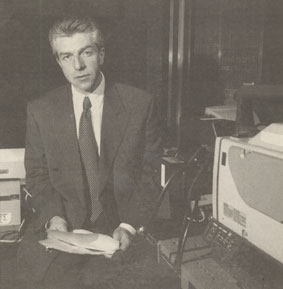
THE REPORTER
BBC journalist Seamus Boyd was in Newry covering the Hibernian parade when news of the Omagh bomb came through.
First reports indicated that one or two people had been killed in the blast. It was 5pm when the TV crew arrived in the town centre.
Said Seamus: "I climbed the stairs of a shop to see out onto the street.
"There was silence, and I was filled with a strange sense of fear and dread as I went up the stairs.
"I looked out the window and saw a scene of utter devastation.
"The bodies had been removed, but the number of prams and pushchairs and buggies, even a wheelchair, in some ways was even more graphic than seeing injured people.
"It brought home the normality that had been there before the explosion.
"We headed for the hospital, and I was expecting some fairly shocking sights, but nothing prepared me for what we found.
"I have never seen so many ambulances and injured people.
"It may sound awful, but it was like a human scrapyard.
"There were people outside with terrible injuries who, under normal circumstances, should have been in a hospital bed.
"Doctors and nurses had to make terrible decisions to cope with the sheer mass of people.
"When the relatives started arriving, it was even more distressing to see them.
"Some didn't know if their relatives had been injured or not.
"When they were reading out the lists of injured and where they were, I have never seen an audience so desperate for details.
"There was relief on the faces of those who knew their father, son or daughter was alive and then the awful, awful disappointment for those people for whom there was no news.
"As a journalist, you are there to do a job, but you feel like an imposter in a suit, of little or any use to people doing real jobs around you. "
Vital From his position as a professional observer, Seamus was suddenly thrust into a vital role.
With the phone lines down and the mobile phone network overloaded, he acted as the link between the Royal Victoria Hospital in Belfast and Tyrone County Hospital.
The Royal had contacted Seamus desperate for news of the number of casualties to expect.
With no phonelines, Seamus was able to use the airwaves to broadcast the information the Royal so urgently needed.
He said: "In a situation as appalling as that, you of course have to get the story.
"People are starved of information, and you have to balance that with the sensitivity that is needed.
"I decided early on that I would get the details, but that the information would come to me.
"I didn't want to be pushing cameras or microphones into peoples' faces.
"I was describing on radio how the floor of the hospital was covered with blood.
"I remember thinking that it sounded like an extreme description, but it wasn't.
"I don't think anything could have prepared me for what I saw in that hospital.
"It will stay with me for the rest of my life."
THE REPORTER
BBC journalist Seamus Boyd was in Newry covering the Hibernian parade when news of the Omagh bomb came through.
First reports indicated that one or two people had been killed in the blast. It was 5pm when the TV crew arrived in the town centre.
Said Seamus: "I climbed the stairs of a shop to see out onto the street.
"There was silence, and I was filled with a strange sense of fear and dread as I went up the stairs.
"I looked out the window and saw a scene of utter devastation.
"The bodies had been removed, but the number of prams and pushchairs and buggies, even a wheelchair, in some ways was even more graphic than seeing injured people.
"It brought home the normality that had been there before the explosion.
"We headed for the hospital, and I was expecting some fairly shocking sights, but nothing prepared me for what we found.
"I have never seen so many ambulances and injured people.
"It may sound awful, but it was like a human scrapyard.
"There were people outside with terrible injuries who, under normal circumstances, should have been in a hospital bed.
"Doctors and nurses had to make terrible decisions to cope with the sheer mass of people.
"When the relatives started arriving, it was even more distressing to see them.
"Some didn't know if their relatives had been injured or not.
"When they were reading out the lists of injured and where they were, I have never seen an audience so desperate for details.
"There was relief on the faces of those who knew their father, son or daughter was alive and then the awful, awful disappointment for those people for whom there was no news.
"As a journalist, you are there to do a job, but you feel like an imposter in a suit, of little or any use to people doing real jobs around you. "
Vital From his position as a professional observer, Seamus was suddenly thrust into a vital role.
With the phone lines down and the mobile phone network overloaded, he acted as the link between the Royal Victoria Hospital in Belfast and Tyrone County Hospital.
The Royal had contacted Seamus desperate for news of the number of casualties to expect.
With no phonelines, Seamus was able to use the airwaves to broadcast the information the Royal so urgently needed.
He said: "In a situation as appalling as that, you of course have to get the story.
"People are starved of information, and you have to balance that with the sensitivity that is needed.
"I decided early on that I would get the details, but that the information would come to me.
"I didn't want to be pushing cameras or microphones into peoples' faces.
"I was describing on radio how the floor of the hospital was covered with blood.
"I remember thinking that it sounded like an extreme description, but it wasn't.
"I don't think anything could have prepared me for what I saw in that hospital.
"It will stay with me for the rest of my life."
Further Information
Publisher: SUNDAY LIFE
Ref: SL/028
Published Date: 23-Aug-98
Related Images