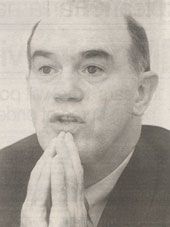
POLICE CHIEF SIR RONNIE QUIZZED FOR THE LAST TIME
Police chief Sir Ronnie quizzed for the last time
Sir Ronnie Flanagan will step down as PSNI Chief Constable on Sunday. In his final major interview, he spoke to News Letter reporter STEPHEN DEMPSTER about controversies surrounding the force, the peace process and his hopes for future policing in Ulster
SIR Ronnie Flanagan yesterday said he will attend the passing out ceremony for the new police recruits, after he has retired from the PSNI.
The Chief Constable confirmed that he had been invited to attend and was accepting.
He also described media reports that he had been attempting to take control of the graduation as "nonsense".
The police chief said that, if it would create huge problems, he would not go but said he wanted and anticipated being there.
The ceremony has been the latest issue to dog the final days of Sir Ronnie's tenure as Chief Constable, with some SDLP figures suggesting their party could boycott the event, depending on the degree of Sir Ronnie's involvement.
But the police boss has also said he hopes to take most of the controversy surrounding the police with him, on his retirement.
He said his departure should underpin the new beginning for policing in Northern Ireland.
The more "difficulties and embarrassments" he could take away with him, the happier he would be, he said.
"Then, hopefully, those who follow will be as free as possible to make a fresh start," he said.
For a man who has been under intense pressure in recent months, the 53-year-old conveyed a relaxed and philosophical air, welcoming half-a-dozen members of the Press to police headquarters for his final major interview as PSNI chief.
Predictably fielding questions on Omagh, Nuala O'Loan, the Castlereagh break-in, police collusion claims, republican criticisms, the IRA, organised crime and the future of policing, the Chief Constable remained patient, friendly and considered.
However, he admitted he was leaving the job after 32 years with mixed feelings - accepting that he had regrets and some mistakes had been made.
Sir Ronnie took up the post in 1996, inheriting the Drumcree problem, a new political climate and increasing demands for an overhaul of the force.
Having said an emotional goodbye to the RUC, he said he now hoped and believed he was leaving the PSNI in a position of strength, having marshalled it through momentous changes.
In particular, he predicted that some of the manpower and other problems which have dogged the police would be left behind this year.
Two years ago, he said that he anticipated there would be a difficult period of around two-and-a-half years, when officer numbers would be the biggest issue, as many with a wealth of experience left the force.
Sir Ronnie noted that military back-up had been needed and officers required to do more overtime, particularly to cover disorder on the streets.
But he said: "The good news is, I think we are coming out of that period.
"The standard, enthusiasm and dedication of the new recruits is of a quality as high as it ever was."
The PSNI now faces two major challenges in the months ahead, the Chief Constable said.
"Firstly, we need to ensure that the new trainees are absolutely integrated into the organisation and I say this as someone who also came into the RUC at a time of great change, after the Hunt Report.
"The other main challenge is not so much for the police service but for the community at large -it's now really time for everyone to work together in support of the police."
The police chief said he referred, in this context, to all the political parties and warned "no one should be in any doubt" that, if one group withholds support, stable policing would be difficult.
He said people with problems over policing should work from within the new arrangements -like the Police Board - to bring change.
However, though the SDLP has joined the board, in recent months the Chief Constable has had a strained relationship with the party - following the O'Loan Omagh bomb report.
SDLP board member Alex Attwood labelled Sir Ronnie "a lame duck" police chief and the party was keen to usher him out of his job.
The police chief noted that he had, in fact, enjoyed a good relationship with Mr Attwood and, therefore, was dismayed at the remarks.
"The comments said more about him than they did about me," Sir Ronnie said.
He said he had also received many cards and letters, suggesting he was not a lame duck to others.
Sir Ronnie said that the O'Loan report had hurt him deeply but that he now viewed his comment that he would publicly commit suicide if it was factual as a "crass remark".
"Nothing is more precious than the sanctity of life," he said.
"I am sure I hurt people and families who have gone through the trauma of a suicide."
On other controversies, he said the RUC and PSNI should have nothing to fear from possible inquiries into controversial killings, like that of Pat Finucane.
"If an independent judge decides public inquiries are the way forward - he will have nothing but cooperation from the PSNI," he said.
Sir Ronnie Flanagan will step down as PSNI Chief Constable on Sunday. In his final major interview, he spoke to News Letter reporter STEPHEN DEMPSTER about controversies surrounding the force, the peace process and his hopes for future policing in Ulster
SIR Ronnie Flanagan yesterday said he will attend the passing out ceremony for the new police recruits, after he has retired from the PSNI.
The Chief Constable confirmed that he had been invited to attend and was accepting.
He also described media reports that he had been attempting to take control of the graduation as "nonsense".
The police chief said that, if it would create huge problems, he would not go but said he wanted and anticipated being there.
The ceremony has been the latest issue to dog the final days of Sir Ronnie's tenure as Chief Constable, with some SDLP figures suggesting their party could boycott the event, depending on the degree of Sir Ronnie's involvement.
But the police boss has also said he hopes to take most of the controversy surrounding the police with him, on his retirement.
He said his departure should underpin the new beginning for policing in Northern Ireland.
The more "difficulties and embarrassments" he could take away with him, the happier he would be, he said.
"Then, hopefully, those who follow will be as free as possible to make a fresh start," he said.
For a man who has been under intense pressure in recent months, the 53-year-old conveyed a relaxed and philosophical air, welcoming half-a-dozen members of the Press to police headquarters for his final major interview as PSNI chief.
Predictably fielding questions on Omagh, Nuala O'Loan, the Castlereagh break-in, police collusion claims, republican criticisms, the IRA, organised crime and the future of policing, the Chief Constable remained patient, friendly and considered.
However, he admitted he was leaving the job after 32 years with mixed feelings - accepting that he had regrets and some mistakes had been made.
Sir Ronnie took up the post in 1996, inheriting the Drumcree problem, a new political climate and increasing demands for an overhaul of the force.
Having said an emotional goodbye to the RUC, he said he now hoped and believed he was leaving the PSNI in a position of strength, having marshalled it through momentous changes.
In particular, he predicted that some of the manpower and other problems which have dogged the police would be left behind this year.
Two years ago, he said that he anticipated there would be a difficult period of around two-and-a-half years, when officer numbers would be the biggest issue, as many with a wealth of experience left the force.
Sir Ronnie noted that military back-up had been needed and officers required to do more overtime, particularly to cover disorder on the streets.
But he said: "The good news is, I think we are coming out of that period.
"The standard, enthusiasm and dedication of the new recruits is of a quality as high as it ever was."
The PSNI now faces two major challenges in the months ahead, the Chief Constable said.
"Firstly, we need to ensure that the new trainees are absolutely integrated into the organisation and I say this as someone who also came into the RUC at a time of great change, after the Hunt Report.
"The other main challenge is not so much for the police service but for the community at large -it's now really time for everyone to work together in support of the police."
The police chief said he referred, in this context, to all the political parties and warned "no one should be in any doubt" that, if one group withholds support, stable policing would be difficult.
He said people with problems over policing should work from within the new arrangements -like the Police Board - to bring change.
However, though the SDLP has joined the board, in recent months the Chief Constable has had a strained relationship with the party - following the O'Loan Omagh bomb report.
SDLP board member Alex Attwood labelled Sir Ronnie "a lame duck" police chief and the party was keen to usher him out of his job.
The police chief noted that he had, in fact, enjoyed a good relationship with Mr Attwood and, therefore, was dismayed at the remarks.
"The comments said more about him than they did about me," Sir Ronnie said.
He said he had also received many cards and letters, suggesting he was not a lame duck to others.
Sir Ronnie said that the O'Loan report had hurt him deeply but that he now viewed his comment that he would publicly commit suicide if it was factual as a "crass remark".
"Nothing is more precious than the sanctity of life," he said.
"I am sure I hurt people and families who have gone through the trauma of a suicide."
On other controversies, he said the RUC and PSNI should have nothing to fear from possible inquiries into controversial killings, like that of Pat Finucane.
"If an independent judge decides public inquiries are the way forward - he will have nothing but cooperation from the PSNI," he said.
Further Information
Publisher: NEWS LETTER
Ref: NL/429
Published Date: 27-Mar-02
Related Images