BLAIR CLASHES WITH HAGUE ON RELEASES
Blair clashes with Hague on releases
Bipartisan policy on peace process under threat
By Mervyn Pauley
PRIME Minister Tony Blair clashed with William Hague in the Commons yesterday when the Tory leader mounted a surprise attack on Labour's handling of the Ulster peace process.
In a fraught atmosphere heightened by Tory backbench protests, Mr Blair rejected Mr Hague's demand for a halt to the early release of terrorist prisoners in the wake of an upsurge in punishment beatings and shootings.
Mr Hague underscored calls for a start to paramilitary disarmament, warned that bipartisan backing for the peace process was important but insisted it was "not a blank cheque".
The exchanges followed a decision by Tory MP Andrew Hunter to shelve plans to use parliamentary privilege to "name and shame" the man he believes was the Omagh bomb-maker.
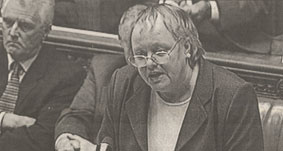
Ulster Secretary Mo Mowlam had used Northern Ireland Questions to warn that naming suspected terrorists could achieve the exact opposite of what victims' families and the RUC wanted to see.
Later Mr Blair - faced with Tory demands on prison releases before moves on decommissioning - argued that a difficult balance of judgment had to be struck and warned that Mr Hague's stance could bring "the whole of the Good Friday Agreement to an end".
Mr Hague retorted that, far from trying to damage the peace deal, his party was actually calling for it to be implemented.
He pointed to the "latest and mounting reports" of terrorist beatings and said: "This morning's reports concerned Andrew Peden who was tortured for 10 hours, left to die, who lost both his legs, whose wife says he cries out every night as he relives what happened to him.
"Beatings like this are happening in increasing numbers, yet we are still releasing early prisoners belonging to the organisations responsible for these crimes. Would you agree these beatings are a breach of the Good Friday agreement?"
Mr Blair said: "Any punishment beatings at all are a breach of the agreements that have been entered into. This has always been, though, a very difficult issue which the previous Government grappled with during the first IRA ceasefire.
"They continued their early release scheme for prisoners although punishment attacks were going on at the time.
"But I agree they are totally unacceptable. We are doing everything we possibly can to bring them to an end."
Mr Hague said it was not right to compare earlier release schemes with the present one "because it was made very clear at the time that those who had committed the most heinous crimes would not be released until the first decade of the next century."
He recalled: "You told me on May 6 last year: 'It is essential that organisations that want to benefit from the early release of prisoners should give up violence'.
"You pledged to the people of Northern Ireland that terrorists would have to bring an end to bombings, killings and beatings, progressive dismantling of paramilitary structures and full co-operation with the commission on decommissioning.
"Given that none of these things are yet happening, isn't it time to stop the early release of terrorist prisoners?"
Mr Blair said: "We have to judge this against all the evidence, including the security advice we receive and the question of whether we believe the ceasefires have broken down.
"We don't believe it's justified to conclude that. But in saying that I don't minimise our anxiety at the level of these punishment beatings and it's a very important judgment that we make the whole time.
"I believe on balance at the present time, we are making the right judgment. But I don't minimise the difficulty of it."
The Tory chief said RUC Chief Constable Sir Ronnie Flanagan had said on Friday that there was no doubt that all of these organisations, including those who purported to be in cessation of military operations, were engaged in this "repugnant activity".
He went on: "The parents of RUC constable David Sterritt have been told the dates on which their son's killers will be freed - one of them in an act of grotesque insensitivity on the part of the Northern Ireland Office, on the 10th anniversary of his murder.
"So plans are being made, months ahead, for the early release of terrorists, seemingly without regard to whether any guns or bombs will be turned in.
"Isn't it time that we put on hold for now releasing convicted terrorists when they've not yet given up a single gun or bomb?"
Mr Blair said the Secretary of State had written to the Sterritt family explaining the circumstances of the case. It was true that the Chief Constable made the remarks ascribed to him, but he had also said that he believed the ceasefires were intact.
"We have to make a judgment. What you are asking us to do, in effect, is to bring the whole of the Good Friday Agreement to an end."
The Prime Minister continued: "You have to follow through the consequences of what you are saying. We continue to make the judgment that we do in very difficult circumstances."
Undaunted, Mr Hague said: "We're now in a situation where more than half the terrorists have now been released, the beatings go on, the torturing goes on, the shootings goes on and the storing of weapons goes on.
"Isn't it true that every time a prisoner is released without weapons being handed in or beatings stopping, the Government is throwing away a valuable negotiating card?"
Mr Blair replied: "No. Obviously I don't believe that to be the case."
Bipartisan policy on peace process under threat
By Mervyn Pauley
PRIME Minister Tony Blair clashed with William Hague in the Commons yesterday when the Tory leader mounted a surprise attack on Labour's handling of the Ulster peace process.
In a fraught atmosphere heightened by Tory backbench protests, Mr Blair rejected Mr Hague's demand for a halt to the early release of terrorist prisoners in the wake of an upsurge in punishment beatings and shootings.
Mr Hague underscored calls for a start to paramilitary disarmament, warned that bipartisan backing for the peace process was important but insisted it was "not a blank cheque".
The exchanges followed a decision by Tory MP Andrew Hunter to shelve plans to use parliamentary privilege to "name and shame" the man he believes was the Omagh bomb-maker.
Ulster Secretary Mo Mowlam had used Northern Ireland Questions to warn that naming suspected terrorists could achieve the exact opposite of what victims' families and the RUC wanted to see.
Later Mr Blair - faced with Tory demands on prison releases before moves on decommissioning - argued that a difficult balance of judgment had to be struck and warned that Mr Hague's stance could bring "the whole of the Good Friday Agreement to an end".
Mr Hague retorted that, far from trying to damage the peace deal, his party was actually calling for it to be implemented.
He pointed to the "latest and mounting reports" of terrorist beatings and said: "This morning's reports concerned Andrew Peden who was tortured for 10 hours, left to die, who lost both his legs, whose wife says he cries out every night as he relives what happened to him.
"Beatings like this are happening in increasing numbers, yet we are still releasing early prisoners belonging to the organisations responsible for these crimes. Would you agree these beatings are a breach of the Good Friday agreement?"
Mr Blair said: "Any punishment beatings at all are a breach of the agreements that have been entered into. This has always been, though, a very difficult issue which the previous Government grappled with during the first IRA ceasefire.
"They continued their early release scheme for prisoners although punishment attacks were going on at the time.
"But I agree they are totally unacceptable. We are doing everything we possibly can to bring them to an end."
Mr Hague said it was not right to compare earlier release schemes with the present one "because it was made very clear at the time that those who had committed the most heinous crimes would not be released until the first decade of the next century."
He recalled: "You told me on May 6 last year: 'It is essential that organisations that want to benefit from the early release of prisoners should give up violence'.
"You pledged to the people of Northern Ireland that terrorists would have to bring an end to bombings, killings and beatings, progressive dismantling of paramilitary structures and full co-operation with the commission on decommissioning.
"Given that none of these things are yet happening, isn't it time to stop the early release of terrorist prisoners?"
Mr Blair said: "We have to judge this against all the evidence, including the security advice we receive and the question of whether we believe the ceasefires have broken down.
"We don't believe it's justified to conclude that. But in saying that I don't minimise our anxiety at the level of these punishment beatings and it's a very important judgment that we make the whole time.
"I believe on balance at the present time, we are making the right judgment. But I don't minimise the difficulty of it."
The Tory chief said RUC Chief Constable Sir Ronnie Flanagan had said on Friday that there was no doubt that all of these organisations, including those who purported to be in cessation of military operations, were engaged in this "repugnant activity".
He went on: "The parents of RUC constable David Sterritt have been told the dates on which their son's killers will be freed - one of them in an act of grotesque insensitivity on the part of the Northern Ireland Office, on the 10th anniversary of his murder.
"So plans are being made, months ahead, for the early release of terrorists, seemingly without regard to whether any guns or bombs will be turned in.
"Isn't it time that we put on hold for now releasing convicted terrorists when they've not yet given up a single gun or bomb?"
Mr Blair said the Secretary of State had written to the Sterritt family explaining the circumstances of the case. It was true that the Chief Constable made the remarks ascribed to him, but he had also said that he believed the ceasefires were intact.
"We have to make a judgment. What you are asking us to do, in effect, is to bring the whole of the Good Friday Agreement to an end."
The Prime Minister continued: "You have to follow through the consequences of what you are saying. We continue to make the judgment that we do in very difficult circumstances."
Undaunted, Mr Hague said: "We're now in a situation where more than half the terrorists have now been released, the beatings go on, the torturing goes on, the shootings goes on and the storing of weapons goes on.
"Isn't it true that every time a prisoner is released without weapons being handed in or beatings stopping, the Government is throwing away a valuable negotiating card?"
Mr Blair replied: "No. Obviously I don't believe that to be the case."
Further Information
Publisher: NEWS LETTER
Ref: NL/181
Published Date: 21-Jan-99
Related Images