LET THE CRY FOR LASTING PEACE BE HEARD
Let the cry for lasting peace be heard
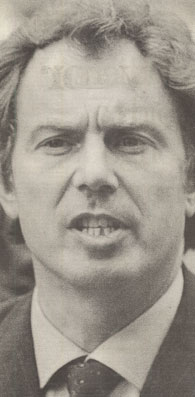
Prime Minister Tony Blair's New Year message to Northern Ireland
NINETEEN-NINETY-EIGHT was a momentous year for Northern Ireland. From the most unpromising and violent of beginnings, the courage and vision of Northern Ireland's politicians led to the Good Friday Agreement little more than three months later.
After this chance of a new beginning was resoundingly endorsed by the people of Northern Ireland in the referendum and Assembly elections, the autumn began with the dreadful tragedy of Omagh.
It was predictably difficult on the political front too, with tough bargaining over the shape of the new institutions. But it was also marked by the historic start of dialogue between unionists and republicans.
And the year ended successfully, with agreement on 18 December between the main parties on the number and nature of the North/South implementation bodies and-cooperation areas to be established and on the departments to make up the new Northern Ireland Administration.
The Christmas and New Year period was one of the most peaceful on record.
We start 1999 with an impressive balance sheet:
>a comprehensive settlement plan agreed and well on the way to being implemented
>the consent principle firmly enshrined in legislation North and South, promising a stable constitutional future for Northern Ireland
>the basic institutional structure of devolved government in place, to enable the people of Northern Ireland to take the key decisions for themselves after nearly 30 years of direct rule
>ceasefires from all the main paramilitary groups, despite the continuing threat of violence from small numbers of loyalist and republican dissidents, and an accelerated prisoner release programme under way
>new provisions in place to ensure equality, and full rights for all
>reviews of policing and criminal justice under way.
>above all, new habits of co-operation across the previous divides growing up, driven by the will of the people that it should be so.
We still face huge challenges. As George Mitchell rightly pointed out, implementation of the Agreement is just as difficult as its negotiation.
Indeed, it may well be more so. Reconciliation is far from complete. Divisions and bitterness persist in some quarters. Many, not least the victims of terrorism, find it understandably hard to accept steps such as prisoner releases.
The key challenge for 1999 is to show that the Agreement is. a practical working reality - in all its aspects.
The Agreement reached by David Trimble and Seamus Mallon on December 18 means that all. the practical steps to launch the new devolved administration are now under way.
The parties will be closely involved in all the detailed preparation and legislation.
We are determined to have this complete so that everything is ready to transfer powers early in March.
But confidence on all sides remains the key to progress. Confidence that everyone keep to their obligations under the Agreement - including the clear obligations on decommissioning.
We are not far from the first anniversary of the Agreement.
The Decommissioning Commission has had a number of meetings but, with the exception of the LVF, no weapons at all so far from the main paramilitary groups. All the Agreement has to be implemented because it all hangs together.
It is an enormous step forward that the guns are - by and large - silent. That has been vital to the progress we have already made. But all of us are committed to the aim of seeing the guns not just silent, but taken out of politics forever.
That is why a start to decommissioning would do more, to create confidence between the communities than any other single step.
Confidence is of course a two-way street. The old days and the old ways of domination by one community have to be put aside once and for all. Mutual respect and mutual acceptance of legitimacy are the keys.
The aim is a normal, peaceful society where both traditions can flourish, and interact successfully, and where all sides have faith in their institutions. That means an end, once and for all, to the despicable practice of punishment beatings and shootings.
It means a police force and criminal justice system genuinely open to all, and seen as such.
It means a job market where background counts for nothing and individual merit counts for everything.
These are hardly impossible dreams on the verge of the new millennium. And I am more than ever confident that they will be realised, starting this year. Every step forward we take makes a return to the old ways and the violence of the past more impossible to contemplate.
Each new move to work together proves the falsehood of the once-prevailing view that it couldn't be done in Northern Ireland.
Every fresh agreement shows Northern Ireland's politicians looking to the future, not the past. History can be overcome.What gives me confidence above all is the will of the people of Northern Ireland. They voted for the Good Friday Agreement. Their view now, and their demand to the politicians of all sides, could not be simpler: make it work.
The big principles are established on a basis satisfactory to all.
Whatever compromises on smaller matters are now required, be ready to make them.
Because we have come too far to fail. That is an imperative I take to heart. I trust others do too.
The road ahead will never be easy. Once the new Administration is up and running, the daily grind of working together will place new strains on all parties arid all leaders. But it can be done. It will be done.
And when the arguments are about education, or health, or jobs, and not about violence or the future of Northern Ireland, we will know we have succeeded in making Northern Ireland a normal place to live.Then Northern Ireland's advantages - quality of life, talented people, educational achievements - will really come into their own, and the economic rewards will be reaped.
One other challenge faces society in Northern Ireland, and all of us: parades and the particular issue of Drumcree.
Last year's experience in many areas showed that, with a little goodwill on both sides, even seemingly intractable disputes over individual parades could be resolved. The situation in Portadown is an exception and a blot on the landscape of Northern Ireland. It is a continuing poison in the system.
It need not remain so. Even this threat can be turned into an opportunity. We must broker an accommodation between those concerned, and begin to address the underlying tensions, and their causes, in that divided town.
We will be making every possible effort to bring this about in the next few weeks. I look to all those involved to show that extra bit of imagination which can bring about the long sought after agreement.
A situation where most people in Northern Ireland dread the approach of summer because of the confrontation it might bring is simply not acceptable any longer.
I do not believe either the Orange Order or the residents groups, striving as they are to do the best for their people, can seriously want to see a repeat of previous years, or Portadown's businesses ruined for good.
My New Year message to the people and politicians of Northern Ireland is straightforward: real and lasting peace is within your grasp after generations of conflict.
Seize the opportunity, and seize it now. Ensure once and for all that there will be no more Omaghs.
This government will do all in its power to make that happen, working with all the parties, and our Irish colleagues. But it depends above all on you and your political will.
Let the voice of the people for lasting peace - through business, culture, sport, worship and every other activity - be heard loud and clear. I am optimistic that it will. That is why I am so confident about the future of Northern Ireland.
Prime Minister Tony Blair's New Year message to Northern Ireland
NINETEEN-NINETY-EIGHT was a momentous year for Northern Ireland. From the most unpromising and violent of beginnings, the courage and vision of Northern Ireland's politicians led to the Good Friday Agreement little more than three months later.
After this chance of a new beginning was resoundingly endorsed by the people of Northern Ireland in the referendum and Assembly elections, the autumn began with the dreadful tragedy of Omagh.
It was predictably difficult on the political front too, with tough bargaining over the shape of the new institutions. But it was also marked by the historic start of dialogue between unionists and republicans.
And the year ended successfully, with agreement on 18 December between the main parties on the number and nature of the North/South implementation bodies and-cooperation areas to be established and on the departments to make up the new Northern Ireland Administration.
The Christmas and New Year period was one of the most peaceful on record.
We start 1999 with an impressive balance sheet:
>a comprehensive settlement plan agreed and well on the way to being implemented
>the consent principle firmly enshrined in legislation North and South, promising a stable constitutional future for Northern Ireland
>the basic institutional structure of devolved government in place, to enable the people of Northern Ireland to take the key decisions for themselves after nearly 30 years of direct rule
>ceasefires from all the main paramilitary groups, despite the continuing threat of violence from small numbers of loyalist and republican dissidents, and an accelerated prisoner release programme under way
>new provisions in place to ensure equality, and full rights for all
>reviews of policing and criminal justice under way.
>above all, new habits of co-operation across the previous divides growing up, driven by the will of the people that it should be so.
We still face huge challenges. As George Mitchell rightly pointed out, implementation of the Agreement is just as difficult as its negotiation.
Indeed, it may well be more so. Reconciliation is far from complete. Divisions and bitterness persist in some quarters. Many, not least the victims of terrorism, find it understandably hard to accept steps such as prisoner releases.
The key challenge for 1999 is to show that the Agreement is. a practical working reality - in all its aspects.
The Agreement reached by David Trimble and Seamus Mallon on December 18 means that all. the practical steps to launch the new devolved administration are now under way.
The parties will be closely involved in all the detailed preparation and legislation.
We are determined to have this complete so that everything is ready to transfer powers early in March.
But confidence on all sides remains the key to progress. Confidence that everyone keep to their obligations under the Agreement - including the clear obligations on decommissioning.
We are not far from the first anniversary of the Agreement.
The Decommissioning Commission has had a number of meetings but, with the exception of the LVF, no weapons at all so far from the main paramilitary groups. All the Agreement has to be implemented because it all hangs together.
It is an enormous step forward that the guns are - by and large - silent. That has been vital to the progress we have already made. But all of us are committed to the aim of seeing the guns not just silent, but taken out of politics forever.
That is why a start to decommissioning would do more, to create confidence between the communities than any other single step.
Confidence is of course a two-way street. The old days and the old ways of domination by one community have to be put aside once and for all. Mutual respect and mutual acceptance of legitimacy are the keys.
The aim is a normal, peaceful society where both traditions can flourish, and interact successfully, and where all sides have faith in their institutions. That means an end, once and for all, to the despicable practice of punishment beatings and shootings.
It means a police force and criminal justice system genuinely open to all, and seen as such.
It means a job market where background counts for nothing and individual merit counts for everything.
These are hardly impossible dreams on the verge of the new millennium. And I am more than ever confident that they will be realised, starting this year. Every step forward we take makes a return to the old ways and the violence of the past more impossible to contemplate.
Each new move to work together proves the falsehood of the once-prevailing view that it couldn't be done in Northern Ireland.
Every fresh agreement shows Northern Ireland's politicians looking to the future, not the past. History can be overcome.What gives me confidence above all is the will of the people of Northern Ireland. They voted for the Good Friday Agreement. Their view now, and their demand to the politicians of all sides, could not be simpler: make it work.
The big principles are established on a basis satisfactory to all.
Whatever compromises on smaller matters are now required, be ready to make them.
Because we have come too far to fail. That is an imperative I take to heart. I trust others do too.
The road ahead will never be easy. Once the new Administration is up and running, the daily grind of working together will place new strains on all parties arid all leaders. But it can be done. It will be done.
And when the arguments are about education, or health, or jobs, and not about violence or the future of Northern Ireland, we will know we have succeeded in making Northern Ireland a normal place to live.Then Northern Ireland's advantages - quality of life, talented people, educational achievements - will really come into their own, and the economic rewards will be reaped.
One other challenge faces society in Northern Ireland, and all of us: parades and the particular issue of Drumcree.
Last year's experience in many areas showed that, with a little goodwill on both sides, even seemingly intractable disputes over individual parades could be resolved. The situation in Portadown is an exception and a blot on the landscape of Northern Ireland. It is a continuing poison in the system.
It need not remain so. Even this threat can be turned into an opportunity. We must broker an accommodation between those concerned, and begin to address the underlying tensions, and their causes, in that divided town.
We will be making every possible effort to bring this about in the next few weeks. I look to all those involved to show that extra bit of imagination which can bring about the long sought after agreement.
A situation where most people in Northern Ireland dread the approach of summer because of the confrontation it might bring is simply not acceptable any longer.
I do not believe either the Orange Order or the residents groups, striving as they are to do the best for their people, can seriously want to see a repeat of previous years, or Portadown's businesses ruined for good.
My New Year message to the people and politicians of Northern Ireland is straightforward: real and lasting peace is within your grasp after generations of conflict.
Seize the opportunity, and seize it now. Ensure once and for all that there will be no more Omaghs.
This government will do all in its power to make that happen, working with all the parties, and our Irish colleagues. But it depends above all on you and your political will.
Let the voice of the people for lasting peace - through business, culture, sport, worship and every other activity - be heard loud and clear. I am optimistic that it will. That is why I am so confident about the future of Northern Ireland.
Further Information
Publisher: NEWS LETTER
Ref: NL/175
Published Date: 11-Jan-99
Related Images