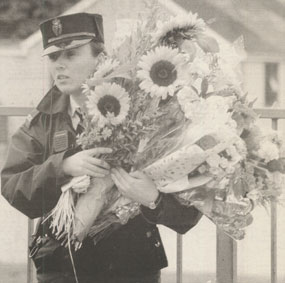
LIVING HELL THAT MADE TOUGH RUC CHIEF WEEP
Living hell that made tough RUC chief weep
By JEANETTE OLDHAM
IT'S a sight you don't often see - a hard-nosed, high-ranking policeman crying like a little boy.
But somehow yesterday, the muffled sobs coming from Omagh police chief James Baxter seemed the most natural thing in the world.
The sub-divisional commander was not at the scene of the blast last Saturday afternoon, but he has been on duty every day and nearly every night since.
And yesterday, the living hell to which his task of talking officers through their experiences at the scene had taken him finally took its inevitable toll.
With his head in his hands and his heart in his boots, this inconsolable 42-year-old, whose face carries the crease-lines of a much older man, cried his heart out.
He had just paid yet another visit to a bereaved family, and still had the sorrowful sounds of officers on the brink of breakdown in his ears.
He said: "I have visited so many families. I wish I could have visited more, but we have had to take care of organising politicians' visits on top of so many other things.
"This station has been very personally touched. One of my officers lost a daughter, another a sister.
"Another suffered a horrific back injury needing 30 stitches."
With more than 20 years' experience in the force, James Baxter has seen first hand the trauma visited on officers called to bomb scenes.
But he admits nothing could have prepared him for having so many of his own officers become victims of the emotional scar tissue that seeing others suffer always inflicts.
"So many officers are in their own private hell at the moment - and it may take for ever for them to get over it."
And his heart-felt reaction to the tragedy comes from the conviction that no amount of time off or counselling will ever completely wipe away the stain of last Saturday's blood-bath for those most deeply affected.
But perhaps the most unbearable factor of all for this caring policeman is the sight of officers first on the scene blaming themselves for the terrific death-toll.
It's borne of the belief that they evacuated shoppers to the place where the bomb was planted.
"Of course, my officers are not to blame. The only ones to blame for this atrocity are the bombers.
"But some of my officers feel guilty because they took shoppers away from what was - although they didn't realise it - a safe area in to an area which wasn't.
"Officers feel guilty because they could not help as many people as they wanted. They did everything they could -they did brilliantly.
"But the tragedy is that so many people were beyond help.
"I feel guilty myself - I wish we could have done more, I wish all those people didn't have to die."
Here, his voice disintegrates and his eyes well up once more.
"But I know my officers did more than anyone will ever know to try and save the dying, help the injured and treat the dead with the utmost respect."
About the station wander officers with haunted eyes, and wherever a few of them stand talking, the conversation is always the same.
"How are you doing? How are you bearing up? Are you sleeping OK?" they can be heard asking one another.
In one respect their mental agony mirrors that of the bereaved, who are tormented by the thought their loves ones died in pain, afraid, and in need of them.
Similarly, many of the policemen and women who have tried to put in to words their ordeal that day, have spoken of their horror that they could not reach the dying in time, that they could not adequately comfort those screaming in pain.
Last week a local radio station caller appealed on the air for help for his traumatised policeman colleague, who he said had been one of the first on the scene.
He, like many others at Omagh police station, had already received initial counselling.
Provision is being made for all officers in any way involved in the bombing to be counselled regularly over the coming months.
However, a constable among the first officers on the scene, highlighted how it is when help is least at hand that it is most needed.
"I keep waking up the night in a cold sweat. The nightmares are dreadful. I keep seeing all those people's disfigured faces - some of which were no longer there - and hearing their screams."
And the reality is that every officer in Omagh will have to come to terms with their own nightmare experiences and memories very much on their own.
But if their superhuman strength in the face of insurmountable odds - both on the day of the blast and in the days since - is anything to go by, they will get there.
By JEANETTE OLDHAM
IT'S a sight you don't often see - a hard-nosed, high-ranking policeman crying like a little boy.
But somehow yesterday, the muffled sobs coming from Omagh police chief James Baxter seemed the most natural thing in the world.
The sub-divisional commander was not at the scene of the blast last Saturday afternoon, but he has been on duty every day and nearly every night since.
And yesterday, the living hell to which his task of talking officers through their experiences at the scene had taken him finally took its inevitable toll.
With his head in his hands and his heart in his boots, this inconsolable 42-year-old, whose face carries the crease-lines of a much older man, cried his heart out.
He had just paid yet another visit to a bereaved family, and still had the sorrowful sounds of officers on the brink of breakdown in his ears.
He said: "I have visited so many families. I wish I could have visited more, but we have had to take care of organising politicians' visits on top of so many other things.
"This station has been very personally touched. One of my officers lost a daughter, another a sister.
"Another suffered a horrific back injury needing 30 stitches."
With more than 20 years' experience in the force, James Baxter has seen first hand the trauma visited on officers called to bomb scenes.
But he admits nothing could have prepared him for having so many of his own officers become victims of the emotional scar tissue that seeing others suffer always inflicts.
"So many officers are in their own private hell at the moment - and it may take for ever for them to get over it."
And his heart-felt reaction to the tragedy comes from the conviction that no amount of time off or counselling will ever completely wipe away the stain of last Saturday's blood-bath for those most deeply affected.
But perhaps the most unbearable factor of all for this caring policeman is the sight of officers first on the scene blaming themselves for the terrific death-toll.
It's borne of the belief that they evacuated shoppers to the place where the bomb was planted.
"Of course, my officers are not to blame. The only ones to blame for this atrocity are the bombers.
"But some of my officers feel guilty because they took shoppers away from what was - although they didn't realise it - a safe area in to an area which wasn't.
"Officers feel guilty because they could not help as many people as they wanted. They did everything they could -they did brilliantly.
"But the tragedy is that so many people were beyond help.
"I feel guilty myself - I wish we could have done more, I wish all those people didn't have to die."
Here, his voice disintegrates and his eyes well up once more.
"But I know my officers did more than anyone will ever know to try and save the dying, help the injured and treat the dead with the utmost respect."
About the station wander officers with haunted eyes, and wherever a few of them stand talking, the conversation is always the same.
"How are you doing? How are you bearing up? Are you sleeping OK?" they can be heard asking one another.
In one respect their mental agony mirrors that of the bereaved, who are tormented by the thought their loves ones died in pain, afraid, and in need of them.
Similarly, many of the policemen and women who have tried to put in to words their ordeal that day, have spoken of their horror that they could not reach the dying in time, that they could not adequately comfort those screaming in pain.
Last week a local radio station caller appealed on the air for help for his traumatised policeman colleague, who he said had been one of the first on the scene.
He, like many others at Omagh police station, had already received initial counselling.
Provision is being made for all officers in any way involved in the bombing to be counselled regularly over the coming months.
However, a constable among the first officers on the scene, highlighted how it is when help is least at hand that it is most needed.
"I keep waking up the night in a cold sweat. The nightmares are dreadful. I keep seeing all those people's disfigured faces - some of which were no longer there - and hearing their screams."
And the reality is that every officer in Omagh will have to come to terms with their own nightmare experiences and memories very much on their own.
But if their superhuman strength in the face of insurmountable odds - both on the day of the blast and in the days since - is anything to go by, they will get there.
Further Information
Publisher: NEWS LETTER
Ref: NL/098
Published Date: 25-Aug-98
Related Images