CIVIL CASE BROUGHT BY RELATIVES UNIQUE IN MANY RESPECTS
Civil case brought by relatives unique in many respects
The civil trial of five men for the Omagh bombing, which opens today and which is funded by the British state, marks a new departure in Ireland, writes CAROL COULTER, Legal Affairs Editor
THERE IS a big distinction in the common law world between civil and criminal trials. Criminal trials arise when the state, through its prosecutorial office, takes a case on behalf of the people for a breach of the criminal law.
The accused person is innocent until proven guilty, and the burden of proof is high - the state must prove its case beyond reasonable doubt. The rules of evidence are strict, and only evidence lawfully obtained by the police can be admitted as evidence.
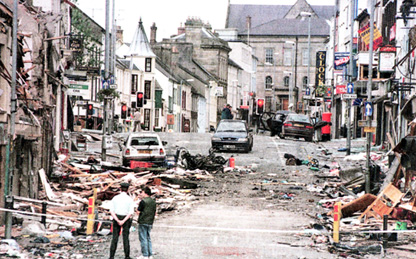
For a prosecution to succeed, the investigation needs to be speedy, careful and thorough. Crimes have been committed where prosecutions have not been brought or have not succeeded because there was insufficient evidence to mount a successful prosecution. The mass murder in Omagh, which took place almost 10 years ago, is such a crime. Despite efforts on the part of the police on both sides of the Border, no one has been successfully prosecuted.
The one man tried in connection with the atrocity, Sean Hoey, was found not guilty in Belfast on 56 charges relating to the bombing that killed 29 people. Last year Mr Justice Reginald Weir severely criticised the first investigation into the bombing when he acquitted Hoey. The PSNI Chief Constable, Hugh Orde, has apologised to the families for the shortcomings in the investigation, acknowledging that this means a successful prosecution in future is unlikely.
Relatives of some of those killed are now taking a civil action for multimillion pound damages against five individuals they suspect of being involved in the crime. None of them has been before the Special Criminal Court or the Northern Irish courts on charges directly relating to the bombing.
The burden of proof in a civil trial is lower than in a criminal trial, and liability must be proved only "on the balance of probabilities", although in a case where the consequences of a finding are very grave the burden of proof is likely to be higher than the 51 per cent minimum "balance of probabilities".
The lower burden of proof is likely to have given the relatives grounds to hope that they can finally establish responsibility for the horrific event of August 1998. It is not unusual for people to seek damages for injuries that occurred while a criminal offence was being committed - for example, where there has been an assault or dangerous driving cases. This case is different in a number of ways, however. The crime the defendants are being accused of is murder, which carries a life sentence in a criminal trial. The case is essentially a cross-jurisdiction one, as evidence will be brought from investigations on both sides of the Border. While in cases of assault or dangerous driving a criminal trial frequently precedes the civil one, here there has been no such criminal trial.
In many ways it resembles not previous Irish or even UK cases, but the OJ Simpson case in the US, when the former sports star was acquitted in 1995 of murdering his wife Nicole Brown Simpson and her friend Ronald Goldman in 1994, but in 1997 was unanimously found responsible in a civil case for Goldman's death and Brown Simpson's fatal injuries and ordered to pay the family of Goldman $8.5 million.
However, it differs from it in one important respect - this trial is being funded by the British state, which has awarded legal aid both to the plaintiffs and the defendants.
The costs of the trial, which is expected to run for at least two months, could run to many millions of pounds.
If the plaintiffs are successful -which is far from certain, in the light of what has been said about the investigation and therefore the evidence by Mr Justice Weir and the North's former police ombudsman Nuala O'Loan - the damages would be enormous for the grave wrong done to the relatives. Given that the defendants all qualified for legal aid, it is difficult to see how such damages could be recovered.
Michael Gallagher, whose son Aidan was among the 29 people killed in the bombing, and who is spokesman for the families, has said a cross-Border inquiry is needed to focus on failings in investigations into the attack. In the end such an inquiry may reveal more about that dreadful event and its aftermath than the court case that starts today.
The civil trial of five men for the Omagh bombing, which opens today and which is funded by the British state, marks a new departure in Ireland, writes CAROL COULTER, Legal Affairs Editor
THERE IS a big distinction in the common law world between civil and criminal trials. Criminal trials arise when the state, through its prosecutorial office, takes a case on behalf of the people for a breach of the criminal law.
The accused person is innocent until proven guilty, and the burden of proof is high - the state must prove its case beyond reasonable doubt. The rules of evidence are strict, and only evidence lawfully obtained by the police can be admitted as evidence.
For a prosecution to succeed, the investigation needs to be speedy, careful and thorough. Crimes have been committed where prosecutions have not been brought or have not succeeded because there was insufficient evidence to mount a successful prosecution. The mass murder in Omagh, which took place almost 10 years ago, is such a crime. Despite efforts on the part of the police on both sides of the Border, no one has been successfully prosecuted.
The one man tried in connection with the atrocity, Sean Hoey, was found not guilty in Belfast on 56 charges relating to the bombing that killed 29 people. Last year Mr Justice Reginald Weir severely criticised the first investigation into the bombing when he acquitted Hoey. The PSNI Chief Constable, Hugh Orde, has apologised to the families for the shortcomings in the investigation, acknowledging that this means a successful prosecution in future is unlikely.
Relatives of some of those killed are now taking a civil action for multimillion pound damages against five individuals they suspect of being involved in the crime. None of them has been before the Special Criminal Court or the Northern Irish courts on charges directly relating to the bombing.
The burden of proof in a civil trial is lower than in a criminal trial, and liability must be proved only "on the balance of probabilities", although in a case where the consequences of a finding are very grave the burden of proof is likely to be higher than the 51 per cent minimum "balance of probabilities".
The lower burden of proof is likely to have given the relatives grounds to hope that they can finally establish responsibility for the horrific event of August 1998. It is not unusual for people to seek damages for injuries that occurred while a criminal offence was being committed - for example, where there has been an assault or dangerous driving cases. This case is different in a number of ways, however. The crime the defendants are being accused of is murder, which carries a life sentence in a criminal trial. The case is essentially a cross-jurisdiction one, as evidence will be brought from investigations on both sides of the Border. While in cases of assault or dangerous driving a criminal trial frequently precedes the civil one, here there has been no such criminal trial.
In many ways it resembles not previous Irish or even UK cases, but the OJ Simpson case in the US, when the former sports star was acquitted in 1995 of murdering his wife Nicole Brown Simpson and her friend Ronald Goldman in 1994, but in 1997 was unanimously found responsible in a civil case for Goldman's death and Brown Simpson's fatal injuries and ordered to pay the family of Goldman $8.5 million.
However, it differs from it in one important respect - this trial is being funded by the British state, which has awarded legal aid both to the plaintiffs and the defendants.
The costs of the trial, which is expected to run for at least two months, could run to many millions of pounds.
If the plaintiffs are successful -which is far from certain, in the light of what has been said about the investigation and therefore the evidence by Mr Justice Weir and the North's former police ombudsman Nuala O'Loan - the damages would be enormous for the grave wrong done to the relatives. Given that the defendants all qualified for legal aid, it is difficult to see how such damages could be recovered.
Michael Gallagher, whose son Aidan was among the 29 people killed in the bombing, and who is spokesman for the families, has said a cross-Border inquiry is needed to focus on failings in investigations into the attack. In the end such an inquiry may reveal more about that dreadful event and its aftermath than the court case that starts today.
Further Information
Publisher: THE IRISH TIMES
Ref: IT/479
Published Date: 07-Apr-08
Related Images