THREE OMAGH FAMILIES WITHHOLD NAMES FROM MEMORIAL PLAQUE
Three Omagh families withhold names from memorial plaque
By Seamus McKinney
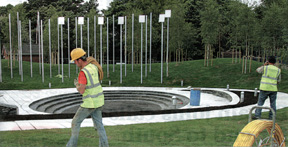
OMAGH council has said it fully respects the decision by three families who have withheld their loved one's names from inscriptions in the Omagh bomb memorial garden.
It has also emerged that some victims' families will not be attending next Friday's official tenth anniversary commemoration event in the town, but will attend a separate commemoration on Sunday August 17.
Some of the relatives have been unhappy about the planning of the memorial or have personal reasons for excluding names from a list of the dead.
Others are unhappy at some of the guests who will be present at the commemoration and some felt it was wrong that a Sinn Fein-controlled council should take the lead in handling the event.
Carol Radford, whose brother Alan was killed, said she felt Sinn Fein's involvement was wrong because of its association with the IRA.
However, Ms Radford's family has given permission for Alan's name to be included on the list of the dead.
All of the families have stressed they accept each other's individual decisions around the anniversary events.
A number of families who were involved in planning the memorial withdrew from the organising body some years ago in a dispute over parts of the wording to be used.
Omagh district council, which led the organisation of the memorial, commissioned an independent facilitation team to handle the inscriptions after concerns were raised.
In a statement yesterday the council said the team engaged in a process which allowed all those affected to express their views.
"The recommendations of the independent facilitation team were unanimously agreed by Omagh district council and these have been implemented in full," the statement read.
"Permission was sought from all of the bereaved families to include the names of their loved ones in the narrative. The decision to include names is one for each individual family and the council fully respects their individual decisions."
The three families who withheld permission are understood to have different personal reasons for doing so.
While two of the families could not be contacted, Laurence Rush, whose wife Libby was killed in the bomb, said he had been unhappy at the way the memorial garden was organised.
He said he also did not want his wife's name used in a memorial that was likely to become a tourist attraction.
"I adored my wife and she was sacred to me and my family," he said.
"We do not require her name on any monument. I have a monument which includes my three children and my grandchildren and great grandchildren."
Wording of bomb memorial inscriptions
TWO inscriptions will be displayed - one on the site of the 1998 bombing and another at a new memorial garden nearby.
The wording at the bomb site will read:
A car bomb exploded at this site on Saturday 15 August 1998 at 3.10pm. This act of terror killed thirty-one people, injured hundreds, and changed forever the lives of many.
At the memorial garden there will be words both on the street wall and on the walls inside the garden, split into five different sections. These will include the names of 26 of the 29 people who died along with a record of Avril Monaghan's unborn twin daughters.
On the street wall of the garden, it will read:
Saturday 15th August 1998 at 3.10 pm. To honour and remember the 31 men, women and children who were killed, the hundreds injured and those whose lives were changed forever in the Omagh bomb. "The light shines in the darkness and the darkness has not overcome it" (John 1:5)
On the walls inside the garden, the format will be:
Section 1:
Weather-wise it was one of the best days that summer had seen. Ordinary people were doing ordinary things on an ordinary day.
In one fateful moment all this was changed forever. Time stood still, futures were obliterated, lives were shattered, hearts were broken.
In the carnage, emergency personnel and many ordinary people reached out, helped the injured, gave hope to the dying and held the dead.
That evening a great silence descended on the town.
Section 2: The names of the dead.
Section 3:
In the week which followed, people walked with one another in the companionship of shared grief as funeral followed funeral.
From all over the world came visitors, messages of sympathy, condemnation, solidarity, hope and practical support.
Section 4:
The Omagh bomb was the largest single atrocity in over thirty years of violence in which over 3700 people were killed. The bomb took place four months after the Good
Friday/Belfast Agreement of 10 April 1998, subsequently endorsed in referenda in both parts of Ireland on 22 May 1998.
Section 5:
In the years that followed people in Omagh and elsewhere sought to rebuild their lives, their families, their community, and to create a new future.
Regardless of the past, every new day dawns as a gift laden with its own possibilities, as the morning sun banishes the darkness of night.
To honour and remember 31 people murdered and hundreds injured from three nations by a dissident republican terrorist car bomb. (Omagh Support and Self Help Group)
"What does the Lord require of you? To act justly and to love mercy and to walk humbly with your God". (Micah: 6:8)".
By Seamus McKinney
OMAGH council has said it fully respects the decision by three families who have withheld their loved one's names from inscriptions in the Omagh bomb memorial garden.
It has also emerged that some victims' families will not be attending next Friday's official tenth anniversary commemoration event in the town, but will attend a separate commemoration on Sunday August 17.
Some of the relatives have been unhappy about the planning of the memorial or have personal reasons for excluding names from a list of the dead.
Others are unhappy at some of the guests who will be present at the commemoration and some felt it was wrong that a Sinn Fein-controlled council should take the lead in handling the event.
Carol Radford, whose brother Alan was killed, said she felt Sinn Fein's involvement was wrong because of its association with the IRA.
However, Ms Radford's family has given permission for Alan's name to be included on the list of the dead.
All of the families have stressed they accept each other's individual decisions around the anniversary events.
A number of families who were involved in planning the memorial withdrew from the organising body some years ago in a dispute over parts of the wording to be used.
Omagh district council, which led the organisation of the memorial, commissioned an independent facilitation team to handle the inscriptions after concerns were raised.
In a statement yesterday the council said the team engaged in a process which allowed all those affected to express their views.
"The recommendations of the independent facilitation team were unanimously agreed by Omagh district council and these have been implemented in full," the statement read.
"Permission was sought from all of the bereaved families to include the names of their loved ones in the narrative. The decision to include names is one for each individual family and the council fully respects their individual decisions."
The three families who withheld permission are understood to have different personal reasons for doing so.
While two of the families could not be contacted, Laurence Rush, whose wife Libby was killed in the bomb, said he had been unhappy at the way the memorial garden was organised.
He said he also did not want his wife's name used in a memorial that was likely to become a tourist attraction.
"I adored my wife and she was sacred to me and my family," he said.
"We do not require her name on any monument. I have a monument which includes my three children and my grandchildren and great grandchildren."
Wording of bomb memorial inscriptions
TWO inscriptions will be displayed - one on the site of the 1998 bombing and another at a new memorial garden nearby.
The wording at the bomb site will read:
A car bomb exploded at this site on Saturday 15 August 1998 at 3.10pm. This act of terror killed thirty-one people, injured hundreds, and changed forever the lives of many.
At the memorial garden there will be words both on the street wall and on the walls inside the garden, split into five different sections. These will include the names of 26 of the 29 people who died along with a record of Avril Monaghan's unborn twin daughters.
On the street wall of the garden, it will read:
Saturday 15th August 1998 at 3.10 pm. To honour and remember the 31 men, women and children who were killed, the hundreds injured and those whose lives were changed forever in the Omagh bomb. "The light shines in the darkness and the darkness has not overcome it" (John 1:5)
On the walls inside the garden, the format will be:
Section 1:
Weather-wise it was one of the best days that summer had seen. Ordinary people were doing ordinary things on an ordinary day.
In one fateful moment all this was changed forever. Time stood still, futures were obliterated, lives were shattered, hearts were broken.
In the carnage, emergency personnel and many ordinary people reached out, helped the injured, gave hope to the dying and held the dead.
That evening a great silence descended on the town.
Section 2: The names of the dead.
Section 3:
In the week which followed, people walked with one another in the companionship of shared grief as funeral followed funeral.
From all over the world came visitors, messages of sympathy, condemnation, solidarity, hope and practical support.
Section 4:
The Omagh bomb was the largest single atrocity in over thirty years of violence in which over 3700 people were killed. The bomb took place four months after the Good
Friday/Belfast Agreement of 10 April 1998, subsequently endorsed in referenda in both parts of Ireland on 22 May 1998.
Section 5:
In the years that followed people in Omagh and elsewhere sought to rebuild their lives, their families, their community, and to create a new future.
Regardless of the past, every new day dawns as a gift laden with its own possibilities, as the morning sun banishes the darkness of night.
To honour and remember 31 people murdered and hundreds injured from three nations by a dissident republican terrorist car bomb. (Omagh Support and Self Help Group)
"What does the Lord require of you? To act justly and to love mercy and to walk humbly with your God". (Micah: 6:8)".
Further Information
Publisher: THE IRISH NEWS
Ref: IN10An/15
Published Date: 09-Aug-08
Related Images