SON OF FORMER OMAGH ACCUSED GETS BAIL PENDING BOMB APPEAL
Son of former Omagh accused gets bail pending bomb appeal
THE son of a man who was convicted of the 1998 Omagh bombing which killed 29 people including a woman pregnant with twins has been granted bail pending an appeal against his conviction for explosives offences.
Conan Murphy (25) is the son of Dundalk man Colm Murphy who was convicted of the Real IRA bombing but was later cleared in a retrial following a successful appeal.
Conan Murphy, with an address at Plaster, Mount Pleasant, Dundalk, Co Louth, was jailed for eight and half years last March having been found guilty by the Special Criminal Court of the possession of explosive sub-stances at Aghaboys, Mount Pleasant, on May 22 2010.
His co-accused Philip McKevitt (58) of Aghaboys, Mount Pleasant, was also given the same jail term having been found guilty of the same offence at his home on the same date. Neither of the men have previous convictions.
The Court of Criminal Appeal yesterday granted bail to both men, having found they had identified discreet grounds of appeal upon which they had a sufficient prospect of success.
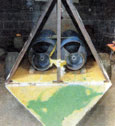
During their trial, which began in December 2011, the court heard that gardai who raided McKevitt's home discovered in an outbuilding an "adaptive" advertising trailer constructed for the purposes of concealing two gas containers which had been modified to cause an explosion.
Chief Superintendant Diarmuid O'Sullivan told the court that the device had a capacity of approximately 5OOlbs of explosive mix.
During the trial the court heard that members of the Garda Emergency Response Unit entered the premises because they believed the two men were in the advanced stages of making an explosive device which was about to be moved.
The court heard that although a warrant under Section 29 of the Offences Against the State Act had been issued to search McKevitt's premises, gardai gave evidence that they entered the premises under Section 6 of the Criminal Law Act, 1997.
The latter act states that, for the purpose of arresting a person without a warrant for an arrestable offence, gardai may enter and search a premises where that person is if, among other things, they reasonably suspect the person will commit an arrestable offence or abscond before a warrant can be obtained.
Paul Greene SC, for the state, said Murphy did not have an entitlement to assert a breach of constitutional rights as he was a visitor to the premises at Aghaboys.
He said McKevitt was in a different situation as he lived in house attached to the premises where the bomb was found.
However, Mr Greene submitted that even if entry under Section 6 did not command the requisite degree of credibility this would only render the gardai trespassers, whose presence at Aghaboys was unlawful but not unconstitutional, allowing the Special Criminal Court a discretionary power to hear the evidence.
Mr Justice Adrian Hardiman, presiding, said the appeal court would not say "more than was strictly necessary" but was of the view that at least one of the grounds was of sufficient cogency to have a reasonable chance of success.
He said that it appeared the applicants were on bail prior to the trial and the court was disposed to admit the applicants bail on the same terms, which included the lodgement of an independent surety of £20,000 for Philip McKevitt.
Further Information
Related Images