OMAGH DAMAGES DECISION REVERSED
Omagh damages decision reversed
A JUDGE has reversed a decision to throw out a damages claim brought by the husband of one of the Omagh bomb victims.
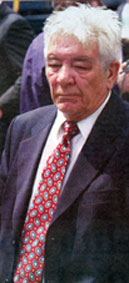
Mr Justice Gillen's ruling allows Laurence Rush, whose wife Elizabeth was among those killed in the atrocity, to proceed with his action against the police and government.
The widower sued the chief constable and secretary of state for failures in the apprehension, detection and preemptive arrest of the Real IRA men responsible.
He also claimed for loss and damages, alleging that police failed to act upon information received about the August 1998 bomb plot, did not give adequate warnings or implement sufficient evacuation procedures.
His case appeared to have failed last May when a High Court master granted an application by the defendants to strike it out on the basis that it disclosed no reasonable cause of action or that it was frivolous or vexatious.
It was held that the claim was unsustainable and without the potential for success.
But Mr Rush's lawyers appealed that decision, instructing high-profile English barrister Michael Mansfield QC to lead their challenge.
In the event the High Court judge did not require to hear from Mr Mansfield before deciding that the case should go to trial.
Mr Justice Gillen is expected to give written reasons for his decision in due course.
The case centres on the duty of care owed by the police in the course of carrying out its functions of investigating, controlling and preventing the incidence of crime.
The core principle established in leading cases is that, in general, officers should be immune from litigation for activities in investigating suspected crimes.
Counsel for the defendants pointed out that Mr Rush's lawyers were seeking to make it an exception because of the alleged information available to police and the scale of the bomb.
"The fact that more than one person did die or could have died and that [allegedly] wouldn't have happened if there had been some form of intervention beforehand had nothing to do with the law as to whether there is an exception or not to the core principle," David Ringland QC argued.
However, Mr Justice Gillen upheld the appeal, prompting Mr Mansfield's only submission when he told the judge: "Thank you."
Mr Rush did not attend the hearing due to ill health but outside the court his solicitor Des Doherty said: "After a long battle that involved closed hearings for nearly two years we are now content that the case is allowed to proceed.
"This is a legal issue that is clearly going to be tested before the courts in the next number of years and it potentially has ramifications for quite a number of cases in the north of Ireland involving the security forces."
A JUDGE has reversed a decision to throw out a damages claim brought by the husband of one of the Omagh bomb victims.
Mr Justice Gillen's ruling allows Laurence Rush, whose wife Elizabeth was among those killed in the atrocity, to proceed with his action against the police and government.
The widower sued the chief constable and secretary of state for failures in the apprehension, detection and preemptive arrest of the Real IRA men responsible.
He also claimed for loss and damages, alleging that police failed to act upon information received about the August 1998 bomb plot, did not give adequate warnings or implement sufficient evacuation procedures.
His case appeared to have failed last May when a High Court master granted an application by the defendants to strike it out on the basis that it disclosed no reasonable cause of action or that it was frivolous or vexatious.
It was held that the claim was unsustainable and without the potential for success.
But Mr Rush's lawyers appealed that decision, instructing high-profile English barrister Michael Mansfield QC to lead their challenge.
In the event the High Court judge did not require to hear from Mr Mansfield before deciding that the case should go to trial.
Mr Justice Gillen is expected to give written reasons for his decision in due course.
The case centres on the duty of care owed by the police in the course of carrying out its functions of investigating, controlling and preventing the incidence of crime.
The core principle established in leading cases is that, in general, officers should be immune from litigation for activities in investigating suspected crimes.
Counsel for the defendants pointed out that Mr Rush's lawyers were seeking to make it an exception because of the alleged information available to police and the scale of the bomb.
"The fact that more than one person did die or could have died and that [allegedly] wouldn't have happened if there had been some form of intervention beforehand had nothing to do with the law as to whether there is an exception or not to the core principle," David Ringland QC argued.
However, Mr Justice Gillen upheld the appeal, prompting Mr Mansfield's only submission when he told the judge: "Thank you."
Mr Rush did not attend the hearing due to ill health but outside the court his solicitor Des Doherty said: "After a long battle that involved closed hearings for nearly two years we are now content that the case is allowed to proceed.
"This is a legal issue that is clearly going to be tested before the courts in the next number of years and it potentially has ramifications for quite a number of cases in the north of Ireland involving the security forces."
Further Information
Publisher: THE IRISH NEWS
Ref: IN/1047
Published Date: 26-Feb-11
Related Images