DAMAGES MINIMAL EVEN IF FAMILIES WIN £10M CASE
Damages 'minimal' even if families win £10m case
By Barry McCaffrey
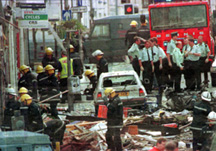
OMAGH bomb victims' families are likely to receive only minimal damages even if they win a £10 million civil law suit today against five dissident republicans they believe were responsible for the 1998 atrocity.
Northern Ireland's expected new Lord Chief Justice Declan Morgan will this morning rule if Michael McKevitt, Liam Campbell, Seamus Daly, Colm Murphy and Seamus McKenna were responsible for the deaths of 29 people and two unborn children killed in the Real IRA bombing of Omagh town centre.
The case is the first time in Britain or Ireland that victims' families have sued those allegedly responsible for the deaths of their loved-ones.
If found guilty, the court could order the five suspects to pay more than £10m to the Omagh families.
However, it emerged last night that the families are unlikely to receive more than a few thousand pounds in damages because they have previously received government compensation for the murder of their loved ones.
It is speculated that even if the five suspects are ordered to pay £10 million to the Omagh families they will claim that they are penniless and have no personal assets.
The Omagh case set a number of historic legal precedents. In 2002 the families, frustrated that police had failed to bring anyone to justice, decided to sue the alleged Omagh bombers.
They had to raise $2 million to bring their civil action against the five suspects.
The case made legal history when the government agreed to make up an £800,000 short-fall in their fundraising.
"It took eight years because the PSNI told us that if we took a civil action during those years it would jeopardise their chances of a criminal conviction," families' spokesman Michael Gallagher, said.
However, Mr Gallagher, pictured, insisted that the civil law suit was never about financial gain for the families and revealed that they are likely to receive only a nominal sum even if the court rules in their favour, as they have already received compensation for the deaths of their loved-ones.
"The case was never about money," he said.
"It was about making these people accountable for the murder of our loved-ones and suing them was the only way to bring them to justice."
The families' decision to issue a civil law suit against the Real IRA suspects means that the judge only has to find them guilty 'on the balance of probability'.
In a criminal prosecution the judge would be obliged to find the defendants guilty beyond all reasonable doubt.
"In a civil prosecution a judge would have to be 98 percent convinced of their guilt, but in a civil suit he only has to be 51 percent convinced of their guilt.
"We felt that it was our best chance of securing justice for our loved-ones.
"Whatever the judge decides we feel we have at least made these people accountable in the eyes of the public."
Further Information
Related Images