OMAGH'S NEXT GENERATION SPEAKS
Omagh's next generation speaks
Anne Hailes
IT'S NOT often adults ask children what they see as their future, take note of their suggestions and act on them. Well, that's what's happening in Omagh.
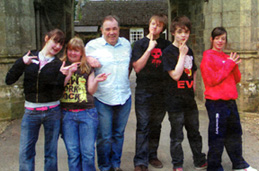
The weekend before last about 50 teenagers from youth organisations in the town were invited to a conference at Baronscourt. Most were only four or five on that Saturday when the town was blown apart by a Real IRA bomb.
Christine Rodgers, senior community relations officer with Omagh District Council, found it emotional facing these youngsters to explain why it was important they should compile their shopping list.
"I felt why should they have to listen to the details of that day."
Thirty-one died including eight children, one baby and two unborn babies. Some bodies were never found, such was the power of the blast. Injuries will never be fully known as glass and rubble from buildings flew through the crowd and families were traumatised.
"We were holding a community festival and a parade that afternoon and at 3pm, I went to the meeting point at the leisure centre. A few minutes later the bomb went off; it blew out the telephone exchange and the only working phone was in the leisure centre so it became the coordinating point for the emergency. Suddenly I was hearing the language of war, casualties, bodies, survivors, wounds. I kept hearing names I recognised, people phoning up looking for relatives, it was the middle of the night before the exchange got working again so it was a very concentrated time. We had to get a Spanish translator for the Spanish family involved, trying to get messages through to Donegal, eventually we hit exhaustion and compassion fatigue. The next day there was a scary silence in the town, Market Street and streets around were all closed off, no traffic, no people. Then came three days of funerals. We'll never forget but the children quite naturally want to look forward and that's what we want."
So in the lovely setting of Baronscourt, they gathered. First a contract was drawn up, all agreed to respect each other, to listen to each other's point of view before a getting-to-know-you session run by Peter McLaughlin of the youth theatre group. One exercise which brought lots of laughter featured a bottle of water - or was it - set in the middle of the floor. Each person was asked to imagine it was something else and so, in mime, it became a guitar, a nail file, a golf club, and a spade. Lesson? Things aren't always what they seem.
The question posed was, 'what it was like to be a young person in Omagh?' 'What ideas have you on building the community after the bomb?' Already there is the Omagh Youth Choir established in August 1998 and taking young talent to America and Europe as well as the UK and Ireland, a positive idea which is an inspiration as are the Cyber Cafe and the arts project where The Petal of Hope exhibition features flowers which had been left along Market Street.
Omagh was the centre of attention 10 summers ago, Manchester United visited, so did Liverpool, the Corrs, Boyzone, Westlife, Clinton, Blair, Lloyd Webber, the Queen, Prince Charles. But what now? I sat with one of half a dozen groups, Aisling at 17 wanted a return visit from Boyzone but she is also concerned with the rubbish and graffiti in her town. She's a feisty lady; when she saw some boys vandalising she tackled them, told them what she thought of their behaviour and they walked away! Matthew at 14 suggested a Masked Ball every year. Emma also 14 a member of the Girls Brigade and Gemma 15 from the Youth Theatre proposed environmental projects; replanting trees damaged by vandals, giving over areas of the town to young people, a theatre, a web page to talk to other teenagers around the world. A water sports area beside the River Strule was popular. Then I became acquainted with Arty G, a much loved street busker who died last autumn. Arthur McGonigal had been a famous rock musician who ended up bringing his music to the people of the town, always accompanied by Gizmo the mongrel. 'An Arty G fun run' developed into an Arty G festival, and Darrel desperately wanted a skate boarding park, that was loudly applauded, 'Sell that statue outside the bank and put the money into something for youth,' straight talking was the order of the day.
A brave idea was to meet visitors and take them round the town, to the shopping areas, recommending where to eat and talking about the history, inevitably including the tragedy.
I visited Market Street one year after the bomb. My lasting memory is of a community working through adversity, despite all, looking to a future.
Now the next generation has spoken.
Let's hope those in positions of responsibility will listen and this town which has seen princes and presidents, the heads of churches and no doubt in August this year media from round the world, will soon regain the heart beat for which it longs.
a.hailes@irishnews.com
Anne Hailes
IT'S NOT often adults ask children what they see as their future, take note of their suggestions and act on them. Well, that's what's happening in Omagh.
The weekend before last about 50 teenagers from youth organisations in the town were invited to a conference at Baronscourt. Most were only four or five on that Saturday when the town was blown apart by a Real IRA bomb.
Christine Rodgers, senior community relations officer with Omagh District Council, found it emotional facing these youngsters to explain why it was important they should compile their shopping list.
"I felt why should they have to listen to the details of that day."
Thirty-one died including eight children, one baby and two unborn babies. Some bodies were never found, such was the power of the blast. Injuries will never be fully known as glass and rubble from buildings flew through the crowd and families were traumatised.
"We were holding a community festival and a parade that afternoon and at 3pm, I went to the meeting point at the leisure centre. A few minutes later the bomb went off; it blew out the telephone exchange and the only working phone was in the leisure centre so it became the coordinating point for the emergency. Suddenly I was hearing the language of war, casualties, bodies, survivors, wounds. I kept hearing names I recognised, people phoning up looking for relatives, it was the middle of the night before the exchange got working again so it was a very concentrated time. We had to get a Spanish translator for the Spanish family involved, trying to get messages through to Donegal, eventually we hit exhaustion and compassion fatigue. The next day there was a scary silence in the town, Market Street and streets around were all closed off, no traffic, no people. Then came three days of funerals. We'll never forget but the children quite naturally want to look forward and that's what we want."
So in the lovely setting of Baronscourt, they gathered. First a contract was drawn up, all agreed to respect each other, to listen to each other's point of view before a getting-to-know-you session run by Peter McLaughlin of the youth theatre group. One exercise which brought lots of laughter featured a bottle of water - or was it - set in the middle of the floor. Each person was asked to imagine it was something else and so, in mime, it became a guitar, a nail file, a golf club, and a spade. Lesson? Things aren't always what they seem.
The question posed was, 'what it was like to be a young person in Omagh?' 'What ideas have you on building the community after the bomb?' Already there is the Omagh Youth Choir established in August 1998 and taking young talent to America and Europe as well as the UK and Ireland, a positive idea which is an inspiration as are the Cyber Cafe and the arts project where The Petal of Hope exhibition features flowers which had been left along Market Street.
Omagh was the centre of attention 10 summers ago, Manchester United visited, so did Liverpool, the Corrs, Boyzone, Westlife, Clinton, Blair, Lloyd Webber, the Queen, Prince Charles. But what now? I sat with one of half a dozen groups, Aisling at 17 wanted a return visit from Boyzone but she is also concerned with the rubbish and graffiti in her town. She's a feisty lady; when she saw some boys vandalising she tackled them, told them what she thought of their behaviour and they walked away! Matthew at 14 suggested a Masked Ball every year. Emma also 14 a member of the Girls Brigade and Gemma 15 from the Youth Theatre proposed environmental projects; replanting trees damaged by vandals, giving over areas of the town to young people, a theatre, a web page to talk to other teenagers around the world. A water sports area beside the River Strule was popular. Then I became acquainted with Arty G, a much loved street busker who died last autumn. Arthur McGonigal had been a famous rock musician who ended up bringing his music to the people of the town, always accompanied by Gizmo the mongrel. 'An Arty G fun run' developed into an Arty G festival, and Darrel desperately wanted a skate boarding park, that was loudly applauded, 'Sell that statue outside the bank and put the money into something for youth,' straight talking was the order of the day.
A brave idea was to meet visitors and take them round the town, to the shopping areas, recommending where to eat and talking about the history, inevitably including the tragedy.
I visited Market Street one year after the bomb. My lasting memory is of a community working through adversity, despite all, looking to a future.
Now the next generation has spoken.
Let's hope those in positions of responsibility will listen and this town which has seen princes and presidents, the heads of churches and no doubt in August this year media from round the world, will soon regain the heart beat for which it longs.
a.hailes@irishnews.com
Further Information
Publisher: THE IRISH NEWS
Ref: IN/0928
Published Date: 01-May-08
Related Images