BOMBING SUSPECT MAY NOT TESTIFY
Bombing suspect may not testify
THE Omagh bomb trial could finish hearing evidence within days, after a court heard the man accused of the atrocity is not expected to enter the witness box.
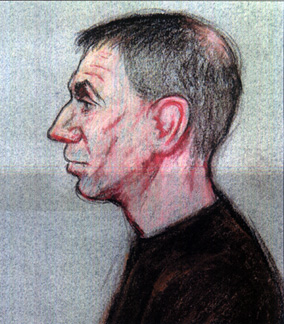
Orlando Pownall, QC defending, was asked at Belfast Crown Court yesterday if south Armagh electrician Sean Hoey, right, would give evidence.
Mr Justice Weir also asked whether the 37-year-old, from Molly Road, Jonesborough, recognised that the court may draw inferences from any refusal to give evidence.
Mr Pownall said Hoey, who is accused of a range of terror offences as well as the 1998 Omagh bomb murders, "does not" wish to testify and had been advised of the consequences.
When the judge indicated he may ask the same question of Hoey at a later date, Mr Pownall suggested the position may not change.
The trial, now in its 52nd day, could finish this week or early next week at the latest, after which it is expected Mr Justice Weir will reserve judgment.
Evidence yesterday concentrated, as it has done mostly throughout the trial, on expert forensic witnesses.
The first to be called was explosives expert Gordon McMillen, who was also allowed to be recalled to be cross-examined again.
He was questioned about the condition of a detonator recovered from a defused car bomb outside Newry Road police station in Armagh in May 1998.
Mr McMillen conceded to the defence that he had no "explanation" as to why a detonation wire had apparently increased in size over the years, but told the prosecution it was the same detonator he had examined in October 1998.
Fibre expert Roger Cook, the only defence witness to be called, later said it was coincidental that fibres found on a timer power unit from a car bomb in Lisburn in April 1998 matched some taken from Hoey's home five years later.
However, he agreed with the findings of a prosecution's expert witness that the fibres could provide a "weak" indication that they came from the same source.
When cross-examined by a prosecuting lawyer, the expert also accepted that "the bottom line" was that there were matching fibres from the power unit and Hoey's home.
The case has been adjourned until tomorrow to allow for comparison tests to be carried out on Newry Road detonator.
The results will dictate whether Hoey may be asked again if he wishes to give evidence on his own behalf.
THE Omagh bomb trial could finish hearing evidence within days, after a court heard the man accused of the atrocity is not expected to enter the witness box.
Orlando Pownall, QC defending, was asked at Belfast Crown Court yesterday if south Armagh electrician Sean Hoey, right, would give evidence.
Mr Justice Weir also asked whether the 37-year-old, from Molly Road, Jonesborough, recognised that the court may draw inferences from any refusal to give evidence.
Mr Pownall said Hoey, who is accused of a range of terror offences as well as the 1998 Omagh bomb murders, "does not" wish to testify and had been advised of the consequences.
When the judge indicated he may ask the same question of Hoey at a later date, Mr Pownall suggested the position may not change.
The trial, now in its 52nd day, could finish this week or early next week at the latest, after which it is expected Mr Justice Weir will reserve judgment.
Evidence yesterday concentrated, as it has done mostly throughout the trial, on expert forensic witnesses.
The first to be called was explosives expert Gordon McMillen, who was also allowed to be recalled to be cross-examined again.
He was questioned about the condition of a detonator recovered from a defused car bomb outside Newry Road police station in Armagh in May 1998.
Mr McMillen conceded to the defence that he had no "explanation" as to why a detonation wire had apparently increased in size over the years, but told the prosecution it was the same detonator he had examined in October 1998.
Fibre expert Roger Cook, the only defence witness to be called, later said it was coincidental that fibres found on a timer power unit from a car bomb in Lisburn in April 1998 matched some taken from Hoey's home five years later.
However, he agreed with the findings of a prosecution's expert witness that the fibres could provide a "weak" indication that they came from the same source.
When cross-examined by a prosecuting lawyer, the expert also accepted that "the bottom line" was that there were matching fibres from the power unit and Hoey's home.
The case has been adjourned until tomorrow to allow for comparison tests to be carried out on Newry Road detonator.
The results will dictate whether Hoey may be asked again if he wishes to give evidence on his own behalf.
Further Information
Publisher: THE IRISH NEWS
Ref: IN/0828
Published Date: 10-Jan-07
Related Images