SHOCK AT FURTHER OMAGH BOMB WARNINGS MISSED BY POLICE
By Sharon O'Neill
Chief Reporter
POLITICIANS last night expressed their shock that police received additional warnings of dissident republican attacks in the run-up to the
Omagh bombing - on top of the two already known.
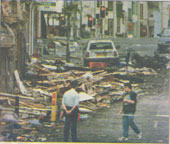
It has been revealed that another two threats were received by police in Omagh, including one on August 14 1998 - the day before the Real IRA bomb exploded in the town killing 29 people including a woman pregnant with twins.
Police Ombudsman Nuala O'Loan's damning report into the police's handling of the investigation was highly critical of Special Branch and senior officers, saying that victims and their families were let down by a "failure of leadership, poor judgment and lack of urgency".
Ms O'Loan's probe was based on an internal review of the investigation and uncovered a litany of errors in the police probe.
The Ombudsman unearthed two warnings - one from an anonymous caller on August 4 that there would be an 'unspecified' attack in the town on August 15 and a tip off from double agent Kevin Fulton who told his police handlers three days before the attack that the Real IRA was preparing a major bomb destined for an unknown location in the north.
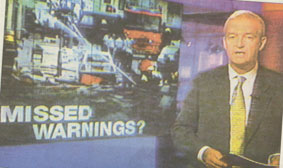
But last night an investigation by Channel Four News uncovered two more warnings which were received by police in Omagh, which allegedly were not thoroughly acted upon.
A memo allegedly written by a Special Branch detective said a threat was received on August 11 1998 that dissidents were 'planning an operation' and another on August 14 that dissidents had 'incendiary devices for use against commercial targets'.
Laurence Rush, whose wife Libby died in the bomb, said: "They had four warnings about this bomb. There's only four arteries into Omagh and no, absolutely no, police vehicles, liveried or otherwise, were at those arteries to stop that bomb coming in," he said.
The programme claimed that a confidential memo outlined the reason why Special Branch failed to act on the warning of August 4.
It was alleged to have said: "As technical assistance could not be deployed in tracing the initial call... that line of inquiry was lost. The matter unfortunately rested there."
It was also claimed that a detective who passed on the first warning to Special Branch broke down over the alleged the lack of police action.
An internal report said: "The officer has an overwhelming feeling of guilt and at the outset asked 'Why has it taken two years for anyone to come and talk to me about this?'"
Also released in to the public domain for the first time were key aspects of the murder investigation not followed through.
It was alleged that two years after the bomb:
150 cashpoint users prior to the explosions were identified but not traced
no record of DNA sampling from those arrested for the bombing were released
118 vehicles remained untraced or unidentified
no action was taken to trace the parked white van which could have been holding a parking place for the bomb car.
Two outside officers have already been drafted in to 'quality assure' the police probe following Ms O'Loan's report.
Next week Her Majesty's Inspectorate of Constabulary, Dan Crompton, is to report his findings of a review into current structures and procedures for the management and dissemination of intelligence between Special Branch and other parts of the Police Service to the Policing Board.
The board ordered a focused review of Special Branch -already in the dock over alleged collusion with loyalist paramilitaries - in a bid to restore confidence in the Omagh bomb probe.
At the time, the then Chief Constable Sir Ronnie Flanagan defended criticism levelled against himself and his colleagues, but admitted that mistakes were made during the investigation.
Further controversy erupted a short time later when it emerged that two senior PSNI officers signed affidavits contradicting a statement by another senior officer over the RUC's response to the bombing and, in particular, who was in charge of the probe.
Last night a police spokesman refused to comment on the new claims and would only say: "We remain determined to catch the people responsible for this outrage."
A spokesman for the Police Ombudsman's office said: "These two warnings on Channel Four were contained in the PSNI's own review of the murder investigation and that was seen by the Police Ombudsman and those two warnings were taken into consideration when the Police Ombudsman reached her overall conclusion (in the report)."
Despite a massive cross-border operation no-one has been charged with murder.
Earlier this year Colm Murphy was jailed for conspiracy to cause the Omagh bombing. Alleged Real IRA leader Michael McKevitt is charged with directing terrorism and is due to stand trial next February.
As well as criticism levelled against police north of the border, gardai are facing similar allegations over the handling of information prior to the bombing and the Irish government has appointed a three-man panel to investigate the claims.
Last night Policing Board member Joe Byrne said: "It is extremely disturbing to hear that information regarding the prior warning of the Omagh bomb may not have been properly assessed and acted upon in order to prevent the atrocity which took place in Omagh on August 15 1998.
"All aspects of the Omagh bomb investigation, including prior warnings, must be thoroughly examined so that the bombers can be brought to trial bomb investigation, including prior warnings, must be thoroughly examined so that the bombers can be brought to trial and convictions can be secured."
DUP Policing Board member Ian Paisley jnr said: "Even by her own admission Nuala O'Loan said the police could not have prevented the Omagh bombing from taking place."
Mr Paisley said people should 'not be distracted' from the fact that the bombers are still at large and reside mainly in the Republic.
"The people who perpetrated the Omagh bombing are still at large. The sooner efforts are brought to bear to bring these people to justice we will see more of the pieces of jigsaw pieced together," he said.
Chief Reporter
POLITICIANS last night expressed their shock that police received additional warnings of dissident republican attacks in the run-up to the
Omagh bombing - on top of the two already known.
It has been revealed that another two threats were received by police in Omagh, including one on August 14 1998 - the day before the Real IRA bomb exploded in the town killing 29 people including a woman pregnant with twins.
Police Ombudsman Nuala O'Loan's damning report into the police's handling of the investigation was highly critical of Special Branch and senior officers, saying that victims and their families were let down by a "failure of leadership, poor judgment and lack of urgency".
Ms O'Loan's probe was based on an internal review of the investigation and uncovered a litany of errors in the police probe.
The Ombudsman unearthed two warnings - one from an anonymous caller on August 4 that there would be an 'unspecified' attack in the town on August 15 and a tip off from double agent Kevin Fulton who told his police handlers three days before the attack that the Real IRA was preparing a major bomb destined for an unknown location in the north.
But last night an investigation by Channel Four News uncovered two more warnings which were received by police in Omagh, which allegedly were not thoroughly acted upon.
A memo allegedly written by a Special Branch detective said a threat was received on August 11 1998 that dissidents were 'planning an operation' and another on August 14 that dissidents had 'incendiary devices for use against commercial targets'.
Laurence Rush, whose wife Libby died in the bomb, said: "They had four warnings about this bomb. There's only four arteries into Omagh and no, absolutely no, police vehicles, liveried or otherwise, were at those arteries to stop that bomb coming in," he said.
The programme claimed that a confidential memo outlined the reason why Special Branch failed to act on the warning of August 4.
It was alleged to have said: "As technical assistance could not be deployed in tracing the initial call... that line of inquiry was lost. The matter unfortunately rested there."
It was also claimed that a detective who passed on the first warning to Special Branch broke down over the alleged the lack of police action.
An internal report said: "The officer has an overwhelming feeling of guilt and at the outset asked 'Why has it taken two years for anyone to come and talk to me about this?'"
Also released in to the public domain for the first time were key aspects of the murder investigation not followed through.
It was alleged that two years after the bomb:
150 cashpoint users prior to the explosions were identified but not traced
no record of DNA sampling from those arrested for the bombing were released
118 vehicles remained untraced or unidentified
no action was taken to trace the parked white van which could have been holding a parking place for the bomb car.
Two outside officers have already been drafted in to 'quality assure' the police probe following Ms O'Loan's report.
Next week Her Majesty's Inspectorate of Constabulary, Dan Crompton, is to report his findings of a review into current structures and procedures for the management and dissemination of intelligence between Special Branch and other parts of the Police Service to the Policing Board.
The board ordered a focused review of Special Branch -already in the dock over alleged collusion with loyalist paramilitaries - in a bid to restore confidence in the Omagh bomb probe.
At the time, the then Chief Constable Sir Ronnie Flanagan defended criticism levelled against himself and his colleagues, but admitted that mistakes were made during the investigation.
Further controversy erupted a short time later when it emerged that two senior PSNI officers signed affidavits contradicting a statement by another senior officer over the RUC's response to the bombing and, in particular, who was in charge of the probe.
Last night a police spokesman refused to comment on the new claims and would only say: "We remain determined to catch the people responsible for this outrage."
A spokesman for the Police Ombudsman's office said: "These two warnings on Channel Four were contained in the PSNI's own review of the murder investigation and that was seen by the Police Ombudsman and those two warnings were taken into consideration when the Police Ombudsman reached her overall conclusion (in the report)."
Despite a massive cross-border operation no-one has been charged with murder.
Earlier this year Colm Murphy was jailed for conspiracy to cause the Omagh bombing. Alleged Real IRA leader Michael McKevitt is charged with directing terrorism and is due to stand trial next February.
As well as criticism levelled against police north of the border, gardai are facing similar allegations over the handling of information prior to the bombing and the Irish government has appointed a three-man panel to investigate the claims.
Last night Policing Board member Joe Byrne said: "It is extremely disturbing to hear that information regarding the prior warning of the Omagh bomb may not have been properly assessed and acted upon in order to prevent the atrocity which took place in Omagh on August 15 1998.
"All aspects of the Omagh bomb investigation, including prior warnings, must be thoroughly examined so that the bombers can be brought to trial bomb investigation, including prior warnings, must be thoroughly examined so that the bombers can be brought to trial and convictions can be secured."
DUP Policing Board member Ian Paisley jnr said: "Even by her own admission Nuala O'Loan said the police could not have prevented the Omagh bombing from taking place."
Mr Paisley said people should 'not be distracted' from the fact that the bombers are still at large and reside mainly in the Republic.
"The people who perpetrated the Omagh bombing are still at large. The sooner efforts are brought to bear to bring these people to justice we will see more of the pieces of jigsaw pieced together," he said.
Further Information
Publisher: THE IRISH NEWS
Ref: IN/0580
Published Date: 29-Oct-02
Related Images