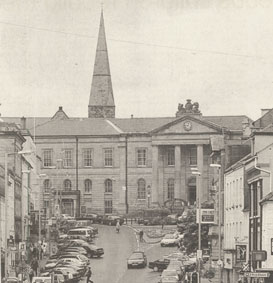
RETURN VISIT TO A TOWN IN SEARCH OF NEW BEGINNINGS
Return visit to a town in search of new beginning
Television by Jude Collins
Twenty years. I suppose I should be thankful for what I had, but it's tough, now."
Twelve months after we first heard it, Kevin Skelton's story still rubs raw on the nerves (Omagh: One Year On, UTV). Since his wife died in last August's bomb he's struggled on alone, trying to raise their family.
He does his best. Plays in a football benefit match, gives an interview to a local man, swallows his tears. "I hate the politicians in the north of Ireland" he says. "There's a certain type of politician here, every time they open their big gab, some family suffers."
The town is full of courage and confusion. Michelle Mimnagh, a young woman who lost a leg: "It's not the end of the world, you know - I saw worse in America." She went to the States and they taught her to ski on one leg. A publican looks at his clock which stopped at the moment the bomb exploded, awe-struck by the thought. A man remembers three little girls at the entrance to the hospital, crying "They've killed my mammy!" He still hears that cry almost every night.
UTV's look at the town was respectful and workmanlike. Prime Time Special - The Bridge (RTE1) was more sophisticated: it had the look and feel of a film. It followed people, not so much talking to them as letting them talk.
People like Una McGurk, who's instantly recognisable even from behind because she's wearing a clear-plastic helmet to help her scars heal.
Despite injuries all over her body, Una is a positive, sweet-faced girl. She goes into her room and plays a piece of pop music that says tomorrow everything will be all right.
John King helped carry bodies that day, from the hell of the main street to the greater hell of the hospital. He's 38 and for a long time felt he shouldn't be breaking down and crying. Others were maimed physically; he felt almost guilty for seeking help when all his wounds are inside.
From its opening, with the tinkle of children's music on a cushion of melancholy strings, this was an elegant, elegiac report. People stood in fields, alone, the camera circling them as if in wonder. Black and white stills replaced the moving image as voices spoke of struggling to overcome pain. The main street was filmed from ground level, as if we ourselves lay there beside the slaughtered. And the interviewer, Adrian Lynch, did superb work in providing space for Una and John and the others to relax and speak from their hearts.
Some viewers feel they've heard enough about Omagh, they don't want to pick over the pain any more. Some Omagh people also want to leave media intrusion behind, move on into a happier, better future. But if we're to respect suffering, then a progress report on pain must be made.
The one programme that remains to be made about Omagh is a financial one. In the days after the disaster, politicians from Ireland, from England, from the United States stood in the street in Omagh and spoke their revulsion and heartache. Since then, millions have been made available to bomb Kosovo.
Will similar millions be made available to fix a broken Tyrone town? A programme that checked politicians' words against their deeds. Now that would be interesting.
Funny, the ingredients that make up a TV character. There was Brian Moore with his sheepskin coat, Des Lynam with his droopy moustache. Now My Generation (C4) has come up with another: Des Moore. Des wears a sheepskin coat, has one of those older gas fires and seems to have something wrong with his teeth. Still hippy after all these years, he remembers the Isle of Wight pop festival: "It is as good as it appears to be. People are in motion".
Des loved, revered the big stars back then: John Lennon, Bob Dylan. "Those people were not into bullshit." But then Lennon got shot, so Des and his mates dropped acid for several days in an attempt to understand it.
Then he met Nanette who was seven months pregnant. So Des helped deliver her child, had several other children with her, until Nanette took off and left Des to raise them single-handed. After a while she came back and took all of the children away except one.
Now Des sits by his gas fire, remembering and trying to figure it all out.
Robin Murray is less of a brooder. He was at the Isle of Wight in 1970, but now he's a criminal defence lawyer. He sits on a garden seat with his lady wife and quarrels politely about why he didn't take her to the festival with him way back then. His twin daughters giggle about Dad saying that the festival had lots of people having sex.
Hanging on to hippiedom, playing by society's rules. It's hard to know which of them got it right. If either.
How bright are you? OK, try these. What TV series was set in a pub in Boston? In which river was Jesus baptised? A Granny Smith is a type of which fruit?
All these, I swear, were questions on Win Beadle's Money (C5). Thelma a school librarian got seven out of 10 right; Jeremy Beadle, who likes to compete as well as compere, beat her because he got eight. But even though Jeremy beat her, he let Thelma keep �350.
Not so the two other contestants. They won money in the early stages, but since they were then knocked out, Jeremy kindly but firmly took the money they'd won back off them.
Assuming that Thelma and the others appeared without payment, this half-hour of prime time television cost not �1,000, not �650 - it cost �350, which is just over a tenner a minute.
As Jeremy said himself, talking about next week's programme: "We're not necessarily looking for clever dicks - just really nice people like Amanda."
Nice and seriously inexpensive.
Television by Jude Collins
Twenty years. I suppose I should be thankful for what I had, but it's tough, now."
Twelve months after we first heard it, Kevin Skelton's story still rubs raw on the nerves (Omagh: One Year On, UTV). Since his wife died in last August's bomb he's struggled on alone, trying to raise their family.
He does his best. Plays in a football benefit match, gives an interview to a local man, swallows his tears. "I hate the politicians in the north of Ireland" he says. "There's a certain type of politician here, every time they open their big gab, some family suffers."
The town is full of courage and confusion. Michelle Mimnagh, a young woman who lost a leg: "It's not the end of the world, you know - I saw worse in America." She went to the States and they taught her to ski on one leg. A publican looks at his clock which stopped at the moment the bomb exploded, awe-struck by the thought. A man remembers three little girls at the entrance to the hospital, crying "They've killed my mammy!" He still hears that cry almost every night.
UTV's look at the town was respectful and workmanlike. Prime Time Special - The Bridge (RTE1) was more sophisticated: it had the look and feel of a film. It followed people, not so much talking to them as letting them talk.
People like Una McGurk, who's instantly recognisable even from behind because she's wearing a clear-plastic helmet to help her scars heal.
Despite injuries all over her body, Una is a positive, sweet-faced girl. She goes into her room and plays a piece of pop music that says tomorrow everything will be all right.
John King helped carry bodies that day, from the hell of the main street to the greater hell of the hospital. He's 38 and for a long time felt he shouldn't be breaking down and crying. Others were maimed physically; he felt almost guilty for seeking help when all his wounds are inside.
From its opening, with the tinkle of children's music on a cushion of melancholy strings, this was an elegant, elegiac report. People stood in fields, alone, the camera circling them as if in wonder. Black and white stills replaced the moving image as voices spoke of struggling to overcome pain. The main street was filmed from ground level, as if we ourselves lay there beside the slaughtered. And the interviewer, Adrian Lynch, did superb work in providing space for Una and John and the others to relax and speak from their hearts.
Some viewers feel they've heard enough about Omagh, they don't want to pick over the pain any more. Some Omagh people also want to leave media intrusion behind, move on into a happier, better future. But if we're to respect suffering, then a progress report on pain must be made.
The one programme that remains to be made about Omagh is a financial one. In the days after the disaster, politicians from Ireland, from England, from the United States stood in the street in Omagh and spoke their revulsion and heartache. Since then, millions have been made available to bomb Kosovo.
Will similar millions be made available to fix a broken Tyrone town? A programme that checked politicians' words against their deeds. Now that would be interesting.
Funny, the ingredients that make up a TV character. There was Brian Moore with his sheepskin coat, Des Lynam with his droopy moustache. Now My Generation (C4) has come up with another: Des Moore. Des wears a sheepskin coat, has one of those older gas fires and seems to have something wrong with his teeth. Still hippy after all these years, he remembers the Isle of Wight pop festival: "It is as good as it appears to be. People are in motion".
Des loved, revered the big stars back then: John Lennon, Bob Dylan. "Those people were not into bullshit." But then Lennon got shot, so Des and his mates dropped acid for several days in an attempt to understand it.
Then he met Nanette who was seven months pregnant. So Des helped deliver her child, had several other children with her, until Nanette took off and left Des to raise them single-handed. After a while she came back and took all of the children away except one.
Now Des sits by his gas fire, remembering and trying to figure it all out.
Robin Murray is less of a brooder. He was at the Isle of Wight in 1970, but now he's a criminal defence lawyer. He sits on a garden seat with his lady wife and quarrels politely about why he didn't take her to the festival with him way back then. His twin daughters giggle about Dad saying that the festival had lots of people having sex.
Hanging on to hippiedom, playing by society's rules. It's hard to know which of them got it right. If either.
How bright are you? OK, try these. What TV series was set in a pub in Boston? In which river was Jesus baptised? A Granny Smith is a type of which fruit?
All these, I swear, were questions on Win Beadle's Money (C5). Thelma a school librarian got seven out of 10 right; Jeremy Beadle, who likes to compete as well as compere, beat her because he got eight. But even though Jeremy beat her, he let Thelma keep �350.
Not so the two other contestants. They won money in the early stages, but since they were then knocked out, Jeremy kindly but firmly took the money they'd won back off them.
Assuming that Thelma and the others appeared without payment, this half-hour of prime time television cost not �1,000, not �650 - it cost �350, which is just over a tenner a minute.
As Jeremy said himself, talking about next week's programme: "We're not necessarily looking for clever dicks - just really nice people like Amanda."
Nice and seriously inexpensive.
Further Information
Publisher: THE IRISH NEWS
Ref: IN/0317
Published Date: 14-Aug-99
Related Images