SEASON IN HELL MADE UP FOR BY THE MIRACLE OF LITTLE LUCY
Season in hell made up for by the miracle of little Lucy
After experiencing bereavement and a terrifying plane crash-landing, a pregnant Karon Armstrong was caught up in the Omagh bomb. As its first anniversary approaches, she talks to Martin Anderson about the horrific year and the miracle of baby Lucy
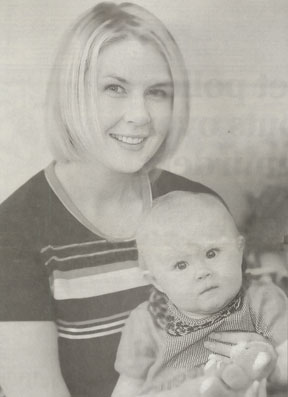
Behind the smile, bomb horror still haunts Karon
DEPENDING on which way you look at it, eight-month-old Lucy McCrea is one of the luckiest or unluckiest babies in Ireland.
Before she was even born she was involved in a plane crash and was caught up in one of the worst atrocities of the past 30 years when the Omagh bomb exploded within yards of her and her young mother, Karon Armstrong.
Karon injured her back as the plane taking her and her unborn child home from a holiday in Gran Canaria was forced to crash-land in Tenerife.
Six months pregnant, the 25-year-old was unable to bend into the correct crash position. That was the start of August 1998.
Two weeks later, she felt well enough to take a run into Omagh town centre with her partner's mother, Ann McCrea, to meet up with her sister who worked in Kells department store at the bottom of Market Street.
Within 10 minutes of arriving in town, Karon was standing in Kells waiting on her sister to finish serving well-known local woman Philomena
Skelton - the next thing she remembers is regaining consciousness under a pile of rubble.
A year on, Karon is still undergoing therapy to try and control the horrific flashbacks to the scenes she witnessed in the minutes and hours
that followed.
But the thing that strikes you most on first meeting the mother-of-one is the heartwarming smile that stretches across her face.
Unlike many of the bomb victims, she is able to talk at length about the events of that day, but then, unlike many of the victims, she has a lot to be thankful for.
"I didn't even hear a bang. I had been knocked backwards in the shop and was covered in rubble. My sister had woken up and found a little girl with half her face missing. She lifted her and took her out of the shop.
"She wanted to come back to help us but the manager wouldn't let her because he didn't know what state we were in. He helped me and Ann out the back - the bomb had blown a hole in the back wall. We were stepping over bodies and bits of bodies.
"I remember being put on an Ulsterbus and taken to casualty. We were sitting in a corridor with lots of other seriously injured people. There was blood everywhere. 1 didn't even know why we were there or what had happened but all 1 was worried about was the baby."
Mrs Skelton was among the seven people who died in the shop, within feet of the expectant mother.
Karon feels very lucky but has also had to deal with survivor guilt.
"I do feel lucky, but then again the survivors are left to deal with the aftermath of what happened."
Karon needed 10 staples in a gash that ran from the middle of her forehead over the top of her skull and has had plastic surgery on a hole that was blown in the bridge of her nose.
There was so much blood over her head and face that hospital staff thought she had ginger hair instead of blonde.
Karon is still attending hospital for treatment for injuries to her chest and legs.
And to remind herself of what she, and her baby, have come through, she keeps fragments of shrapnel surgeons removed from her chest in a jewellery box in her front room. Because, through some amazing stroke of luck, or perhaps divine intervention, there was not one single cut or bruise on her stomach.
"Every other area of my body had some kind of injury but my bump didn't have a scratch on it. It's amazing."
She obviously feels there was some higher force protecting her baby, but doesn't elaborate.
"After some tests, the doctors told me that Lucy was fine but for about a week to 10 days after the bomb she didn't move about much and that was very worrying.
"Until Lucy was born I was terrified that she was going to be deaf because so many adults had their ears damaged by the bomb. I thought her little eardrums would have been perforated."
To the relief of everyone involved, Lucy was born with a clean bill of health on December 4.
Surprisingly, the terror of the plane crash remains more vivid for Karon than the horror of the explosion.
"I was conscious throughout the crash and that was even more terrifying because I don't remember a lot about the bomb.
"On the plane there were people crying and children being sick. One of the stewardesses even broke down in tears and had to be taken to the back of the plane and comforted. We thought we were going to die."
It wasn't until months after the bomb that Karon realised she needed help dealing with her experiences and contacted the town's specialist trauma team who diagnosed her as having post traumatic stress disorder. "My mother died in the March before the bomb so this was the first time that she was not there to support me."
She forced herself to go to the bomb site shortly after getting out of hospital but now finds it difficult to go back.
"There is such an eerie feeling when you walk past that part of town. You never feel safe and you're always on edge. It is like there is always a dark cloud hanging over you."
Like many victims, Karon will be far away from Omagh on the anniversary of the atrocity.
"It's going to be very, very hard. The thought of being there is just too much, bringing all the memories back. We are going away on holiday." But also, like many other victims and bereaved relatives, Karon is hoping that the first anniversary will mark some kind of turning point for herself and for the town.
"Things will never be the same again but the hope is that after this month we will be able to start getting on with our lives again."
After experiencing bereavement and a terrifying plane crash-landing, a pregnant Karon Armstrong was caught up in the Omagh bomb. As its first anniversary approaches, she talks to Martin Anderson about the horrific year and the miracle of baby Lucy
Behind the smile, bomb horror still haunts Karon
DEPENDING on which way you look at it, eight-month-old Lucy McCrea is one of the luckiest or unluckiest babies in Ireland.
Before she was even born she was involved in a plane crash and was caught up in one of the worst atrocities of the past 30 years when the Omagh bomb exploded within yards of her and her young mother, Karon Armstrong.
Karon injured her back as the plane taking her and her unborn child home from a holiday in Gran Canaria was forced to crash-land in Tenerife.
Six months pregnant, the 25-year-old was unable to bend into the correct crash position. That was the start of August 1998.
Two weeks later, she felt well enough to take a run into Omagh town centre with her partner's mother, Ann McCrea, to meet up with her sister who worked in Kells department store at the bottom of Market Street.
Within 10 minutes of arriving in town, Karon was standing in Kells waiting on her sister to finish serving well-known local woman Philomena
Skelton - the next thing she remembers is regaining consciousness under a pile of rubble.
A year on, Karon is still undergoing therapy to try and control the horrific flashbacks to the scenes she witnessed in the minutes and hours
that followed.
But the thing that strikes you most on first meeting the mother-of-one is the heartwarming smile that stretches across her face.
Unlike many of the bomb victims, she is able to talk at length about the events of that day, but then, unlike many of the victims, she has a lot to be thankful for.
"I didn't even hear a bang. I had been knocked backwards in the shop and was covered in rubble. My sister had woken up and found a little girl with half her face missing. She lifted her and took her out of the shop.
"She wanted to come back to help us but the manager wouldn't let her because he didn't know what state we were in. He helped me and Ann out the back - the bomb had blown a hole in the back wall. We were stepping over bodies and bits of bodies.
"I remember being put on an Ulsterbus and taken to casualty. We were sitting in a corridor with lots of other seriously injured people. There was blood everywhere. 1 didn't even know why we were there or what had happened but all 1 was worried about was the baby."
Mrs Skelton was among the seven people who died in the shop, within feet of the expectant mother.
Karon feels very lucky but has also had to deal with survivor guilt.
"I do feel lucky, but then again the survivors are left to deal with the aftermath of what happened."
Karon needed 10 staples in a gash that ran from the middle of her forehead over the top of her skull and has had plastic surgery on a hole that was blown in the bridge of her nose.
There was so much blood over her head and face that hospital staff thought she had ginger hair instead of blonde.
Karon is still attending hospital for treatment for injuries to her chest and legs.
And to remind herself of what she, and her baby, have come through, she keeps fragments of shrapnel surgeons removed from her chest in a jewellery box in her front room. Because, through some amazing stroke of luck, or perhaps divine intervention, there was not one single cut or bruise on her stomach.
"Every other area of my body had some kind of injury but my bump didn't have a scratch on it. It's amazing."
She obviously feels there was some higher force protecting her baby, but doesn't elaborate.
"After some tests, the doctors told me that Lucy was fine but for about a week to 10 days after the bomb she didn't move about much and that was very worrying.
"Until Lucy was born I was terrified that she was going to be deaf because so many adults had their ears damaged by the bomb. I thought her little eardrums would have been perforated."
To the relief of everyone involved, Lucy was born with a clean bill of health on December 4.
Surprisingly, the terror of the plane crash remains more vivid for Karon than the horror of the explosion.
"I was conscious throughout the crash and that was even more terrifying because I don't remember a lot about the bomb.
"On the plane there were people crying and children being sick. One of the stewardesses even broke down in tears and had to be taken to the back of the plane and comforted. We thought we were going to die."
It wasn't until months after the bomb that Karon realised she needed help dealing with her experiences and contacted the town's specialist trauma team who diagnosed her as having post traumatic stress disorder. "My mother died in the March before the bomb so this was the first time that she was not there to support me."
She forced herself to go to the bomb site shortly after getting out of hospital but now finds it difficult to go back.
"There is such an eerie feeling when you walk past that part of town. You never feel safe and you're always on edge. It is like there is always a dark cloud hanging over you."
Like many victims, Karon will be far away from Omagh on the anniversary of the atrocity.
"It's going to be very, very hard. The thought of being there is just too much, bringing all the memories back. We are going away on holiday." But also, like many other victims and bereaved relatives, Karon is hoping that the first anniversary will mark some kind of turning point for herself and for the town.
"Things will never be the same again but the hope is that after this month we will be able to start getting on with our lives again."
Further Information
Publisher: THE IRISH NEWS
Ref: IN/0302
Published Date: 12-Aug-99
Related Images