HUNDREDS WHOSE MENTAL SCARS MIGHT NEVER HEAL
Hunders whose mental scars might never heal
IN December, Tracey Devine became the last victim of the Omagh bomb to be released from hospital.
Her physical injuries had healed sufficiently to allow her to be at home with her surviving children for Christmas.
It was four months since her 20-month-old daughter Breda died in the rubble of the Real IRA explosion and still she faced months, if not years, of painful physiotherapy and skin grafts.
But for many of those involved in the horrific events of August 15 last year, the mental scars will prove the most formidable obstacle to overcome.
Within days of the bomb a specialist trauma unit had been set up to deal with the psychological aftermath of the worst single atrocity that Northern Ireland has ever suffered.
The Community Trauma and Recovery Team, based in Omagh's Bridge Centre, has counselled a total of 474 people in the 12 months since the explosion, aged between two and 76.
Doctors in the Omagh area reported more than 2,500 contacts in the two weeks after the bomb by patients who had been affected.
Almost three quarters of those counselled have been women but the unit's coordinator, Michael Duffy, explains that is not because women were worst affected but rather that men are less likely to ask for help.
"We have concerns that men who have been traumatised are attempting to take a macho attitude and may be experiencing difficulties but find it hard to come forward," he said.
Apart from those physically injured in the bomb, the largest group of people who have had to seek counselling are the eyewitnesses who were unable to take part in rescue attempts.
Mr Duffy said: "Survivor guilt is a feature of that group. People who were so overwhelmed by what they saw they had to leave the scene and then questioned themselves later that maybe they could have helped.
"They were exposed to such horrific scenes, the carnage, the death and destruction that they were just overwhelmed by it."
David Bolton, director of social work with the Sperrin Lakeland Health Trust, said the timing of the bomb had exacerbated the psychological problems.
"People were incredibly vulnerable because their expectations of a bomb were so low," he said.
"It was one of the sunniest days of the year, the peace process was moving forward, there was a happy, party atmosphere about the town and people were being moved to what they thought was a place of safety.
"People's psychological defences were down and they were just not prepared in any way at all. That has been a major factor in how people have handled the aftermath of the bomb."
The list of psychological conditions brought on by the bombing is long; grief, depression, agoraphobia and other phobias, panic attacks, alcohol and drug abuse, post-traumatic stress disorder, deliberate self-harm, hypomania, and psychosis.
Mr Duffy said: "A lot of people are still avoiding the town centre because they can't face going to the scene of all that destruction. It can trigger a lot of flashbacks and people can literally relive the scene on the day.
"Smells can also trigger flashbacks. One particular person hasn't been able to go to a barbecue since the bomb because it conjures up all sorts of horrific images of what happened."
The state of the peace process also has a direct effect on the well-being of many of the people worst-affected by the bomb.
Dr Maura McDermott, a specialist child counsellor with the unit, said the ups and downs of the political process impact on the victims' state of mind.
"I remember for months afterwards the feeling around the town was that the bomb would be the last one and the peace process was continuing," she said.
"Coming up to the first anniversary and the way the peace process is going will affect a lot of people.
'There was a certain amount of comfort to be had in the belief that the bomb had brought politicians together and made them more determined to find a solution."
The trauma unit also played an important rote in expressing the wishes of the victims when it came to organising events to mark the first anniversary.
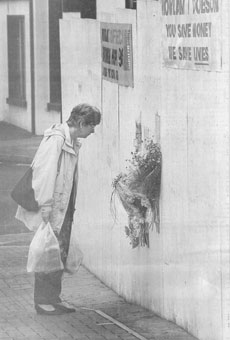
"We are very conscious that many people will be revisiting the site of the bomb, possibly for the first time, to mark the first. anniversary," said Mr Duffy.
"Many see the site as a very sacred place. It's important that people can attend a dignified area where they can come along and express their condolences, lay flowers, pray, whatever they want to do."
The relatives of those killed in the bomb are now in a period of reliving the last moments they spent with their loved ones, according to Mr Bolton.
"The first anniversary of any bereavement is a critical moment and somebody said to me that they are retracing their final steps one day at a time; the last time we went shopping together, went for a walk together, went to church together or whatever.
"There is also the point that the anniversary could provide a positive turning point for many people. Having survived one year without somebody or with an injury could in itself be seen as a great achievement. It will very much depend on the individual."
Mr Duffy added: "We will be reminded very vividly and explicitly for years to come about the bomb. It's important that we never forget what happened as a mark of respect for the victims but we also have to try and adjust to what happened.
"We have to integrate what happened into the history of this community."
IN December, Tracey Devine became the last victim of the Omagh bomb to be released from hospital.
Her physical injuries had healed sufficiently to allow her to be at home with her surviving children for Christmas.
It was four months since her 20-month-old daughter Breda died in the rubble of the Real IRA explosion and still she faced months, if not years, of painful physiotherapy and skin grafts.
But for many of those involved in the horrific events of August 15 last year, the mental scars will prove the most formidable obstacle to overcome.
Within days of the bomb a specialist trauma unit had been set up to deal with the psychological aftermath of the worst single atrocity that Northern Ireland has ever suffered.
The Community Trauma and Recovery Team, based in Omagh's Bridge Centre, has counselled a total of 474 people in the 12 months since the explosion, aged between two and 76.
Doctors in the Omagh area reported more than 2,500 contacts in the two weeks after the bomb by patients who had been affected.
Almost three quarters of those counselled have been women but the unit's coordinator, Michael Duffy, explains that is not because women were worst affected but rather that men are less likely to ask for help.
"We have concerns that men who have been traumatised are attempting to take a macho attitude and may be experiencing difficulties but find it hard to come forward," he said.
Apart from those physically injured in the bomb, the largest group of people who have had to seek counselling are the eyewitnesses who were unable to take part in rescue attempts.
Mr Duffy said: "Survivor guilt is a feature of that group. People who were so overwhelmed by what they saw they had to leave the scene and then questioned themselves later that maybe they could have helped.
"They were exposed to such horrific scenes, the carnage, the death and destruction that they were just overwhelmed by it."
David Bolton, director of social work with the Sperrin Lakeland Health Trust, said the timing of the bomb had exacerbated the psychological problems.
"People were incredibly vulnerable because their expectations of a bomb were so low," he said.
"It was one of the sunniest days of the year, the peace process was moving forward, there was a happy, party atmosphere about the town and people were being moved to what they thought was a place of safety.
"People's psychological defences were down and they were just not prepared in any way at all. That has been a major factor in how people have handled the aftermath of the bomb."
The list of psychological conditions brought on by the bombing is long; grief, depression, agoraphobia and other phobias, panic attacks, alcohol and drug abuse, post-traumatic stress disorder, deliberate self-harm, hypomania, and psychosis.
Mr Duffy said: "A lot of people are still avoiding the town centre because they can't face going to the scene of all that destruction. It can trigger a lot of flashbacks and people can literally relive the scene on the day.
"Smells can also trigger flashbacks. One particular person hasn't been able to go to a barbecue since the bomb because it conjures up all sorts of horrific images of what happened."
The state of the peace process also has a direct effect on the well-being of many of the people worst-affected by the bomb.
Dr Maura McDermott, a specialist child counsellor with the unit, said the ups and downs of the political process impact on the victims' state of mind.
"I remember for months afterwards the feeling around the town was that the bomb would be the last one and the peace process was continuing," she said.
"Coming up to the first anniversary and the way the peace process is going will affect a lot of people.
'There was a certain amount of comfort to be had in the belief that the bomb had brought politicians together and made them more determined to find a solution."
The trauma unit also played an important rote in expressing the wishes of the victims when it came to organising events to mark the first anniversary.
"We are very conscious that many people will be revisiting the site of the bomb, possibly for the first time, to mark the first. anniversary," said Mr Duffy.
"Many see the site as a very sacred place. It's important that people can attend a dignified area where they can come along and express their condolences, lay flowers, pray, whatever they want to do."
The relatives of those killed in the bomb are now in a period of reliving the last moments they spent with their loved ones, according to Mr Bolton.
"The first anniversary of any bereavement is a critical moment and somebody said to me that they are retracing their final steps one day at a time; the last time we went shopping together, went for a walk together, went to church together or whatever.
"There is also the point that the anniversary could provide a positive turning point for many people. Having survived one year without somebody or with an injury could in itself be seen as a great achievement. It will very much depend on the individual."
Mr Duffy added: "We will be reminded very vividly and explicitly for years to come about the bomb. It's important that we never forget what happened as a mark of respect for the victims but we also have to try and adjust to what happened.
"We have to integrate what happened into the history of this community."
Further Information
Publisher: THE IRISH NEWS
Ref: IN/0298
Published Date: 10-Aug-99
Related Images