AFTERMATH: UNCEASING PAIN
Aftermath: unceasing pain
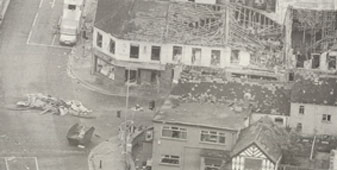
A year after the Real IRA bomb which claimed 29 lives in Omagh, Alan Erwin and Martin Anderson spoke to two men still numbed by the tragedy
ON Sunday Stanley McCombe will attend church along with his two sons.
Once a regular, he has found it almost impossible to continue to go since losing his wife in the explosion which devastated Omagh last
August 15.
A year on from the start of his anguish, however, he knows the emotional service is something he must go through with.
"I have always gone to church, but since this I think I have been three times. I went two Sundays in a row but couldn't face it again, and then I tried once more.
"Ann sang in the choir and when I go I'm looking for her - but of course she's not there." he says.
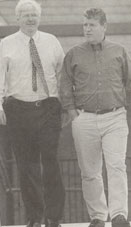
Stanley is sitting in the tiny portacabin headquarters of the Omagh Self Help and Support Group, alongside Michael Gallagher, whose son Aidan was also among the 29 killed when the Real IRA bomb ripped apart Market Street that Saturday afternoon.
Comfort has proved elusive in Omagh these past twelve months, but despite the unimaginable grief endured by the victims' loved ones, these two men have found a solace of sorts through their shared suffering.
"In our group we talk together and it does help. You can relate to someone who is going through what you are going through.
"Michael and I were never as close as we are now, but we would always acknowledge each other. We had different lifestyles but Michael and I have been friends for years," Stanley says.
Both men recount how the events on that day affected them, from the awful dread that a loved one had been caught up in the carnage to the horrific reality that their worst nightmare had become reality.
For Michael, the day had started out on a note of optimism as he noticed newspapers headlines telling of how a young boy who had suffered extensive facial injuries in the Enniskillen bombing was set to get married.
At lunchtime Michael was chatting with his 21-year-old son who was going into town to buy a new pair of jeans and boots.
"We had a nice, pleasant conversation. He seemed very happy. As he was walking away I'll never forget when he turned around and said: 'I'll not be long' and gave us a smile. That was the last we ever saw of him."
By 3.10pm Michael had returned to his garage to work on a car. Then he heard the explosion and his instincts told him to lock up and go home. After reports of fatalities began to filter through he decided to go to the nearby County Hospital.
When he found no sign of his son he went into town along with the father of Michael Barrett, Aidan's friend who he had been with that day. From there he returned to the hospital, where he discovered Michael in one of the wards. Although the young man's face and hair were badly burnt he was able to confirm Aidan had been with him when the blast went off.
"We were then told to go to the leisure centre, where I spent the worst 14 hours of my life, waiting on news.
"But as the night went on the lists became smaller until eventually we were taken down a corridor. There were two policemen there and two social workers and it was obvious from the questions that something was wrong.
"Shortly after we filled out a form and then were taken on a police minibus to the mortuary. That was the beginning of our nightmare."
For Stanley McCombe, that Saturday had been spent in Glasgow competing in the world pipe band championships. At around 3.30pm another man from Omagh told him there had been a bomb at the courthouse.
"I knew that Ann was working at Watterson's shop which is quite close to the courthouse, about fifty or sixty yards away.
"I had no phone but then I met another woman who told me an awful lot of people had been killed. But I said to her the police must have got it wrong because it was at the courthouse and they had cleared the area."
Along with the others Stanley frantically tried to phone home, but to no avail. Then, as he was getting back onto the coach to go to Ayr where they were staying that night, he was told his sister Rosemary, a traffic warden, had been killed.
By the time the coach party arrived in Ayr, Stanley's brother had managed to get through on the driver's mobile phone. He was told Rosemary was injured, although not seriously.
But the crushing news was that Ann was still missing, five hours after the explosion.
"I tried to get home, but there was no flights anywhere. I was even prepared to pay for a helicopter. But the only thing was to get the next sailing from Stranraer at five o'clock in the morning.
"Prior to that my brother got through to the hotel at 11pm. He didn't speak to me, he spoke to Clive, my eldest boy, and told him his mum was dead.
"I was out there and, although I had everybody around me, I was completely isolated. I just wanted to get home."
One of the tragic ironies of the bombing was that Ann did not usually work in Watterson's on Saturdays. She was only covering for a colleague who was on holiday leave.
Stanley's two boys have struggled to come to terms with the loss, especially his younger son Colin (19).
"He doesn't say an awful lot. But when he does talk about it you can see the anger."
His other son, Clive (23), has also had his problems in coping, drifting from one job to another.
"Clive's just like me. He's so unsettled and mixed up. When Ann was there, she was the boss, she was the manager. No matter where you were going or what you were doing, everything was laid out."
Along with their grief both men admit to having feelings of rage, although they realise the danger of being consumed by such emotions.
"I have got anger as well as everybody else, but I realised very early on that the anger could destroy me. The people who did this would get more out of it if I lashed out at them," says Michael, who had a brother murdered by the IRA in 1984.
"I do lash out at them, but not in an angry way. I want them to realise the value of the people's lives they destroyed. These people will be in prison for the rest of their lives.
"It is on my mind every hour of every day. Wherever we go, if we go out and appear to be enjoying ourselves, there is always the guilt that you shouldn't be doing that because there's nothing to be joyful about. I don't know whether it's survivors guilt or not."
For Stanley it is in times of solitude that he experiences the worst outpourings.
"I get rid of anger through emotion. There's nights I'll wait to the boys are out and you walk into a house that's very lonely and I sit down and cry," he admits.
"If Ann had died a natural death then you could accept it and try to move on. But this has changed my whole personality. I would never have been a person with any hate, but that's what I feel for those who planted that bomb. And forgiveness? How can you forgive them after what they did?"
He refuses to look beyond the immediate future. "The future is tomorrow," he insists.
Stanley's bitterness is compounded by what he perceives as a lack of progress in the attempts to reach a political settlement.
"The peace process is a joke, but it's a very sour one on our part."
But there is also a determination to send a message that the two communities in Omagh can live together, despite the attempts by paramilitaries to rip them apart.
This is typified by the way Michael, a Catholic and Stanley, a Protestant, have united.
"Most people in a small town like this, they all come together and are able to gel together at some time," says Michael.
That's why it's so important that we come together as Protestant and Catholic and send a message to these sort of people who came here and planted a bomb and cynically tried to destroy the peace process, that it definitely won't work in this town."
The pair are looking to the investigation into the bombing to provide some answers.
"I think until we hear the full story of what happened in Omagh there will always be something missing in our lives. It's one of the areas that is important to us," says Michael.
The relatives are also scheduled to meet RUC Chief Constable Sir Ronnie Flanagan and Garda Superintendent Pat Byrne to discuss what stage the current investigation is at. Before that, however, they must get over the emotional hurdle this weekend presents.
A year after the Real IRA bomb which claimed 29 lives in Omagh, Alan Erwin and Martin Anderson spoke to two men still numbed by the tragedy
ON Sunday Stanley McCombe will attend church along with his two sons.
Once a regular, he has found it almost impossible to continue to go since losing his wife in the explosion which devastated Omagh last
August 15.
A year on from the start of his anguish, however, he knows the emotional service is something he must go through with.
"I have always gone to church, but since this I think I have been three times. I went two Sundays in a row but couldn't face it again, and then I tried once more.
"Ann sang in the choir and when I go I'm looking for her - but of course she's not there." he says.
Stanley is sitting in the tiny portacabin headquarters of the Omagh Self Help and Support Group, alongside Michael Gallagher, whose son Aidan was also among the 29 killed when the Real IRA bomb ripped apart Market Street that Saturday afternoon.
Comfort has proved elusive in Omagh these past twelve months, but despite the unimaginable grief endured by the victims' loved ones, these two men have found a solace of sorts through their shared suffering.
"In our group we talk together and it does help. You can relate to someone who is going through what you are going through.
"Michael and I were never as close as we are now, but we would always acknowledge each other. We had different lifestyles but Michael and I have been friends for years," Stanley says.
Both men recount how the events on that day affected them, from the awful dread that a loved one had been caught up in the carnage to the horrific reality that their worst nightmare had become reality.
For Michael, the day had started out on a note of optimism as he noticed newspapers headlines telling of how a young boy who had suffered extensive facial injuries in the Enniskillen bombing was set to get married.
At lunchtime Michael was chatting with his 21-year-old son who was going into town to buy a new pair of jeans and boots.
"We had a nice, pleasant conversation. He seemed very happy. As he was walking away I'll never forget when he turned around and said: 'I'll not be long' and gave us a smile. That was the last we ever saw of him."
By 3.10pm Michael had returned to his garage to work on a car. Then he heard the explosion and his instincts told him to lock up and go home. After reports of fatalities began to filter through he decided to go to the nearby County Hospital.
When he found no sign of his son he went into town along with the father of Michael Barrett, Aidan's friend who he had been with that day. From there he returned to the hospital, where he discovered Michael in one of the wards. Although the young man's face and hair were badly burnt he was able to confirm Aidan had been with him when the blast went off.
"We were then told to go to the leisure centre, where I spent the worst 14 hours of my life, waiting on news.
"But as the night went on the lists became smaller until eventually we were taken down a corridor. There were two policemen there and two social workers and it was obvious from the questions that something was wrong.
"Shortly after we filled out a form and then were taken on a police minibus to the mortuary. That was the beginning of our nightmare."
For Stanley McCombe, that Saturday had been spent in Glasgow competing in the world pipe band championships. At around 3.30pm another man from Omagh told him there had been a bomb at the courthouse.
"I knew that Ann was working at Watterson's shop which is quite close to the courthouse, about fifty or sixty yards away.
"I had no phone but then I met another woman who told me an awful lot of people had been killed. But I said to her the police must have got it wrong because it was at the courthouse and they had cleared the area."
Along with the others Stanley frantically tried to phone home, but to no avail. Then, as he was getting back onto the coach to go to Ayr where they were staying that night, he was told his sister Rosemary, a traffic warden, had been killed.
By the time the coach party arrived in Ayr, Stanley's brother had managed to get through on the driver's mobile phone. He was told Rosemary was injured, although not seriously.
But the crushing news was that Ann was still missing, five hours after the explosion.
"I tried to get home, but there was no flights anywhere. I was even prepared to pay for a helicopter. But the only thing was to get the next sailing from Stranraer at five o'clock in the morning.
"Prior to that my brother got through to the hotel at 11pm. He didn't speak to me, he spoke to Clive, my eldest boy, and told him his mum was dead.
"I was out there and, although I had everybody around me, I was completely isolated. I just wanted to get home."
One of the tragic ironies of the bombing was that Ann did not usually work in Watterson's on Saturdays. She was only covering for a colleague who was on holiday leave.
Stanley's two boys have struggled to come to terms with the loss, especially his younger son Colin (19).
"He doesn't say an awful lot. But when he does talk about it you can see the anger."
His other son, Clive (23), has also had his problems in coping, drifting from one job to another.
"Clive's just like me. He's so unsettled and mixed up. When Ann was there, she was the boss, she was the manager. No matter where you were going or what you were doing, everything was laid out."
Along with their grief both men admit to having feelings of rage, although they realise the danger of being consumed by such emotions.
"I have got anger as well as everybody else, but I realised very early on that the anger could destroy me. The people who did this would get more out of it if I lashed out at them," says Michael, who had a brother murdered by the IRA in 1984.
"I do lash out at them, but not in an angry way. I want them to realise the value of the people's lives they destroyed. These people will be in prison for the rest of their lives.
"It is on my mind every hour of every day. Wherever we go, if we go out and appear to be enjoying ourselves, there is always the guilt that you shouldn't be doing that because there's nothing to be joyful about. I don't know whether it's survivors guilt or not."
For Stanley it is in times of solitude that he experiences the worst outpourings.
"I get rid of anger through emotion. There's nights I'll wait to the boys are out and you walk into a house that's very lonely and I sit down and cry," he admits.
"If Ann had died a natural death then you could accept it and try to move on. But this has changed my whole personality. I would never have been a person with any hate, but that's what I feel for those who planted that bomb. And forgiveness? How can you forgive them after what they did?"
He refuses to look beyond the immediate future. "The future is tomorrow," he insists.
Stanley's bitterness is compounded by what he perceives as a lack of progress in the attempts to reach a political settlement.
"The peace process is a joke, but it's a very sour one on our part."
But there is also a determination to send a message that the two communities in Omagh can live together, despite the attempts by paramilitaries to rip them apart.
This is typified by the way Michael, a Catholic and Stanley, a Protestant, have united.
"Most people in a small town like this, they all come together and are able to gel together at some time," says Michael.
That's why it's so important that we come together as Protestant and Catholic and send a message to these sort of people who came here and planted a bomb and cynically tried to destroy the peace process, that it definitely won't work in this town."
The pair are looking to the investigation into the bombing to provide some answers.
"I think until we hear the full story of what happened in Omagh there will always be something missing in our lives. It's one of the areas that is important to us," says Michael.
The relatives are also scheduled to meet RUC Chief Constable Sir Ronnie Flanagan and Garda Superintendent Pat Byrne to discuss what stage the current investigation is at. Before that, however, they must get over the emotional hurdle this weekend presents.
Further Information
Publisher: THE IRISH NEWS
Ref: IN/0295
Published Date: 09-Aug-99
Related Images