INFLICTING PAIN IS NEVER THE ANSWER
Inflicting pain is never the answer'
By Paul McKillion
THE timing and placing of the Omagh bomb was cruelly ironic.
It was planted in a town which had enjoyed harmonious relations for many years at a time when the two traditions in Northern Ireland were looking to a brighter future which they could enjoy together.
Republican dissidents, in all their various guises and names, had been threatening an atrocity like this for some time.
The series of bombs in Portadown, Markethill. Moira, Banbridge and Newtownhamilton were claimed by the CIRA, RIRA and INLA -all unhappy at the Provisionals' support for Sinn Fein's strategy in the peace process and Good Friday agreement
Their RIRAs protestations that it did not intend to inflict the 28 immediate deaths and destruction which Omagh suffered were treated with contempt by all.
Secretary of State Mo Mowlam described RIRA claims that three warnings had been given stating that the bomb was at a commercial target 300-400 yards from the courthouse as "a pathetic attempt at an excuse for mass murder".
Statements of condemnation came from around the world. Pope John Paul II said the act was one of "blind violence".
Politicians, taking their first steps towards a new society stressed their resolve to continue the work the bombers had tried to wreck.
First Minister David Trimble said: "The people of Northern Ireland can unite round tills to express their determination that this atrocity will not deflect from the way forward."
Sinn Fein President Gerry Adams said:"People need to have the conviction that we are going to have peace in this country."
The bomb, which ripped apart lower Market Street, caused "every injury imaginable", said an accident and emergency consultant at the Royal Victoria Hospital.
Over 220 people were injured in the blast which stretched the emergency services to the limit. Taxis, private cars and vans and buses were all utilised in ferrying the injured to the nearest hospitals.
The outrage provoked the sternest of responses from the British and Irish governments who vowed to hunt down the bombers and other republican dissidents with new security legislation aimed at tightening border areas where the dissidents were thought operate.
Bertie Ahern issued a defiant message to those responsible. He said: "If we have learned one lesson from our history, it is that the inflicting of pain and suffering is never the answer and benefits no one. Peace and democracy cannot he held to ransom."
Ireland entered a week of mourning as the dead were laid to rest. Scenes of uncontrollable grief dominated the week as funeral after funeral took
place.
Bishop Edward Daly said: "In our terrible experience of the last 30 years, Omagh was the worst atrocity of all. Is it too much to ask or too much to hope that it will be the last atrocity of all?"
In death, as in life, the people of Omagh shared their experiences, feelings and emotions. At the funeral of 15-year-old Lorraine Wilson, bishop of Derry and Raphoe Dr James Mehaffey paid homage to this.
He said: The evil intention of the bombers is in stark contrast to the innumerable deeds of care and compassion which have been so dearly demonstrated by the people of this community."
A week to the exact minute of the explosion, Ireland stood in silence, reflecting on the scale of the tragedy, and the hundreds still badly injured.
Omagh's memorial service, held on the steps of me courthouse, brought hundreds of thousands to the streets. Prayers were read in English, Irish and Spanish in remembrance of those from Northern Ireland, the Republic, and Madrid who died in the bomb.
The day before the memorial service Bernadette Sands-McKevitt vice-chair of the dissident-aligned 32 County Sovereignty Movement - seen as the political wing of the RIRA - was escorted from her Dundalk shop to avoid a breach of the peace.
She then left the family home with her partner, Michael McKevitt and their three children. In a letter written from her hospital bed, Omagh woman Gwen Hall confronted the bombers who had also seriously injured her 13-year-old son Alistair.
Mrs Hall wrote: "You may have broken the bodies of the people of Omagh, but you can never break their spirit"
The words captured the resolve and commitment of the people of Omagh as they made their first small steps on the long road to recovery.
By Paul McKillion
THE timing and placing of the Omagh bomb was cruelly ironic.
It was planted in a town which had enjoyed harmonious relations for many years at a time when the two traditions in Northern Ireland were looking to a brighter future which they could enjoy together.
Republican dissidents, in all their various guises and names, had been threatening an atrocity like this for some time.
The series of bombs in Portadown, Markethill. Moira, Banbridge and Newtownhamilton were claimed by the CIRA, RIRA and INLA -all unhappy at the Provisionals' support for Sinn Fein's strategy in the peace process and Good Friday agreement
Their RIRAs protestations that it did not intend to inflict the 28 immediate deaths and destruction which Omagh suffered were treated with contempt by all.
Secretary of State Mo Mowlam described RIRA claims that three warnings had been given stating that the bomb was at a commercial target 300-400 yards from the courthouse as "a pathetic attempt at an excuse for mass murder".
Statements of condemnation came from around the world. Pope John Paul II said the act was one of "blind violence".
Politicians, taking their first steps towards a new society stressed their resolve to continue the work the bombers had tried to wreck.
First Minister David Trimble said: "The people of Northern Ireland can unite round tills to express their determination that this atrocity will not deflect from the way forward."
Sinn Fein President Gerry Adams said:"People need to have the conviction that we are going to have peace in this country."
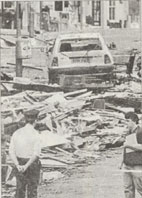
The bomb, which ripped apart lower Market Street, caused "every injury imaginable", said an accident and emergency consultant at the Royal Victoria Hospital.
Over 220 people were injured in the blast which stretched the emergency services to the limit. Taxis, private cars and vans and buses were all utilised in ferrying the injured to the nearest hospitals.
The outrage provoked the sternest of responses from the British and Irish governments who vowed to hunt down the bombers and other republican dissidents with new security legislation aimed at tightening border areas where the dissidents were thought operate.
Bertie Ahern issued a defiant message to those responsible. He said: "If we have learned one lesson from our history, it is that the inflicting of pain and suffering is never the answer and benefits no one. Peace and democracy cannot he held to ransom."
Ireland entered a week of mourning as the dead were laid to rest. Scenes of uncontrollable grief dominated the week as funeral after funeral took
place.
Bishop Edward Daly said: "In our terrible experience of the last 30 years, Omagh was the worst atrocity of all. Is it too much to ask or too much to hope that it will be the last atrocity of all?"
In death, as in life, the people of Omagh shared their experiences, feelings and emotions. At the funeral of 15-year-old Lorraine Wilson, bishop of Derry and Raphoe Dr James Mehaffey paid homage to this.
He said: The evil intention of the bombers is in stark contrast to the innumerable deeds of care and compassion which have been so dearly demonstrated by the people of this community."
A week to the exact minute of the explosion, Ireland stood in silence, reflecting on the scale of the tragedy, and the hundreds still badly injured.
Omagh's memorial service, held on the steps of me courthouse, brought hundreds of thousands to the streets. Prayers were read in English, Irish and Spanish in remembrance of those from Northern Ireland, the Republic, and Madrid who died in the bomb.
The day before the memorial service Bernadette Sands-McKevitt vice-chair of the dissident-aligned 32 County Sovereignty Movement - seen as the political wing of the RIRA - was escorted from her Dundalk shop to avoid a breach of the peace.
She then left the family home with her partner, Michael McKevitt and their three children. In a letter written from her hospital bed, Omagh woman Gwen Hall confronted the bombers who had also seriously injured her 13-year-old son Alistair.
Mrs Hall wrote: "You may have broken the bodies of the people of Omagh, but you can never break their spirit"
The words captured the resolve and commitment of the people of Omagh as they made their first small steps on the long road to recovery.
Further Information
Publisher: THE IRISH NEWS
Ref: IN/0264
Published Date: 28-Dec-98
Related Images