REBEL MPS FAIL IN BID TO BLOCK TERROR LAW
Rebel MPs fail in bid to block terror law
EMERGENCY counter-terrorism powers were backed by the Commons early today with a massive 374 majority.
A bid to block the second reading of the Criminal Justice (Terrorism and Conspiracy) Bill, on grounds that MPs had been given less than 24 hours to scrutinise it, was defeated by 391 to 17.
The vote came shortly after anti-terror measures cleared the Dail in Dublin.
The bill, introduced after last month's Omagh bomb which killed 28 people, was then given an unopposed second reading at 12.37am - after more than seven hours of debate.
MPs, called back from their holidays then moved on to detailed line-by-line consideration of the legislation.
This was expected to last up to six hours as government business managers stuck rigidly to their plans to get the bill on the statute book later today.
The bill, which will make it easier to prosecute people for membership of outlawed terrorist groups - the Real IRA, the Continuity IRA, the INLA and the LVF - is due to go before the Lords later today.
It mirrors the new laws debated in the Republic in a symbolic gesture of unity between the two governments reflecting their determination to defeat terrorism.
Earlier last night, debate on the bill was delayed after MPs from all parties complained bitterly that they had not been given enough time to consider the bill properly.
Ministers had been expecting some protests, but the scale of the backlash over the timetabling of the bill, and the seniority of the MPs involved, came as a surprise.
The timetable for debate on the bill was eventually put to a vote which the Government won with 317 votes in support.
But a sizeable 88 MPs voted against. These included senior MPs from the Labour, Tory, Liberal Democrat, Ulster Unionist and Democratic Unionist parties, as well as from minor parties.
They included Tory former prime minister Sir Edward Heath, UUP leader and Northern Ireland First Minister designate David Trimble and DUP Ian Paisley.
Ministers plan to complete the Commons stages of the bill in a debate that could run into the early hours, with the measure passing through the Lords today, reaching the statute book late tonight.
Earlier, in his statement to the Commons, the prime minister issued a stern message to the Omagh bombers who killed 28.
"You sought to wreck the agreement, and you have failed. You sought to divide the community, and you failed. You sought to win new support, and you failed.
"You failed because violence and terror represent the past in Northern Ireland, and democracy and peace represent the future," Mr Blair declared.
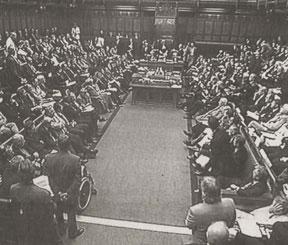
In an emotional Commons statement, before a house crowded with MPs called back from their summer holidays, Mr Blair said things were now "moving in the right direction" in Northern Ireland.
He said the best response to the Omagh bombing last month was not to abandon the peace accord but to "carry it forward vigorously" and deny those opposed to the democratic process.
Opening debate on the bill last night, Home Secretary Jack Straw faced a barrage of interventions from Labour MPs concerned that the bill could put civil liberties at risk.
But he stressed the proposals were vital to outlaw terrorism for good.
He said of the package: "It is undoubtedly tough, but it is proportionate."
He added: "We believe it is essential to act without delay."
The debate came during a day of fast moving events in the province after Sinn Fein's forthright renunciation of violence on Tuesday.
Earlier it was disclosed that Scots Guardsmen James Fisher and Mark Wright had been released from the prison where they were serving life for murdering an unarmed Catholic - provoking outraged condemnation from their victim's family.
Mr Blair defended the bill as a "proportionate and targeted response to deal with small and evil groups of violent men who seek to wreck the hopes for peace which the great majority yearn for and have voted for".
Turning to international terrorism in the wake of the devastating attacks on the US embassies in Kenya and Tanzania, Mr Blair said terrorism was an increasing threat worldwide and Britain must play an active part in the international battle against it.
The recall of parliament provided an opportunity to put into law "long-held plans to make it a criminal offence of conspiracy to commit offences outside the UK".
Tory Leader William Hague said his party would back the bill, but called for progress on decommissioning. But he insisted the "tough words must be matched by clear deeds".
Labour's Chris Mullan (Sunderland S), Home Affairs Select Committee chairman, said he had tabled amendments to the bill to ensure "credible evidence, capable of belief in court".
He warned: "If we get this wrong, we shall end up creating a political base for a tiny isolated sect that at the moment has no political base.",
Mr Trimble called for safeguards for early-release terrorists to be scrutinised more carefully.
"Are you not disturbed, as I was, that a leading member of the Real IRA was a person released by the Irish government some months ago as a confidence building measure at the request of Sinn Fein? You must be sure that this does not happen again," he told Mr Blair.
DUP leader Ian Paisley spoke of the four men who were arrested after the Omagh bomb "who were known by Sinn Fein to be members of the so-called Real IRA."
Mr Blair replied: "I cannot comment on individual cases. What I can say is that we believe this legislation gives us a far better chance to prove whether people are members of a proscribed organisation."
The unsuccessful rebel amendment seeking to block the bill was backed by 17 Labour MPs, including Tony Benn, Ann Cryer, Tam Dalyell, Bernie Grant, Kevin McNamara and Dennis Skinner. Tellers for the noes were Labour MPs Jeremy Corbyn and Dennis Canavan.
EMERGENCY counter-terrorism powers were backed by the Commons early today with a massive 374 majority.
A bid to block the second reading of the Criminal Justice (Terrorism and Conspiracy) Bill, on grounds that MPs had been given less than 24 hours to scrutinise it, was defeated by 391 to 17.
The vote came shortly after anti-terror measures cleared the Dail in Dublin.
The bill, introduced after last month's Omagh bomb which killed 28 people, was then given an unopposed second reading at 12.37am - after more than seven hours of debate.
MPs, called back from their holidays then moved on to detailed line-by-line consideration of the legislation.
This was expected to last up to six hours as government business managers stuck rigidly to their plans to get the bill on the statute book later today.
The bill, which will make it easier to prosecute people for membership of outlawed terrorist groups - the Real IRA, the Continuity IRA, the INLA and the LVF - is due to go before the Lords later today.
It mirrors the new laws debated in the Republic in a symbolic gesture of unity between the two governments reflecting their determination to defeat terrorism.
Earlier last night, debate on the bill was delayed after MPs from all parties complained bitterly that they had not been given enough time to consider the bill properly.
Ministers had been expecting some protests, but the scale of the backlash over the timetabling of the bill, and the seniority of the MPs involved, came as a surprise.
The timetable for debate on the bill was eventually put to a vote which the Government won with 317 votes in support.
But a sizeable 88 MPs voted against. These included senior MPs from the Labour, Tory, Liberal Democrat, Ulster Unionist and Democratic Unionist parties, as well as from minor parties.
They included Tory former prime minister Sir Edward Heath, UUP leader and Northern Ireland First Minister designate David Trimble and DUP Ian Paisley.
Ministers plan to complete the Commons stages of the bill in a debate that could run into the early hours, with the measure passing through the Lords today, reaching the statute book late tonight.
Earlier, in his statement to the Commons, the prime minister issued a stern message to the Omagh bombers who killed 28.
"You sought to wreck the agreement, and you have failed. You sought to divide the community, and you failed. You sought to win new support, and you failed.
"You failed because violence and terror represent the past in Northern Ireland, and democracy and peace represent the future," Mr Blair declared.
In an emotional Commons statement, before a house crowded with MPs called back from their summer holidays, Mr Blair said things were now "moving in the right direction" in Northern Ireland.
He said the best response to the Omagh bombing last month was not to abandon the peace accord but to "carry it forward vigorously" and deny those opposed to the democratic process.
Opening debate on the bill last night, Home Secretary Jack Straw faced a barrage of interventions from Labour MPs concerned that the bill could put civil liberties at risk.
But he stressed the proposals were vital to outlaw terrorism for good.
He said of the package: "It is undoubtedly tough, but it is proportionate."
He added: "We believe it is essential to act without delay."
The debate came during a day of fast moving events in the province after Sinn Fein's forthright renunciation of violence on Tuesday.
Earlier it was disclosed that Scots Guardsmen James Fisher and Mark Wright had been released from the prison where they were serving life for murdering an unarmed Catholic - provoking outraged condemnation from their victim's family.
Mr Blair defended the bill as a "proportionate and targeted response to deal with small and evil groups of violent men who seek to wreck the hopes for peace which the great majority yearn for and have voted for".
Turning to international terrorism in the wake of the devastating attacks on the US embassies in Kenya and Tanzania, Mr Blair said terrorism was an increasing threat worldwide and Britain must play an active part in the international battle against it.
The recall of parliament provided an opportunity to put into law "long-held plans to make it a criminal offence of conspiracy to commit offences outside the UK".
Tory Leader William Hague said his party would back the bill, but called for progress on decommissioning. But he insisted the "tough words must be matched by clear deeds".
Labour's Chris Mullan (Sunderland S), Home Affairs Select Committee chairman, said he had tabled amendments to the bill to ensure "credible evidence, capable of belief in court".
He warned: "If we get this wrong, we shall end up creating a political base for a tiny isolated sect that at the moment has no political base.",
Mr Trimble called for safeguards for early-release terrorists to be scrutinised more carefully.
"Are you not disturbed, as I was, that a leading member of the Real IRA was a person released by the Irish government some months ago as a confidence building measure at the request of Sinn Fein? You must be sure that this does not happen again," he told Mr Blair.
DUP leader Ian Paisley spoke of the four men who were arrested after the Omagh bomb "who were known by Sinn Fein to be members of the so-called Real IRA."
Mr Blair replied: "I cannot comment on individual cases. What I can say is that we believe this legislation gives us a far better chance to prove whether people are members of a proscribed organisation."
The unsuccessful rebel amendment seeking to block the bill was backed by 17 Labour MPs, including Tony Benn, Ann Cryer, Tam Dalyell, Bernie Grant, Kevin McNamara and Dennis Skinner. Tellers for the noes were Labour MPs Jeremy Corbyn and Dennis Canavan.
Further Information
Publisher: THE IRISH NEWS
Ref: IN/0212
Published Date: 03-Sep-98
Related Images