IRA'S THREAT REMAINS REAL
IRA's threat remains real
Tom Brady
WITHIN the past two months the breakaway republican faction, the Real IRA selected a new six-man ruling army council. It was hardly the action of a group that intended to go away.
The Real IRA declared a ceasefire last year in the wake of the Omagh bomb atrocity after enormous pressure exerted on them by the Irish and British Governments in the form of new legislation, public shunning of known associates and the threat of armed action from the Provisionals.
The declaration was accepted at face value by the two Governments that the Real IRA as a terrorist organisation had been effectively disbanded although no concessions were made in terms of early releases for jailed members of the dissident group.
But it was acknowledged by senior politicians - based on the best security advice - that the group had been left with little alternative. Apart from the threat posed by new draconian legislation and visits to their homes by armed Provisionals, the massive public backlash after Omagh also ensured they could no longer rely on peripheral sympathisers to provide safe houses and logistical support for their main activists.
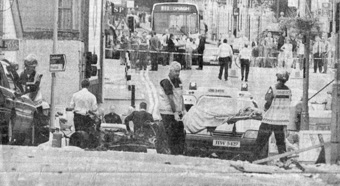
The declaration, however, did not impinge on the RUC and Garda investigation into the Omagh bombing and the promised crackdown on those responsible for the blast which killed 29 people on August 15. And there has been concrete evidence since then that the investigation has remained very active with arrests even in the past few days of people suspected of being involved in events leading up to the bombing.
There has also been no let-up in surveillance on known dissidents who have remained active by attending meetings with other militarists and associating closely with members of the Continuity IRA which is the only republican splinter group not to have declared a ceasefire.
The distinction between the two dissident groups has become increasingly blurred since last summer when garda intelligence uncovered a link between the two and a third renegade republican faction, the INLA. Significantly, the arrests in Dundalk and in south Armagh this week have included suspected associates of the three groups as well as suspected members of a car theft ring blamed for taking the car used in the Omagh bombing.
According to senior anti terrorist personnel, there are considerable cross-overs in membership between the Real IRA and the Continuity IRA, particularly, and that often makes difficult for police to say with certainty which group is responsible for a specific incident.
Thus, it cannot be said definitely which faction was behind the apparent attempt to transport two beer keg bombs across the Border for a terrorist attack, probably intended to coincide with the unionist long march and the breakdown of the peace process next Wednesday.
However, the two men arrested by gardai in county Donegal yesterday following the interception of a van filled with 150 kilos of fertiliser, suspected gunpowder, two beer kegs and other bomb-making components, are known to be firm supporters of a former leading Provisional IRA man from Derry.
According to intelligence, he defected to the Real IRA and declared his support for the group's chief of staff, a former Provisional quartermaster who had defected with a group of 20 allies following a row over the signing of the Mitchell principles at a stormy IRA convention in Falcarragh, Co Donegal, in October 1997. He subsequently formed the group dubbed in the media as the Real IRA and membership built up to around 80 activists.
The Derry man followed the quartermaster although support in the northwest for the renegades was comparatively limited as that area of republicanism is strongly controlled by a Donegal Provisional who is the former director of intelligence for the mainstream group. The Derry man has since been subjected to considerable harassment in his home city by the local Provisionals.
In the meantime, the north county Louth based quartermaster was recently confirmed in his post as chief of staff of the dissidents and other members of the new army council include the former Provisional head of engineering from Inchicore, Co Dublin, a hardliner from Dundalk, one of their main recruiting agents from Cork city, and another Dubliner.
The Continuity IRA became militarily active after the initial Provisional ceasefire is 1994 and was added to the list of proscribed organisations in June 1997. It initially concentrated on planting incendiary devices around Newry and Enniskillen but was about to boost its profile as a terrorist organisation when gardai intercepted a bombing mission in county Monaghan in November 1995. That led to the arrest and subsequent jailing of a senior member of the ard chomhairle of its political wing.
ACTIVISTS from the two groups have been meeting regularly in recent months and in the lead up to 'the North's marching season and the growing likelihood of the collapse of the peace talks, the Gardai and the RUC have been stepping up its surveillance on the terrorists.
The main area of concern to the two police forces is the South Armagh region which has always been traditionally hardline republican and although it has been controlled largely up to now by two members of the Provisionals" army council, there have been warnings that if another split comes because of the peace path adopted by Sinn Fein it is South Armagh that will produce the main bunch of key defectors. At this stage it is premature to predict the precise target of the bombs intercepted by the Gardai early yesterday morning. But if they had resulted in another terrorist atrocity the slide down the slippery slope towards all-out war between republican and loyalist groups might not have been too easy to halt. It's a scenario worth keeping in mind by the politicians who seem unlikely to keep the peace talk on track from the middle of next week.
Tom Brady
WITHIN the past two months the breakaway republican faction, the Real IRA selected a new six-man ruling army council. It was hardly the action of a group that intended to go away.
The Real IRA declared a ceasefire last year in the wake of the Omagh bomb atrocity after enormous pressure exerted on them by the Irish and British Governments in the form of new legislation, public shunning of known associates and the threat of armed action from the Provisionals.
The declaration was accepted at face value by the two Governments that the Real IRA as a terrorist organisation had been effectively disbanded although no concessions were made in terms of early releases for jailed members of the dissident group.
But it was acknowledged by senior politicians - based on the best security advice - that the group had been left with little alternative. Apart from the threat posed by new draconian legislation and visits to their homes by armed Provisionals, the massive public backlash after Omagh also ensured they could no longer rely on peripheral sympathisers to provide safe houses and logistical support for their main activists.
The declaration, however, did not impinge on the RUC and Garda investigation into the Omagh bombing and the promised crackdown on those responsible for the blast which killed 29 people on August 15. And there has been concrete evidence since then that the investigation has remained very active with arrests even in the past few days of people suspected of being involved in events leading up to the bombing.
There has also been no let-up in surveillance on known dissidents who have remained active by attending meetings with other militarists and associating closely with members of the Continuity IRA which is the only republican splinter group not to have declared a ceasefire.
The distinction between the two dissident groups has become increasingly blurred since last summer when garda intelligence uncovered a link between the two and a third renegade republican faction, the INLA. Significantly, the arrests in Dundalk and in south Armagh this week have included suspected associates of the three groups as well as suspected members of a car theft ring blamed for taking the car used in the Omagh bombing.
According to senior anti terrorist personnel, there are considerable cross-overs in membership between the Real IRA and the Continuity IRA, particularly, and that often makes difficult for police to say with certainty which group is responsible for a specific incident.
Thus, it cannot be said definitely which faction was behind the apparent attempt to transport two beer keg bombs across the Border for a terrorist attack, probably intended to coincide with the unionist long march and the breakdown of the peace process next Wednesday.
However, the two men arrested by gardai in county Donegal yesterday following the interception of a van filled with 150 kilos of fertiliser, suspected gunpowder, two beer kegs and other bomb-making components, are known to be firm supporters of a former leading Provisional IRA man from Derry.
According to intelligence, he defected to the Real IRA and declared his support for the group's chief of staff, a former Provisional quartermaster who had defected with a group of 20 allies following a row over the signing of the Mitchell principles at a stormy IRA convention in Falcarragh, Co Donegal, in October 1997. He subsequently formed the group dubbed in the media as the Real IRA and membership built up to around 80 activists.
The Derry man followed the quartermaster although support in the northwest for the renegades was comparatively limited as that area of republicanism is strongly controlled by a Donegal Provisional who is the former director of intelligence for the mainstream group. The Derry man has since been subjected to considerable harassment in his home city by the local Provisionals.
In the meantime, the north county Louth based quartermaster was recently confirmed in his post as chief of staff of the dissidents and other members of the new army council include the former Provisional head of engineering from Inchicore, Co Dublin, a hardliner from Dundalk, one of their main recruiting agents from Cork city, and another Dubliner.
The Continuity IRA became militarily active after the initial Provisional ceasefire is 1994 and was added to the list of proscribed organisations in June 1997. It initially concentrated on planting incendiary devices around Newry and Enniskillen but was about to boost its profile as a terrorist organisation when gardai intercepted a bombing mission in county Monaghan in November 1995. That led to the arrest and subsequent jailing of a senior member of the ard chomhairle of its political wing.
ACTIVISTS from the two groups have been meeting regularly in recent months and in the lead up to 'the North's marching season and the growing likelihood of the collapse of the peace talks, the Gardai and the RUC have been stepping up its surveillance on the terrorists.
The main area of concern to the two police forces is the South Armagh region which has always been traditionally hardline republican and although it has been controlled largely up to now by two members of the Provisionals" army council, there have been warnings that if another split comes because of the peace path adopted by Sinn Fein it is South Armagh that will produce the main bunch of key defectors. At this stage it is premature to predict the precise target of the bombs intercepted by the Gardai early yesterday morning. But if they had resulted in another terrorist atrocity the slide down the slippery slope towards all-out war between republican and loyalist groups might not have been too easy to halt. It's a scenario worth keeping in mind by the politicians who seem unlikely to keep the peace talk on track from the middle of next week.
Further Information
Publisher: IRISH INDEPENDENT
Ref: II/238
Published Date: 25-Jun-99
Related Images